How to Prune Golden orchid?
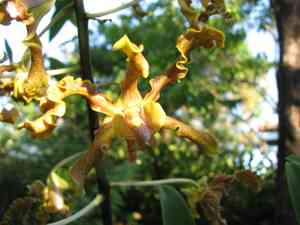
The golden orchid, known for its vibrant yellow flowers, needs very little trimming. Cut away aged or lifeless pseudobulbs from late winter to early spring, coinciding with periods of new development. Discard faded blossoms and any infected or injured sections. This practice improves air circulation and light exposure, fostering more robust growth and increased flowering. Always employ disinfected instruments to avoid the spread of pathogens.
Advantages of Trimming Golden Orchid
Advantages of Trimming Golden Orchid
Golden orchid is pruned to foster robust development, maintain proper form, and manage its dimensions. Pruning also boosts blooming, improves air circulation, and aids in pest and disease resistance, ensuring the plant stays healthy and visually appealing.
Optimal Period for Pruning Golden Orchid
Optimal Period for Pruning Golden Orchid
Trimming golden orchid in late winter and early spring is ideal as this period coincides with the plant's dormant stage, minimizing stress and lowering disease risk. During this time, golden orchid is not actively growing, allowing for recovery before the active growth season. Furthermore, pruning prior to new growth ensures the plant's energy is directed towards developing strong, healthy stems and an abundant flowering period.
Required Tools for Pruning Golden Orchid
Sterilized Pruning Shears
Perfect for precise cuts of spent flowers and dead or damaged stems. Ensures clean cuts to minimize harm and reduce infection risk.
Bypass Pruners
Useful for cutting thicker stems without crushing plant tissues, preserving plant health.
Disinfectant Spray (Isopropyl Alcohol or Bleach Solution)
Crucial for sanitizing tools before and after pruning to prevent disease transmission.
Sharp Knife
Required for more delicate pruning tasks where precision is vital, such as cutting aerial roots or dividing pseudobulbs.
How to Prune Golden Orchid
Examine
Carefully check golden orchid for any indications of diseased or withered foliage. Use sterilized pruning shears to prevent pathogen spread.
Remove Ailing Parts
Cut off any diseased leaves at their base where they connect to the stem. Be careful not to harm the healthy sections of golden orchid.
Discard
Dispose of the diseased leaves away from your garden to prevent potential contamination. Do not compost diseased plant material.
Trim Withered Parts
Snip off withered leaves close to the base. This helps redirect the plant's energy towards healthier growth.
Clean Tools
After pruning, cleanse your tools with a disinfectant solution to ensure they are ready for future use and prevent disease spread.
Common Pruning Errors with Golden Orchid
Excessive Pruning
Removing too many canes or leaves at once can stress golden orchid and hinder future growth and flowering.
Incorrect Tools
Using dull or unclean tools can cause damage or introduce diseases to golden orchid.
Improper Cuts
Making jagged or too-close-to-the-base cuts can harm the plant structure, leading to poor recovery.
Neglecting Dead or Diseased Parts
Failing to remove dead or diseased parts can encourage the spread of disease and pests, impacting the overall health of golden orchid.
General Pruning Advice for Golden Orchid
Utilize sharp, sanitized tools
Always use sharpened and sterilized pruning shears to make clean cuts that minimize damage and disease risks.
Remove dead and diseased canes first
Prune away any dead or diseased canes to promote healthy growth and reduce disease spread.
Prune judiciously
Only remove canes that are dead, diseased, or particularly old to avoid over-pruning and stressing golden orchid.
Encourage new growth
Cut canes just above a node or healthy green tissue to stimulate new growth and flowering.
Regular inspection
Regularly inspect golden orchid to identify and address issues early, keeping the plant healthy and strong.



