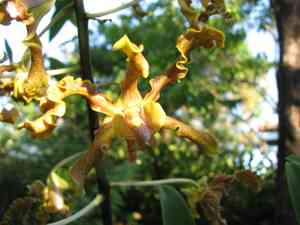
Golden orchid (Dendrobium discolor)
Also known as: Yellow Dendrobium, Cape York Dendrobium, Golden Orchid
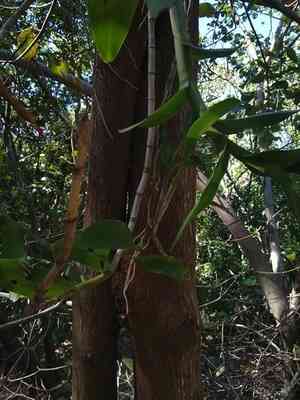
The golden orchid captivates with its striking, aromatic blooms, which range from soft creams to vivid golds. These flowers stand out beautifully in tropical landscapes. This orchid flourishes as an epiphyte, attaching itself to trees and thriving in the warm, moist conditions of tropical climates. Its sturdy stems and long leaves are well-suited to the filtered sunlight found in forest canopies, making it a versatile choice for enhancing tropical gardens.
In This Article
Attributes of Golden orchid
Lifespan
Perennial
Plant Type
Herb
Plant Height
30 to 100 cm (12 to 39 inches)
Spread
N/A
Leaf Color
Green
Flower Size
5 to 7 cm (2 to 2.8 inches)
Flower Color
Yellow, Golden
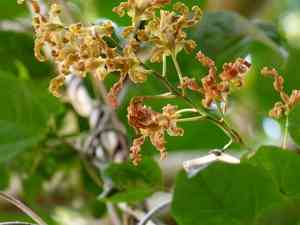
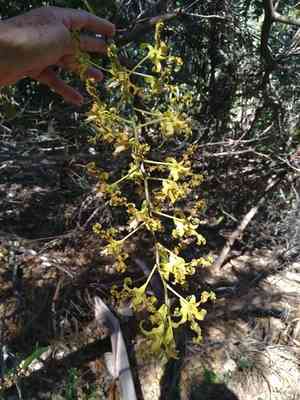
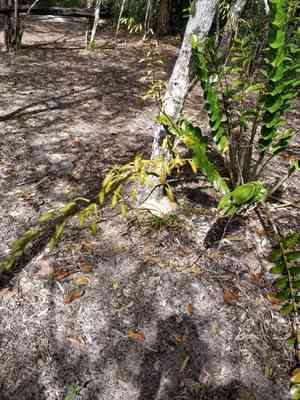
Images of Golden orchid
Quickly Identify Golden orchid
1
Dendrobium discolor can be identified by its slender pseudobulbs, elongated leaves, and clusters of vibrant yellow flowers. The flowers typically have a unique wavy or crinkled appearance.
Scientific Classification of Golden orchid
Phylum
Vascular plants
Class
Monocotyledons
Order
Asparagales
Family
Orchid
Genus
Dendrobium
Species
Golden orchid
Planting and Growing of Golden orchid
Care Difficulty
Moderate
Watering Schedule
Every 4 days
Sunlight Requirements
Partial sun
Sunshine Duration
6-10 hours
Ideal Temperature
70-80℉
Soil Type
Potting Mix, Peat Mix
Soil pH
6.5-7.5
Fertilizer Type
Balanced
Pruning Season
Spring, Summer
Pruning Area
Branches, Leaves
Pruning Frequency
2 times a year
Repotting Season
Spring
Pot Type
Plastic, Ceramic
 How to Water Golden orchid?
Dendrobium discolor requires moderate watering. Ensure the water drains thoroughly and do not allow it to sit in water since this can damage the roots. Water until you see it draining from the bottom of the pot.
What are the symptoms of an underwatered Golden orchid?
›
What should I do if my Golden orchid is not getting enough water?
›
What are the symptoms of an overwatered Golden orchid?
›
How to save an overwatered Golden orchid?
›
 What Are the Sunlight Requirements for Golden orchid?
Partial sun is best for Dendrobium discolor, providing it with 4 to 6 hours of sun filtered through a sheer barrier. This offers optimal growth conditions, fostering robust plants with vibrant blooms.
How much light does Dendrobium discolor need?
›
What are some solutions for ideal lighting?
›
What benefits does ideal lighting offer?
›
 What Is the Ideal Temperature Range for Golden orchid?
For optimal growth, Dendrobium discolor thrives best in temperatures ranging from 70°F to 80°F. This range tends to suit the plant’s preferred environment, where both daytime warmth and nighttime cooler temperatures are balanced. Keeping the plant within this spectrum will promote healthy growth and flowering.
 What Soil is Best for Golden orchid?
Dendrobium discolor thrives in nutrient-rich soil that provides essential minerals like nitrogen and potassium, vital for robust growth and vibrant blooms. Well-draining medium is crucial to prevent waterlogging and root rot, ensuring the roots have access to adequate oxygen and promote healthy overall plant development. Incorporating organic matter such as compost can enhance soil fertility, improve aeration, and retain moisture, benefiting overall plant vitality and bloom performance.
 How to Fertilize Golden orchid?
For Dendrobium discolor, use a balanced fertilizer at a quarter to half of the recommended strength per session. When using water-soluble fertilizers, mix them at a ratio of 1:4 to ensure the plant receives adequate nutrients without the risk of burning.
 How to Prune Golden orchid?
It's essential not to remove too much at once, as over-pruning can stress the plant. Focus on trimming only unhealthy sections or spent flower spikes, and leave healthy canes intact to ensure continuous blooming. After pruning, pay close attention to the plant’s environment. Adequate humidity, temperature, and light are crucial for recovery and promoting new growth. Ensure the orchid is placed in a suitable location to optimize its health.
More About Pruning Techniques→
 How to Propagate Golden orchid plant?
1
First, collect mature pods from the Dendrobium discolor plant. Clean the seeds by removing any surrounding pulp. Prepare them for sowing by ensuring they are dry and free from any contaminants.
2
Choose a healthy and mature plant to divide. Gently remove it from its pot and separate the rhizomes. Use sterilized pruning shears to cut the plant into sections, ensuring each section has at least three pseudobulbs.
3
For seed propagation, sow the seeds lightly on the growing medium. For divisions, plant each section in a separate pot with orchid-specific soil. Water the plant moderately and place it in a warm, humid environment.
 How to Repot Golden orchid plant?
1
Dendrobium discolor should be repotted when you notice roots growing out of the pot or when the growth of the plant becomes stunted. Typically, this coincides with the start of new growth in spring. It's essential to repot before the potting medium becomes too compacted, as this can hinder root health and overall plant vitality.
2
Select a pot that is only slightly larger than the current root mass of Dendrobium discolor. Using a pot that is too large can lead to overwatering issues. Clay pots are a great choice as they allow for better aeration and drainage, which are crucial for the health of orchid roots. Make sure that the pot has ample drainage holes to prevent water from pooling at the bottom.
3
Opt for a well-draining orchid mix, especially one containing bark chips, charcoal, and perlite. This type of mix promotes excellent drainage and aeration while providing the essential support needed for the roots. The bark chips help replicate the plant's natural epiphytic environment, leading to healthy root development.



