How to Propagate Scarlet sage?
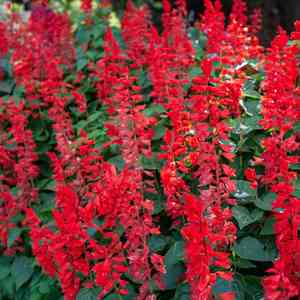
Scarlet sage, frequently referred to as Scarlet sage, reproduces easily by planting seeds in the springtime. The appearance of young plants indicates successful reproduction. No further advice regarding propagation is necessary for this species.
Optimal Period for Scarlet Sage Propagation
Propagation Method
Seeding
Propagation Season
Spring
Essential Tools for Scarlet Sage Propagation
Seed trays or flats
Seed trays or flats offer a structured environment for planting scarlet sage seeds, ensuring ample room for root development without crowding. These containers enable precise management of temperature and moisture, crucial for scarlet sage germination and initial growth.
Fine seed-starting mix
A fine, well-draining seed-starting mix is vital for scarlet sage seeds, fostering proper air circulation and moisture retention around delicate roots. The mix should be loose and free of debris to aid easy seedling emergence. A specialized mix also helps prevent damping off, a common issue in seed propagation.
Misting bottle or fine spray nozzle
A misting bottle or fine spray nozzle allows for gentle watering, preventing the small scarlet sage seeds from being dislodged or buried. Maintaining consistent moisture without overwatering is key to successful germination and early seedling development.
Plastic or glass cover
A clear plastic or glass cover helps maintain high humidity and a stable temperature around scarlet sage seeds, creating a greenhouse effect. This cover is especially beneficial for scarlet sage, which needs warmth to germinate. Remove the cover once germination occurs to prevent mold.
Heat mat (Optional)
While not strictly necessary, a heat mat can provide consistent and appropriate bottom heat to sown scarlet sage seeds, promoting faster and more uniform germination. This can be particularly useful in cooler growing environments.
Grow lights (Optional)
After germination, scarlet sage seedlings benefit from strong, even light to prevent them from becoming leggy. Grow lights can supply the necessary intensity and spectrum of light when natural light is insufficient, ensuring robust plant development.
How to Propagate Scarlet Sage?
Propagation Type
Seeding
Difficulty Level
Easy
Caring for Your Newly Propagated Scarlet Sage
Caring for Your Newly Propagated Scarlet Sage
After propagation, scarlet sage seedlings need full sun to partial shade and well-draining soil to thrive. Keep the soil consistently moist, but avoid overwatering to prevent root rot. Fertilize monthly with a balanced, water-soluble fertilizer. Deadhead spent flowers to encourage more blooms. Protect from extreme cold, as scarlet sage is sensitive to frost. Mulch around the base to conserve moisture and suppress weeds.
Common Errors to Avoid When Propagating Scarlet Sage
Overwatering
Excessive watering of scarlet sage during propagation can lead to root rot and fungal diseases. These plants are drought-tolerant, and too much moisture can negatively impact root development.
Deep planting
Planting scarlet sage seeds too deeply can result in reduced germination rates. The seeds require light to germinate effectively and should be sown on the soil surface or lightly covered.
Neglecting hygiene
Using contaminated pots or tools without sterilization can introduce pathogens to scarlet sage, leading to poor propagation results. Proper hygiene helps prevent the spread of diseases.
Overcrowding
Sowing scarlet sage seeds too densely can cause competition for light, nutrients, and air circulation among seedlings, leading to weaker plants and increased susceptibility to disease.
Ignoring soil composition
Propagating scarlet sage in heavy, poorly draining soil can impede root growth and water flow, which is detrimental to seedling development and overall plant health.
Tips For Propagating Scarlet Sage
Adequate moisture
Maintain consistent, moderate moisture levels for scarlet sage during propagation. Use well-draining soil and water sparingly to avoid waterlogging and promote healthy root growth.
Light exposure
Ensure scarlet sage seeds have sufficient light exposure after sowing. Press them gently into the soil surface or cover with a very thin soil layer to facilitate proper germination.
Equipment sterilization
Disinfect pots, trays, and gardening tools before propagating scarlet sage to minimize disease risks. Clean equipment helps ensure a healthy propagation environment.
Seed spacing
Space scarlet sage seeds adequately to give each seedling enough room to grow without excessive competition, enhancing their vigor and reducing the spread of potential diseases.
Soil selection
Choose a propagation medium for scarlet sage that is light and well-draining. A quality seed-starting mix or a mixture of peat and perlite can provide the ideal conditions for root development.



