How to Propagate Sturt's desert rose?
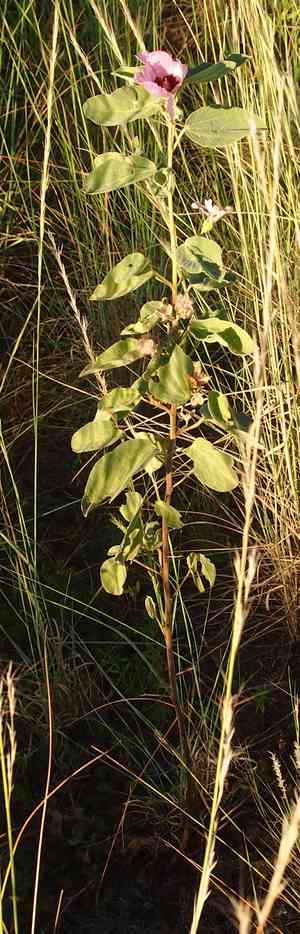
Sturt's desert rose can be successfully multiplied through stem sections. To stimulate the formation of roots, it is advantageous to coat the severed tip with a rooting stimulant prior to insertion. These sections ought to be situated in a substrate that drains efficiently and kept damp, yet not saturated, to avert decay. Supplying filtered light and a warm environment can significantly improve the likelihood of successful root establishment. Diligence is required to guarantee the planting material stays uniformly hydrated during the entire rooting phase.
Optimal Time for Sturt's Desert Rose Propagation
Propagation Type
Cutting
Propagation Season
Autumn,Winter
Tools for Sturt's Desert Rose Propagation
Sharp Pruning Shears
Designed for clean, precise cuts, sharp pruning shears are crucial for harvesting sturt's desert rose cuttings. Clean cuts prevent infection and promote faster healing and rooting.
Rooting Hormone Powder
This product encourages root development in sturt's desert rose cuttings. Dipping the cut end in rooting hormone boosts successful rooting, vital for this plant which can struggle to establish roots.
Sterile Potting Mix
A well-draining, sterile potting mix protects delicate new sturt's desert rose roots from common soil pathogens. It also retains moisture without waterlogging, essential for root growth.
Small Pots or Trays
Ideal for individual cuttings, small pots or trays allow better control of moisture and soil, crucial for effective sturt's desert rose rooting. Individual spacing reduces root competition, letting each plant thrive.
Plastic Covers or Humidity Domes
Maintaining high humidity around sturt's desert rose cuttings is vital to prevent water loss. Covers or domes create a mini-greenhouse effect, supporting new root and shoot development.
How to Propagate Sturt's Desert Rose?
Propagation Type
Moderately Difficult
Caring for Your Newly Propagated Sturt's Desert Rose
Caring for Your Newly Propagated Sturt's Desert Rose
After rooting, gradually introduce the new sturt's desert rose to drier conditions by removing its cover for longer periods daily. Once established, water deeply but infrequently, mimicking its natural arid environment. Provide full sun and protect from extreme cold. Lightly fertilize during the growing season with a low-nitrogen product to encourage blooms without excessive foliage.
Common Errors to Avoid When Propagating Sturt's Desert Rose
Overwatering
Excessive watering can cause root rot in sturt's desert rose, which thrives in dry conditions. Too much soil moisture compromises the root system, severely impacting plant health and propagation success.
Deep Planting of Cuttings
Planting sturt's desert rose cuttings too deep can impede root formation. Cuttings need adequate light and air exposure at their base to effectively initiate new root growth.
Using Non-Sterile Tools
Unsterilized tools can introduce pathogens to sturt's desert rose, especially during the sensitive cutting process for propagation. This can lead to infections that hinder growth and potentially kill the propagules.
Ignoring Humidity Needs
While sturt's desert rose doesn't demand high humidity, completely neglecting humidity control can cause cuttings to dry out, particularly in dry or heated indoor settings, lowering propagation success.
Tips For Propagating Sturt's Desert Rose
Moderate Watering Regimen
Maintain a balanced watering schedule for sturt's desert rose, allowing the soil to dry somewhat between waterings. This mimics its natural arid habitat and prevents issues from overwatering.
Shallow Planting for Cuttings
Plant sturt's desert rose cuttings shallowly, ensuring the base where roots are expected is not buried too deep. This promotes sufficient air and light exposure, stimulating healthier root growth.
Use of Sterile Pruning Tools
Always use sterilized pruning shears or knives when taking sturt's desert rose cuttings to prevent disease spread. Clean tools before and after each use for a healthy and effective propagation process.
Humidity Trays
Utilize humidity trays or occasional misting to maintain minimal humidity around sturt's desert rose, preventing excessive drying of cuttings. This creates an environment conducive to root development without encouraging disease.



