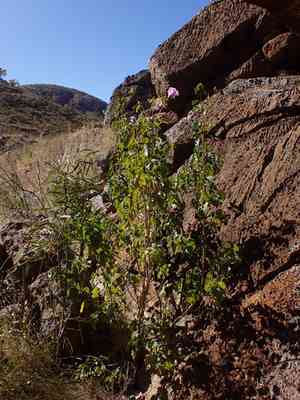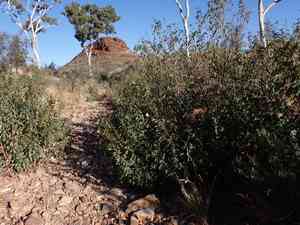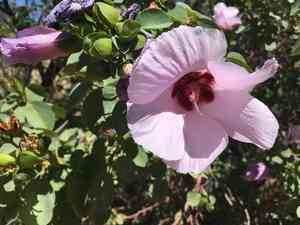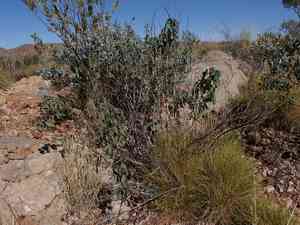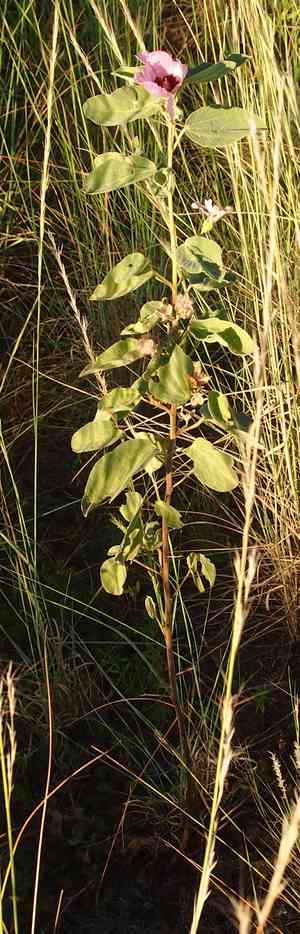
Sturt's desert rose(Gossypium sturtianum)

Sturt's desert rose (Gossypium sturtianum)

Also known as: Cotton rosebush

Sturt's desert rose (Gossypium sturtianum) is a hardy, woody shrub perfectly suited for arid conditions. Its adaptations include:

1. **Reflective Leaves**: The silver-green leaves help reflect sunlight, reducing water loss.
2. **Deep Roots**: Its deep root system allows it to access subterranean water sources.
3. **Drought Resilience**: The plant can endure long droughts, going dormant until water is available.
4. **Distinctive Flowers**: The vibrant flowers, similar to hibiscus and ranging from pink to yellow with red centers, are visually striking.
5. **Seed Capsules**: The plant produces cotton-like fibers in its seed capsules, aiding in reproduction and survival in dry habitats.

Attributes of Sturt's desert rose

Lifespan
Perennial
Plant Type
Shrub
Plant Height
1 m to 3 m
Spread
50 cm to 1.5 m
Leaf Color
Grey-green
Flower Size
4 cm
Flower Color
Purple Pink

ForwardPlant - Identify plants with a snap

Identify and diagnose plants, get toxicity alerts, and explore safety guides for all types of fungi.

Try for Free

Images of Sturt's desert rose

Sturt's desert rose(Gossypium sturtianum)

Quickly Identify Sturt's desert rose

1
The plant can be identified by its distinctive large, mauve petals with a darker red center, and its grey-green, hairy leaves. Typically blooms after rain.

Scientific Classification of Sturt's desert rose

Phylum
Vascular plants
Class
Dicotyledons
Order
Malvales
Family
Mallow
Genus
Cottons
Species
Sturt's desert rose

Planting and Growing of Sturt's desert rose

Care Difficulty
Easy
Watering Schedule
Every 2 days
Sunlight Requirements
Full sun
Sunshine Duration
4-8 hours
Ideal Temperature
68-77℉
Soil Type
Potting Mix, Peat Mix
Soil pH
6.5-7.5
Fertilizer Type
Balanced
Pruning Season
Spring, Summer
Pruning Area
Branches, Leaves
Pruning Frequency
2 times a year
Repotting Season
Spring
Pot Type
Plastic, Ceramic

water icon How to Water Sturt's desert rose?

Gossypium sturtianum, commonly known as Sturt's Desert Rose, requires careful attention to watering. Ensure that each watering session delivers approximately 200 milliliters of water. The soil must be moist but not waterlogged. It's crucial to allow the topsoil to dry out completely between waterings, consistent with its native arid habitat. This approach mimics the natural rainfall patterns the plant is accustomed to.
What are the symptoms of an underwatered Sturt's desert rose?
What should I do if my Sturt's desert rose is not getting enough water?
What are the symptoms of an overwatered Sturt's desert rose?
How to save an overwatered Sturt's desert rose?

sunlight icon What Are the Sunlight Requirements for Sturt's desert rose?

Sunlight Requirements: Full sun
Duration of light: 6 to 8 hours
Gossypium sturtianum flourishes best under full sun conditions. Exposure to 6-8 hours of unobstructed sunlight daily supports its growth by boosting photosynthesis, which is essential for flourishing foliage and prolific bloom cycles.
How much sunlight is ideal for Gossypium sturtianum?
What are the solutions for ensuring ideal lighting?
What benefits does adequate sunlight provide?

temperature icon What Is the Ideal Temperature Range for Sturt's desert rose?

Ideal Temperature: 68 ~ 77℉
Gossypium sturtianum thrives in environments where the temperature range is consistently between 68°F and 77°F. These conditions ensure optimal growth and flowering potential. Maintaining this range helps to support proper physiological processes and ensures a healthy growing environment for the plant.

soil icon What Soil is Best for Sturt's desert rose?

Soil type: Sandy loam, Loam
Soil PH: 6.5 ~ 7.5
Gossypium sturtianum thrives in well-drained soil as it prevents waterlogging, which can lead to root rot. Proper drainage allows roots to breathe and access essential nutrients, promoting healthy growth and vibrant blooms. This plant benefits from soil that is rich in organic matter, which provides essential nutrients and improves soil structure. Organic matter enhances microbial activity, crucial for nutrient cycling and plant health. A balance in soil fertility ensures that Gossypium sturtianum receives all necessary nutrients without an excess that could lead to poor growth. Controlled nutrient levels foster optimal growth and resistance to diseases.

fertilize icon How to Fertilize Sturt's desert rose?

Fertilizer type: Balanced
For Gossypium sturtianum, it is crucial to not overdo the fertilizer. Use a balanced liquid fertilizer diluted to half strength, approximately 200-250 ml per plant during the active growing season.

prune icon How to Prune Sturt's desert rose?

Pruning Time: Spring, Summer, Autumn
Start by identifying and removing any dead, damaged, or diseased branches. This helps divert the plant's energy to healthier parts, promoting vigorous growth. Trim branches to maintain a pleasing and balanced shape. Focus on creating an open center to allow light and air to penetrate the foliage, reducing the risk of fungal diseases. Remove any overcrowded branches, particularly those growing towards the center. This not only improves airflow but also enhances the plant's aesthetic by promoting an even distribution of leaves and flowers. Finally, give the entire plant a general tidy-up, snipping off any stray stems and leaves that detract from the plant's overall appearance. This ensures a neat and well-groomed look. More About Pruning Techniques

propagate icon How to Propagate Sturt's desert rose plant?

Propagate Time: Spring, Late spring, Early spring
1
To begin with seed propagation, soak the Gossypium sturtianum seeds in warm water for 24 hours to soften the seed coat. This process increases the germination rate.
2
Once prepared, plant the seeds in a seed tray filled with a well-draining soil mix. Place them at a depth of about 1 cm and lightly cover with soil. Keep the tray in a warm, sunny location.
3
For cutting propagation, cut healthy stems from the parent plant. Each cutting should be around 10-15 cm long and have at least two nodes. Remove the leaves from the lower half of the cutting to reduce water loss.
More About Propagating Techniques

repot icon How to Repot Sturt's desert rose plant?

Repotting frequency: Every 2-3 years
1
Gossypium sturtianum should be repotted when you notice it becomes root-bound, meaning roots are emerging from the drainage holes or the plant's growth has significantly slowed. These signs indicate the plant needs more space to thrive.
2
Choose a pot that is one size larger than the current one with excellent drainage holes. The increase in size ensures adequate space for root growth, while good drainage prevents waterlogging, reducing the risk of root rot.
3
Opt for a well-draining cactus mix, which replicates the arid native environment of Gossypium sturtianum. This mix allows for oxygen flow to the roots and reduces excess moisture problems, key for healthy growth.

ForwardPlant - Identify plants with a snap

Find the best spots for them to optimize their health, simply using your phone.

Try for Free