How to Propagate Spiny greasebush?
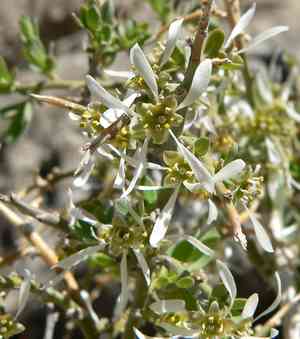
The desert-dwelling Spiny greasebush is characterized by its robust, thorny stems and tiny, intricate blossoms. This resilient bush flourishes in porous, stony ground with limited moisture. To propagate, utilize semi-hardwood sections harvested from vigorous specimens. Confirm that the cuttings possess multiple leaf junctions and strip off the bottom leaves. A rooting stimulant can boost the likelihood of success. Insert the cuttings into a sandy, free-draining substrate, maintaining its dampness until root systems emerge.
Optimal Period for Spiny Greasebush Propagation
Propagation Method
Cutting
Propagation Period
Spring,Summer
Tools Required for Spiny Greasebush Propagation
Sterile pruning shears
Pruning shears are vital for obtaining clean, precise cuttings from spiny greasebush. Sterilization is key to prevent disease transmission that could harm the cuttings.
Rooting hormone
This promotes root formation by supplying hormones that stimulate root development, enhancing the success rate of spiny greasebush cuttings.
Propagation trays
Propagation trays provide a controlled setting for rooting cuttings, ensuring they stay moist and supported until roots are established.
Humidity dome
A humidity dome helps maintain high moisture levels around cuttings, crucial for preventing dehydration and encouraging root growth in spiny greasebush.
Sharp knife or grafting tool
A sharp knife or grafting tool can be used to make precise cuts in stem cuttings, which is essential for successful spiny greasebush propagation.
Perlite or vermiculite
These mediums offer excellent drainage and aeration, fostering healthy root development and reducing the risk of rot in spiny greasebush.
Misting bottle
A misting bottle is useful for regularly hydrating cuttings without dislodging them, keeping the environment humid and the cuttings moisturized.
Heat mat
A heat mat provides warmth from below, which can encourage quicker root development by maintaining ideal soil temperatures for spiny greasebush.
Labeling tags
Labeling tags help track different cuttings and their progress, ensuring accurate monitoring and care for each spiny greasebush cutting.
How to Propagate Spiny Greasebush?
Propagation Type
Moderately Difficult
How to Care for Your Newly Propagated Spiny Greasebush?
How to Care for Your Newly Propagated Spiny Greasebush?
After propagation, keep the new spiny greasebush plants in a partially shaded location until they are well-established. Gradually introduce them to full sunlight over several weeks. Ensure the soil remains well-drained and avoid overwatering. Regularly check for any signs of pests or diseases, and apply a balanced, slow-release fertilizer during the growing season to support healthy growth.
Common Mistakes to Avoid When Propagating Spiny Greasebush
Overwatering
This can lead to root rot and other fungal problems, which are particularly damaging given spiny greasebush's preference for well-drained soils.
Improper Soil Mix
Using soil that retains too much moisture can hinder root development and lead to poor growth, as spiny greasebush thrives in well-drained, often rocky or sandy substrates.
Lack of Sunlight
Insufficient light can result in weak, leggy growth, as spiny greasebush generally requires full sun to partial shade for optimal development.
Incorrect Pruning
Pruning too much or at the wrong time can impede growth and reduce the plant's ability to produce healthy new shoots, impacting its overall vigor.
Neglecting Temperature Needs
Exposing spiny greasebush to improper temperature ranges can stunt growth or kill the plant, as it has specific temperature tolerances.
Tips For Propagating Spiny Greasebush
Use Well-Drained Soil
Choose a sandy or rocky soil mix, or amend potting soil with sand or perlite to ensure proper drainage and prevent waterlogging.
Water Sparingly
Allow the soil to dry out between waterings to prevent root rot. Water deeply, but infrequently, to encourage robust root systems.
Provide Adequate Light
Ensure spiny greasebush receives plenty of sunlight, ideally six to eight hours of direct sun daily, to promote healthy growth.
Prune Strategically
Trim only the necessary parts of the plant to encourage branching and healthy growth, avoiding extensive cutting which can stress spiny greasebush.
Monitor Temperatures
Maintain an environment within the plantâs specific temperature range, being mindful of extreme cold or heat that could damage or kill spiny greasebush.



