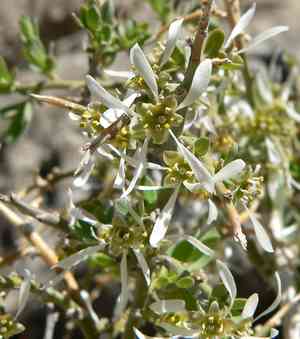
Spiny greasebush (Glossopetalon spinescens)
Also known as: Spiny Glossopetalon, Nevada Greasebush
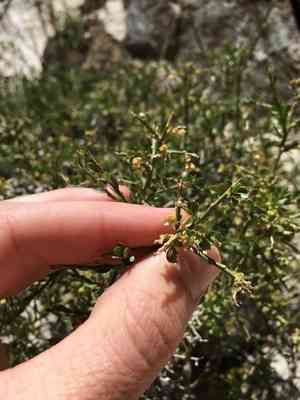
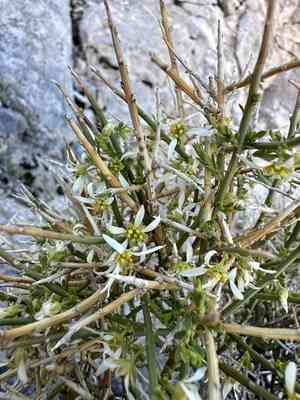
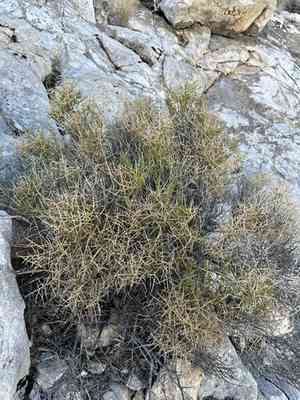
This shrub grows as a compact, upright cluster of numerous slender, branched, thorny stems, reaching up to 2 meters in height. It features small green oval leaves, each less than 2 centimeters in length. Tiny white flowers bloom at the points where the leaves meet the stems. The fruit consists of one or two small follicles, just a few millimeters in width.
In This Article
Attributes of Spiny greasebush
Lifespan
Perennial
Plant Type
Shrub
Plant Height
0.5 to 1.5 meters
Spread
Up to 1 meter
Leaf Color
Greenish-grey
Flower Size
0.5 to 1 cm
Flower Color
White
Images of Spiny greasebush
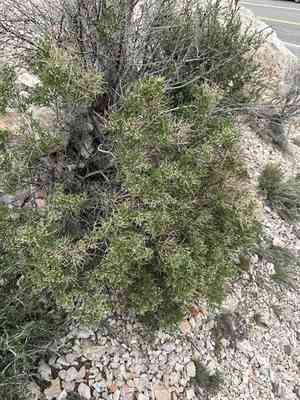
Quickly Identify Spiny greasebush
1
Identify Glossopetalon spinescens by its thorny branches, small white flowers, and greenish-grey leaves. It typically grows in rocky soils or limestone outcrops.
Scientific Classification of Spiny greasebush
Phylum
Vascular plants
Class
Dicotyledons
Order
Crossosomatales
Family
Crossosoma
Genus
Greasebush
Species
Spiny greasebush
Planting and Growing of Spiny greasebush
Care Difficulty
Hard
Watering Schedule
Every 2 days
Sunlight Requirements
Full sun
Sunshine Duration
6-10 hours
Ideal Temperature
60-75℉
Soil Type
Potting Mix, Peat Mix
Soil pH
6.5-8
Fertilizer Type
Balanced
Pruning Season
Spring, Summer
Pruning Area
Branches, Leaves
Pruning Frequency
2 times a year
Repotting Season
Spring
Pot Type
Plastic, Ceramic
 How to Water Spiny greasebush?
Glossopetalon spinescens requires a moderate watering approach. Watering with 250 milliliters each time ensures that the roots receive enough moisture without waterlogging the soil. The water should thoroughly reach the root level but not remain saturated, as the plant prefers well-draining conditions.
What are the symptoms of an underwatered Spiny greasebush?
›
What should I do if my Spiny greasebush is not getting enough water?
›
What are the symptoms of an overwatered Spiny greasebush?
›
How to save an overwatered Spiny greasebush?
›
 What Are the Sunlight Requirements for Spiny greasebush?
Glossopetalon spinescens prefers full to partial sunlight, offering vibrant growth and flowering as it effectively utilizes sunlight for energy production and sustains healthy photosynthesis.
What type of light is ideal for Glossopetalon spinescens?
›
How can you ensure ideal lighting conditions?
›
What are the benefits of ideal lighting for this plant?
›
 What Is the Ideal Temperature Range for Spiny greasebush?
Glossopetalon spinescens thrives best in temperatures ranging from 60 to 75 degrees Fahrenheit. This range provides a balance of warmth that supports optimal physiological processes such as photosynthesis and nutrient uptake, ensuring vigorous growth and development. Maintaining these temperatures aids in preventing stress, which could otherwise compromise the plant's health and vitality.
 What Soil is Best for Spiny greasebush?
Glossopetalon spinescens thrives in soil with excellent drainage, preventing waterlogging which can damage the roots. Well-draining soil ensures roots receive optimal oxygen levels, promoting robust growth and plant health. This plant prefers soil rich in essential nutrients such as nitrogen and potassium. Nutrient-rich soil supports healthy foliage growth and vibrant blooms, enhancing the plant's ornamental appeal. A neutral to slightly alkaline pH range is ideal for this species. This pH balance improves nutrient uptake efficiency, ensuring the plant receives the necessary nutrients to thrive.
 How to Fertilize Spiny greasebush?
Glossopetalon spinescens doesn't demand heavy feeding. Typically, a diluted solution of liquid fertilizer should suffice. Use a quarter strength of balanced 10-10-10 fertilizer for liquid feeds, ensuring you do not overwhelm the plant's system.
 How to Prune Spiny greasebush?
Begin by removing dead or diseased branches to improve air circulation. This helps prevent infections from spreading, promoting healthy growth during the active seasons. Trim branches that are overly long or disrupting the natural aesthetics of the plant. This encourages more compact and lush growth, aligning with the plant's natural architecture. When pruning, always ensure to cut just above a leaf node. This stimulates new growth, effectively guiding the plant to develop in a desired direction, ensuring fuller foliage.
 How to Propagate Spiny greasebush plant?
1
Select mature seeds from a healthy Glossopetalon spinescens plant. Clean and dry them properly before sowing to ensure they are free from pathogens and ready for germination.
2
Choose a semi-hardwood cutting from a mature plant. Make sure the cutting is about 4-6 inches long, cut just below a node, and remove any leaves from the lower half.
3
Plant seeds or cuttings in a well-draining soil mix. Water lightly and keep the propagation medium at an even temperature to facilitate rooting and growth.
 How to Repot Spiny greasebush plant?
1
Glossopetalon spinescens needs repotting when its growth slows, roots appear out of the drainage holes, or the soil starts degrading and compacting. Repot during its active growth phase, preferably in spring or autumn, to minimize stress.
2
Select a pot that is one size larger than the current one, with ample drainage holes to prevent waterlogging. A slightly larger pot encourages healthy root development while avoiding overgrowth that could overtax your plant's resources.
3
Opt for a well-draining gritty mix containing sand, perlite, and a little compost. This composition facilitates good drainage, reducing the risk of root rot, while supplying essential nutrients for steady growth.



