How to Propagate Shining bedstraw?
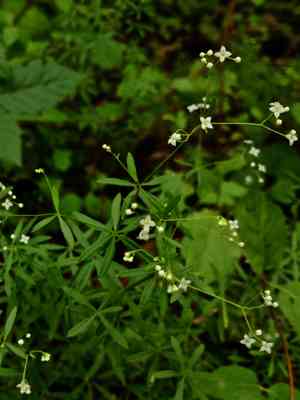
Galium concinnum thrives most effectively when its seeds are planted directly into rich, adequately drained earth. Keep the soil consistently somewhat damp and offer dappled sunlight to facilitate prime development. Being a species within the Rubiaceae family, focusing on avoiding excessive density and the proliferation of insects can greatly assist in successful cultivation. Distributing seeds sparsely provides each one ample room to develop robust root structures.
Optimal Time for Shining Bedstraw Propagation
Propagation Method
Seeding
Propagation Period
Spring
Tools for Shining Bedstraw Propagation
Seed trays
Seed trays are vital for indoor cultivation of shining bedstraw seeds, offering a controlled setting for optimal sprouting. These trays aid in organizing seeds and maintaining necessary moisture and temperature. Their compact size and divisions ensure each seedling has ample space to grow without crowding, crucial for shining bedstraw's delicate roots.
Sterile potting mix
A sterile potting mix is essential for shining bedstraw seed propagation to prevent soil-borne illnesses, which can be harmful during the vulnerable seedling stage. The mix provides a light, airy environment, promoting better root growth and water drainage, both critical for healthy shining bedstraw seedling development.
Heat mat
A heat mat gently warms the soil, boosting the germination rate of shining bedstraw seeds, which need consistent, slightly elevated temperatures to sprout successfully. This tool is especially useful during colder months or in cooler climates, helping to mimic an ideal growing environment for shining bedstraw.
Watering can with a fine rose
This tool is used for gently watering shining bedstraw seeds and fragile seedlings. The fine rose attachment distributes water evenly and softly, preventing seed disturbance or soil erosion in the trays. Precise watering promotes uniform germination and prevents waterlogging, both vital for shining bedstraw's health.
Grow lights
Grow lights provide the necessary light spectrum for shining bedstraw seedlings when natural light is insufficient, especially crucial during the seedling stage to prevent etiolation and encourage strong, healthy growth. Proper light exposure ensures shining bedstraw seedlings develop robust leaf systems and sturdy stems, essential for successful maturation and eventual transplant.
How to Propagate Shining Bedstraw
Propagation Difficulty
Simple
Caring for Newly Propagated Shining Bedstraw
Caring for Newly Propagated Shining Bedstraw
Post-germination, continue to provide shining bedstraw with moist but well-drained soil and partial shade to encourage healthy growth. Gradually reduce watering frequency as the plant establishes itself. This species is relatively low-maintenance but may benefit from light fertilization during the growing season and mulching to retain soil moisture.
Common Propagation Mistakes for Shining Bedstraw
Overwatering
Excessive moisture can lead to root rot in shining bedstraw, as their roots require a balance of moisture, especially in young plants. Overwatering suffocates the roots by reducing the air pockets in the soil.
Using non-sterile soil
Introducing shining bedstraw to non-sterile soil can be detrimental because it may contain pathogens harmful to young plants which could stifle growth or introduce disease.
Deep planting
Planting shining bedstraw's cuttings or seeds too deeply can cause them to either not sprout or to sprout weakly as the emerging shoots may not be able to break through the soil surface easily.
Tips for Propagating Shining Bedstraw
Moisture control
Maintain a moist, but not waterlogged, environment for shining bedstraw's soil. This balance is crucial for preventing root diseases and supports healthy root development.
Use of sterile soil
Shining bedstraw benefits highly from the use of sterile soil when propagating. This prevents the introduction of potential soil-borne diseases, ensuring a safer growth environment.
Appropriate planting depth
Ensure that shining bedstraw's seeds or cuttings are planted at just the right depthâshallow enough to allow easy sprouting but deep enough to support initial root development. Typically, seeds should be sown at a depth about twice their size.



