How to Propagate Marumleaf buckwheat?
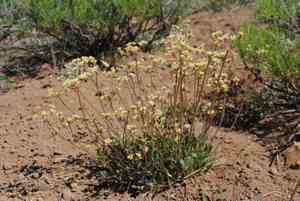
Eriogonum parvifolium flourishes in sandy, well-drained substrates under direct sunlight. During planting, lightly press the seeds onto the soil surface, leaving them uncovered, as illumination is crucial for their sprouting. Ensure continuous dampness until the young plants are firmly rooted. Employ a delicate spray for irrigation to avoid disturbing the growing medium. Cultivating in containers or flats offers enhanced environmental management prior to relocation.
When Is the Best Time to Propagate Marumleaf Buckwheat?
Propagation Type
Seeding
Propagation Season
Spring
What Tools Are Used for Marumleaf Buckwheat Propagation?
Seed Trays
Seed trays are shallow containers with individual sections, allowing for separate seed planting. For marumleaf buckwheat, these trays facilitate easy observation of germination and root growth, ensuring each seedling has ample space without competition.
Sterile Potting Mix
A sterile potting mix is crucial for seed sowing to prevent pests, diseases, and weed seeds from harming young seedlings. For marumleaf buckwheat, a well-draining mix that mimics its natural environment enhances successful germination and development.
Heat Mat
A heat mat delivers consistent, gentle warmth from below, which can encourage quicker and more uniform germination for marumleaf buckwheat. It is especially useful in cooler climates where ambient temperatures might not be ideal for seedling growth.
Misting Bottle
A misting bottle ensures seedlings remain consistently moist without over-watering, which is critical during the delicate initial stages of marumleaf buckwheat's growth. Overhead misting also helps prevent soil compaction and seed displacement.
Clear Plastic Cover
A clear plastic cover placed over the seed tray creates a miniature greenhouse effect, maintaining high humidity and a stable temperature. This benefits marumleaf buckwheat by providing a suitable microenvironment for seed germination.
Label Stakes
Label stakes help track the sowing date, seed type, and specific care instructions. This is essential for marumleaf buckwheat due to its unique needs and the potential requirement for varied care based on its growth stage.
Fine Mesh Sieve
A fine mesh sieve can be used to lightly cover sown seeds with a thin layer of fine soil or sand. For marumleaf buckwheat, this ensures good seed-to-soil contact while allowing light exposure if required for germination.
pH Testing Kit
A pH testing kit allows the gardener to confirm the soil pH is within the optimal range for marumleaf buckwheat's growth. Maintaining the correct pH level is vital for nutrient availability and overall seedling health.
How to Propagate Marumleaf Buckwheat?
Propagation Type
Simple
How to Care for Your Newly Propagated Marumleaf Buckwheat?
How to Care for Your Newly Propagated Marumleaf Buckwheat?
Once germinated, gradually introduce seedlings to outdoor conditions by slowly increasing their exposure to direct sunlight. Transplant them to their permanent location in a well-draining, sunny spot. Water sparingly, mimicking their natural drought-tolerant habitat. Regularly check for pests and diseases, and remove any weeds to ensure healthy development. Prune as needed to maintain shape and encourage robust growth.
Common Mistakes to Avoid When Propagating Marumleaf Buckwheat
Overwatering
Excessive water can lead to root rot, which is harmful to marumleaf buckwheat's health and can impede successful propagation.
Poor Soil Drainage
Using soil that retains too much water can cause waterlogging, leading to root diseases and stunted growth in marumleaf buckwheat.
Incorrect pH Levels
Soil that is either too acidic or too alkaline can prevent marumleaf buckwheat from absorbing vital nutrients, impacting its growth and propagation.
Insufficient Light
Not providing enough sunlight can weaken marumleaf buckwheat, making it more vulnerable to diseases and reducing its chances for successful propagation.
Improper Seed Handling
Handling seeds roughly or planting them too deeply may damage them or prevent germination, thus hindering propagation.
Tips For Propagating Marumleaf Buckwheat
Optimal Watering
Water marumleaf buckwheat moderately, ensuring the soil is moist but not saturated to prevent root rot.
Well-Draining Soil
Utilize a well-draining soil mix to prevent water retention, which can cause root diseases in marumleaf buckwheat.
Maintain Balanced pH
Ensure the soil pH is between 6.0 and 7.5 to provide optimal nutrient availability for marumleaf buckwheat.
Adequate Light
Place marumleaf buckwheat in a location that receives full sunlight for at least six hours daily to promote healthy growth.
Gentle Seed Handling
Handle seeds carefully and plant them at the correct depth to improve germination rates for marumleaf buckwheat.



