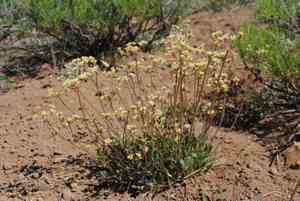
Marumleaf buckwheat (Eriogonum marifolium)
Also known as: Marum-leaf wild buckwheat
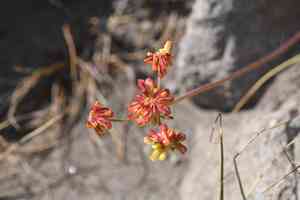
Marumleaf buckwheat (Eriogonum marifolium) is notable for its compact, rounded gray-green leaves that form a dense mat at the base. Its flowering stems rise above this foliage, producing tight clusters of small, white to pinkish flowers that attract pollinators. This hardy perennial thrives in dry, well-drained, sandy, or rocky soils, often found in sunny, arid regions. Its deep root system and mat-forming growth habit reflect its adaptability and resilience in harsh, nutrient-poor conditions.
In This Article
Attributes of Marumleaf buckwheat
Lifespan
Perennial
Plant Type
Herb
Plant Height
10 cm to 25 cm
Spread
30-60 cm
Leaf Color
Gray-green
Flower Size
1-2 cm
Flower Color
White to pinkish
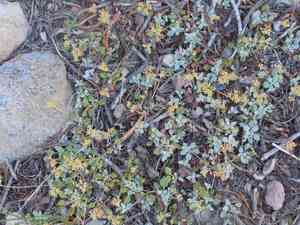
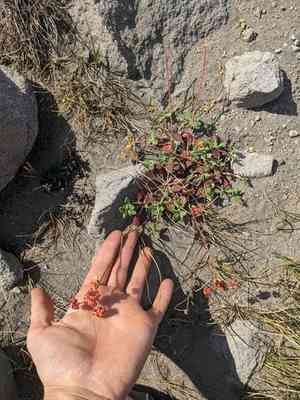
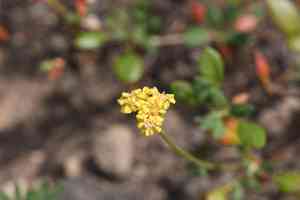
Images of Marumleaf buckwheat
Quickly Identify Marumleaf buckwheat
1
Desert Buckwheat can be identified by its small, rounded, gray-green leaves that are often covered in fine hairs, and its dense clusters of small, white to pinkish flowers that bloom in late spring to early summer.
Scientific Classification of Marumleaf buckwheat
Phylum
Vascular plants
Class
Dicotyledons
Order
Caryophyllales
Family
Buckwheat
Genus
Wild Buckwheat
Species
Marumleaf buckwheat
Planting and Growing of Marumleaf buckwheat
Care Difficulty
Moderate
Watering Schedule
Every 2 days
Sunlight Requirements
Full sun
Sunshine Duration
6-8 hours
Ideal Temperature
60-75℉
Soil Type
Potting Mix, Peat Mix
Soil pH
6.5-7.5
Fertilizer Type
Balanced
Pruning Season
Spring, Summer
Pruning Area
Branches, Leaves
Pruning Frequency
2 times a year
Repotting Season
Spring
Pot Type
Plastic, Ceramic
 How to Water Marumleaf buckwheat?
Eriogonum marifolium appreciates a moderate watering approach. Aim for about 250 ml per session, ensuring that the water fully penetrates the soil but doesn’t cause waterlogging. The key is to keep the soil moist but not soggy.
What are the symptoms of an underwatered Marumleaf buckwheat?
›
What should I do if my Marumleaf buckwheat is not getting enough water?
›
What are the symptoms of an overwatered Marumleaf buckwheat?
›
How to save an overwatered Marumleaf buckwheat?
›
 What Are the Sunlight Requirements for Marumleaf buckwheat?
Eriogonum marifolium favours full to partial sunlight, thriving best in environments allowing 6 to 8 hours of sunlight. This optimizes its flowering potential and structural health, crucial for sustained growth.
How much sunlight does Eriogonum marifolium need?
›
What are some solutions for achieving ideal sunlight?
›
What are the benefits of ideal sunlight for Eriogonum marifolium?
›
 What Is the Ideal Temperature Range for Marumleaf buckwheat?
The ideal temperature range for Eriogonum marifolium is between 60°F and 75°F. This range provides the best conditions for growth, promoting healthy leaf development and optimal flowering. Within this temperature window, the plant is most likely to thrive and achieve its full potential in terms of aesthetics and longevity.
 What Soil is Best for Marumleaf buckwheat?
Eriogonum marifolium thrives in well-drained soil, which prevents waterlogging—a condition that can suffocate roots and stunt plant growth. This type of soil allows air to circulate freely, providing oxygen to the roots. The plant benefits from nutrient-rich soil, which fosters vigorous growth and flowering. Loamy soil is especially good, as it supplies essential minerals and nutrients, aiding in overall plant health. A medium-textured soil, like sandy loam, offers the perfect balance of drainage and moisture retention, ensuring that the plant's roots remain hydrated without the risk of root rot.
 How to Fertilize Marumleaf buckwheat?
For Eriogonum marifolium, it's important not to over-fertilize. Use a balanced liquid fertilizer at half the recommended strength once every two weeks during the growing season. Solid fertilizers should be applied sparingly, using a slow-release formula two to three times per year, depending on the soil's nutrient content.
 How to Prune Marumleaf buckwheat?
To prune Eriogonum marifolium effectively, start by identifying any dead or dried flower heads, using sharp sterilized shears to cleanly sever them near the stem junction. Remove any damaged or weak stems to revitalize the plant's energy focus. Ensure to make cuts at a slight angle to facilitate water runoff and heal swiftly.
More About Pruning Techniques→
 How to Propagate Marumleaf buckwheat plant?
1
Gather seeds from mature Eriogonum marifolium plants in late summer or early autumn. Ensure they are dry and free from pests before storing or planting.
2
Use a well-draining soil mix rich in organic matter. This promotes proper root development and prevents excessive moisture, which can lead to rot.
3
Choose a healthy plant and gently dig it up, ensuring to keep the roots intact. Using a sharp knife, divide the plant into sections, each with roots and shoots.
 How to Repot Marumleaf buckwheat plant?
1
Look for visible roots emerging from the pot's drainage holes, a plant that seems root-bound, or one that isn't thriving despite adequate water and light. These are signals that it's time for repotting Eriogonum marifolium.
2
Select a pot 1 to 2 inches larger than the current one, ensuring it has good drainage holes. A slightly bigger pot provides root space without overwhelming the plant, preventing waterlogging and root rot.
3
Opt for a well-draining sandy loam mix to mimic its natural habitat, which prevents the roots from sitting in water and thus reduces the risk of root diseases.
Learn More About Marumleaf buckwheat Diseases
Anthracnose
Bacterial Leaf Spot
Bacterial Soft Rot
Chemical Injury
Crown Gall
Cyst Nematode
Damping-off
Downy Mildew
Drought Stress
Fusarium Wilt
Gray Mold
Leaf Curl
Leaf Spot
Mosaic
Nutrient Deficiency
Nutrient Toxicity
Powdery Mildew
Root Rot
Root-knot Nematode
Rusts
Sooty Mold
Spider Mites
Temperature Stress
Thrips Damage
White Mold



