How to Propagate Hooker's buckwheat?
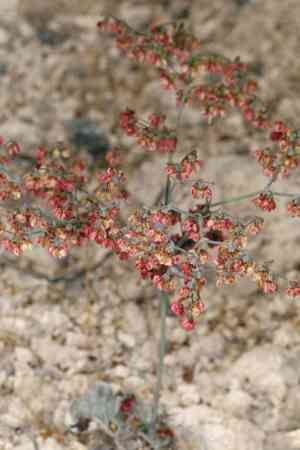
Hooker's buckwheat flourishes when reproduced by seeding. To achieve the best outcomes, utilize newly harvested seeds and confirm their placement in soil that drains effectively, thereby averting excessive moisture that might impede seed emergence. Place the seeds superficially, enabling illumination to encourage germination. Consistent, gentle irrigation is vital, yet refrain from drenching the substrate. Seedlings generally need progressive adaptation to external surroundings, slowly introducing them to the habitat to foster vigorous development.
Optimal Period for Propagating Hooker's Buckwheat
Propagation Type
Sowing
Propagation Season
Spring
Tools Utilized in Hooker's Buckwheat Propagation
Seed trays
Seed trays are crucial for initiating hooker's buckwheat seeds. They enable precise control over soil conditions and easy monitoring of humidity and temperature, both vital for hooker's buckwheat germination. Employing high-quality, well-drained trays ensures no excess water accumulates, reducing the risk of seed decay.
Fine-textured soil mix
This soil blend is essential for hooker's buckwheat as it guarantees proper drainage and aeration, fostering robust root development critical for vigorous growth. A mixture containing perlite or vermiculite enhances soil structure, boosting the germination rate of hooker's buckwheat seeds by maintaining ideal moisture levels.
Misting bottle
A misting bottle is indispensable during the initial phases of hooker's buckwheat's propagation, as it helps maintain necessary moisture levels without disturbing the soil or seeds. Consistent application prevents seedling desiccation, crucial for the delicate early stage of hooker's buckwheat's development.
Grow lights
Grow lights are advantageous if propagating hooker's buckwheat indoors or in areas with insufficient natural light. They supply the required light spectrum that aids hooker's buckwheat seedlings in growing strong and healthy, mimicking optimal sunlight conditions that promote superior growth and development.
Temperature control unit
Temperature variations can significantly impact hooker's buckwheat's germination and growth. A temperature control unit helps maintain a consistent temperature, ideally between 60-70°F, which is vital for the successful propagation of hooker's buckwheat. This device ensures stable environmental conditions, enhancing germination rates and overall plant vitality.
Method for Propagating Hooker's Buckwheat
Propagation Type
Easy
Post-Propagation Care for Your Hooker's Buckwheat
How to Care for Your Newly Propagated Hooker's Buckwheat?
Following germination, gradually introduce young hooker's buckwheat plants to outdoor conditions if they were started indoors. Transplant them to their permanent growing spot, ensuring adequate spacing for mature development. Hooker's buckwheat thrives in full sun and tolerates poor, dry soils well. Minimize watering once established, as hooker's buckwheat can flourish in arid conditions. Avoid excessive fertilization to maintain plant health and bloom quality.
Common Errors to Avoid When Propagating Hooker's Buckwheat
Overwatering
Excessive watering can lead to root rot, which severely damages hooker's buckwheat's delicate root systems. This error hinders the plant's ability to absorb nutrients and oxygen, stunting its growth and potentially causing its demise.
Deep planting
Planting hooker's buckwheat too deeply can bury its crown, resulting in crown rot. Hooker's buckwheat has specific depth requirements, and disregarding these can suffocate the plant, preventing it from flourishing.
Ignoring soil composition
Hooker's buckwheat thrives in well-drained soil. Planting hooker's buckwheat in dense, clay-heavy soil can impede root growth and water drainage, causing stress and increasing susceptibility to diseases.
Advice for Propagating Hooker's Buckwheat
Using well-draining soil
Choose sandy or gritty soil that ensures good drainage and aeration. This soil type supports the health of hooker's buckwheat's root system and prevents water-related issues like root rot.
Proper depth and spacing
Ensure that hooker's buckwheat is not planted too deep and that there is sufficient space between cuttings or seeds. This prevents crown rot and allows for adequate air circulation around the plant, promoting healthier growth.
Gentle handling of roots
Roots of hooker's buckwheat are particularly fragile. During transplanting, handle the roots with care to prevent damage. Minimizing stress on the roots during this process is crucial for ensuring the successful establishment and growth of hooker's buckwheat.



