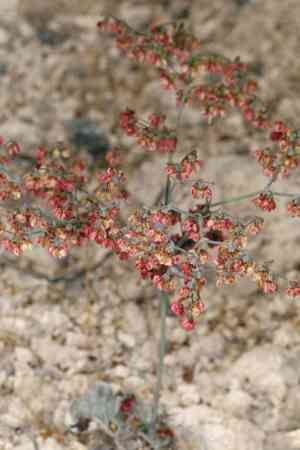
Hooker's buckwheat (Eriogonum hookeri)
Also known as: Hooker's Buckwheat, Hooker's Wild Buckwheat
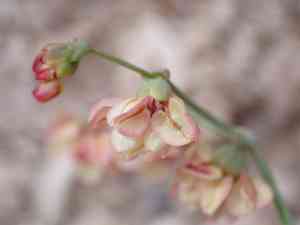
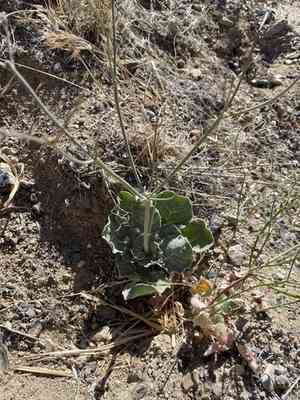
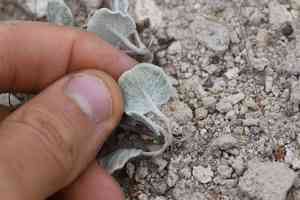
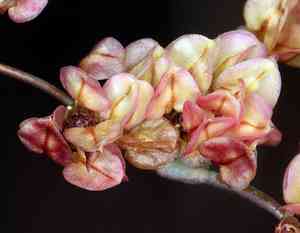
This annual herb features an upright stem that emerges from a base adorned with a cluster of round, woolly leaves. The flowering stem, which branches out, is smooth and has a waxy appearance. It extends into an inflorescence comprised of numerous small clusters of hanging flowers, which can range in color from yellow to reddish. Each flower in these clusters measures only a few millimeters across.
In This Article
Attributes of Hooker's buckwheat
Lifespan
Annual
Plant Type
Herb
Plant Height
10-30 cm
Spread
30-60 cm
Leaf Color
Grey-green
Flower Size
0.5-1 cm
Flower Color
White to pink
Images of Hooker's buckwheat
Quickly Identify Hooker's buckwheat
1
Eriogonum hookeri can be identified by its small, clustered white to pink flowers, slender stems, and grey-green leaves that are often woolly or hairy. It typically grows in sandy or rocky soils.
Scientific Classification of Hooker's buckwheat
Phylum
Vascular plants
Class
Dicotyledons
Order
Caryophyllales
Family
Buckwheat
Genus
Wild Buckwheat
Species
Hooker's buckwheat
Planting and Growing of Hooker's buckwheat
Care Difficulty
Easy
Watering Schedule
Every 2 days
Sunlight Requirements
Full sun
Sunshine Duration
4-6 hours
Ideal Temperature
60-75℉
Soil Type
Potting Mix, Peat Mix
Soil pH
6.5-7.5
Fertilizer Type
Balanced
Pruning Season
Spring, Summer
Pruning Area
Branches, Leaves
Pruning Frequency
2 times a year
Repotting Season
Spring
Pot Type
Plastic, Ceramic
 How to Water Hooker's buckwheat?
Eriogonum hookeri, known for its drought tolerance, thrives on a modest watering regime. A careful approach is required; watering should be sufficient to moisten the soil without causing saturation, generally around 200 ml per session.
What are the symptoms of an underwatered Hooker's buckwheat?
›
What should I do if my Hooker's buckwheat is not getting enough water?
›
What are the symptoms of an overwatered Hooker's buckwheat?
›
How to save an overwatered Hooker's buckwheat?
›
 What Are the Sunlight Requirements for Hooker's buckwheat?
Eriogonum hookeri performs best with full day sun exposure, ideally between 6 to 8 hours daily. This condition fosters excellent growth and floral abundance, enhancing the plant's overall health and aesthetic value.
What is the optimal light for Eriogonum hookeri?
›
How can I achieve the ideal lighting?
›
What are the benefits of ideal lighting for this plant?
›
 What Is the Ideal Temperature Range for Hooker's buckwheat?
The ideal temperature range for Eriogonum hookeri cultivation is between 60°F to 75°F. This range supports optimal growth and health by providing a stable and comfortable thermal environment. Temperatures within this range promote photosynthesis and energy balance in the plant, resulting in robust development.
 What Soil is Best for Hooker's buckwheat?
Eriogonum hookeri thrives best in well-draining soil as this prevents root rot and ensures that the plant doesn’t sit in water for extended periods. Good drainage is crucial to its health, allowing the roots to breathe and absorb nutrients effectively. This plant is adapted to grow in nutrient-poor soils, reflecting its natural habitats. Such conditions help maintain its natural growth form and prevent excessive leaf growth, which could hinder flowering. While it can tolerate slight acidity, Eriogonum hookeri does well in slightly alkaline conditions. This tolerance helps it thrive in calcareous regions and maintain its vibrant bloom cycles.
 How to Fertilize Hooker's buckwheat?
When fertilizing Eriogonum hookeri, ensure to use a balanced fertilizer. For liquid fertilizers, apply at half the recommended strength to avoid over-fertilization. The plant requires only light feeding, and the amount should be carefully regulated to sustain moderate growth without causing harm.
 How to Prune Hooker's buckwheat?
Start by using sharp pruning shears to remove any dead or damaged stems at their base. Focus on encouraging a well-balanced, open center to allow for optimal air circulation and light penetration. Lightly trim back overgrown branches to maintain the plant’s natural shape and size. To encourage more blooms, pinch off spent flowers regularly. This not only prolongs the flowering period but also prevents the plant from going to seed too quickly, which can conserve the plant’s energy for continuous growth and flowering.
More About Pruning Techniques→
 How to Propagate Hooker's buckwheat plant?
1
Before sowing the seeds, prepare the soil by ensuring it is well-draining and rich in nutrients. This can include adding organic matter to improve fertility and texture.
2
Scatter the seeds evenly across the surface of the seed tray. Cover them lightly with a thin layer of soil, as excessive burial can prevent germination.
3
Ensure that the soil is kept consistently moist but not waterlogged. Use a spray bottle for gentle watering to prevent disturbing the seeds.
 How to Repot Hooker's buckwheat plant?
1
Eriogonum hookeri should be repotted when you notice roots growing out of the drainage holes, or if it becomes top-heavy. This indicates that the plant has outgrown its current container, and is a signal for a larger home. During growth spurts in spring or summer, the plant will appreciate extra room for root development.
2
Choose a pot that's one size larger than the current one. It should have adequate drainage holes to prevent waterlogging, which can lead to root rot. A terracotta pot is ideal as it allows soil to dry more thoroughly between waterings, mimicking the plant's natural habitat.
3
Select a sandy, well-draining soil mix. Eriogonum hookeri thrives in a gritty composition that closely resembles its native arid environment. Such a mix ensures excess water drains well, preventing root rot and encouraging strong root growth.
Learn More About Hooker's buckwheat Diseases
Anthracnose
Bacterial Leaf Spot
Bacterial Wilt
Crown Gall
Cyst Nematode
Damping-off
Downy Mildew
Drought Stress
Fusarium Wilt
Gray Mold
Leaf Spot
Mosaic
Nutrient Deficiency
Nutrient Toxicity
Powdery Mildew
Root Rot
Root-knot Nematode
Rusts
Sooty Mold
Spider Mites
Temperature Stress
Thrips Damage
White Mold



