How to Propagate Woolly-fruited whitlow-grass?
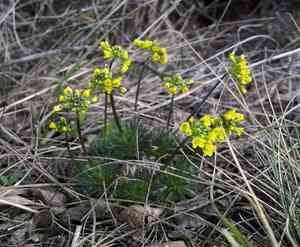
Woolly-fruited whitlow-grass flourishes optimally in porous, sandy substrate with abundant solar exposure. For effective reproduction, scatter seeds directly upon the soil's top layer, gently pressing them down without covering. Ensure steady hydration without allowing the soil to become saturated. Since it favors stony, high-altitude habitats, replicating these surroundings can boost its development. Perseverance is crucial, as sprouting might be gradual yet ultimately fulfilling.
Optimal Time for Propagating Woolly-fruited Whitlow-grass
Propagation Method
Seeding
Propagation Period
Spring
Tools Required for Woolly-fruited Whitlow-grass Propagation
Seed Trays
Seed trays are vital for initiating woolly-fruited whitlow-grass seeds within a controlled setting. Their individual compartments facilitate seedling growth, preventing crowding and ensuring each seed has ample room to sprout and develop. These trays also simplify moisture level management, which is key for successful germination.
Fine Seed Compost
A fine seed compost offers the ideal growth medium for woolly-fruited whitlow-grass, balancing moisture retention with proper drainage. Its fine texture ensures excellent seed-to-soil contact, crucial for seed germination.
Fine Sprayer
A fine sprayer is essential for irrigating woolly-fruited whitlow-grass seeds without dislodging them. The gentle mist guarantees even moisture distribution across the seed tray, promoting uniform germination and seedling development.
Seed Labels
Seed labels are important for tracking woolly-fruited whitlow-grass seeds, especially when cultivating multiple species or varieties. Clear labeling helps prevent confusion and ensures appropriate care and monitoring.
Heat Mat
Employing a heat mat can significantly boost the germination rate of woolly-fruited whitlow-grass by providing consistent soil warmth. This is particularly advantageous in cooler climates or during early spring planting.
Humidity Dome
A humidity dome positioned over the seed tray helps maintain a moist and warm environment, which is favorable for the germination of woolly-fruited whitlow-grass. This also reduces the need for frequent watering and prevents soil desiccation.
Fine Mesh Sieve
A fine mesh sieve is useful for lightly covering woolly-fruited whitlow-grass seeds with a thin layer of compost or sand. This ensures good seed-to-soil contact while protecting the seeds from being washed away during watering.
Tweezers
Tweezers are helpful for handling the small seeds of woolly-fruited whitlow-grass, allowing for precise placement in the seed tray without causing damage. This minimizes the risk of overcrowding and enhances germination outcomes.
Steps to Propagate Woolly-fruited Whitlow-grass
Propagation Difficulty
Easy
Post-Propagation Care for Your Woolly-fruited Whitlow-grass
Post-Propagation Care for Your Woolly-fruited Whitlow-grass
Once seedlings have developed several true leaves, they can be carefully moved to individual pots or directly into the garden. Ensure they are planted in well-draining soil and in locations offering partial to full sunlight. Water sparingly, allowing the soil to dry slightly between watering. Protect young plants from harsh weather and pests. With proper attention, woolly-fruited whitlow-grass will gradually establish and thrive in its new setting.
Common Errors to Avoid When Propagating Woolly-fruited Whitlow-grass
Incorrect Soil Selection
Using soil that retains too much moisture can lead to root rot. Woolly-fruited whitlow-grass prefers well-draining soil.
Excessive Watering
Too much moisture can cause fungal diseases and root rot. Woolly-fruited whitlow-grass thrives in moderately dry conditions.
Insufficient Sunlight
Lack of adequate sunlight can result in weak growth. Woolly-fruited whitlow-grass requires full sun to partial shade for optimal health.
Improper Spacing
Planting too close can hinder air circulation, promoting disease. Adequate spacing is needed to maintain healthy plants.
Advice for Propagating Woolly-fruited Whitlow-grass
Utilize Well-Draining Soil
Ensure the soil mix drains effectively to prevent root rot. A sandy or gritty mix is ideal for woolly-fruited whitlow-grass.
Moderate Watering
Water sparingly and allow the soil to dry out between watering sessions to prevent overwatering.
Provide Ample Sunlight
Place woolly-fruited whitlow-grass in an area where it will receive plenty of sunlight, preferably full sun to partial shade.
Appropriate Spacing
Space plants adequately to allow good air circulation, reducing the risk of fungal diseases.
Sanitized Tools
Always use clean and sterilized tools to prevent the spread of diseases during propagation.



