How to Propagate Desert larkspur?
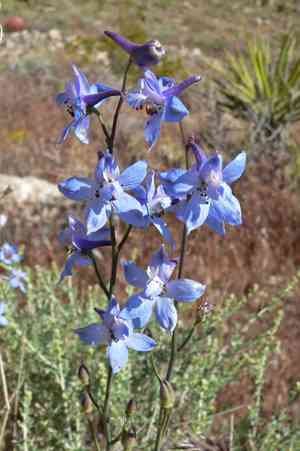
Desert larkspur, a perennial herbaceous plant, thrives in parched desert environments and is recognized for its vibrant blue to violet blossoms. Reproduce this plant by utilizing cuttings harvested from robust, established specimens. Verify that the cuttings remain hydrated and are planted in substrate that drains effectively. Optimal development occurs with ample sunlight and limited moisture, so replicating its natural surroundings will yield superior outcomes.
Optimal Period for Desert Larkspur Propagation
Propagation Method
Cutting
Propagation Period
Spring,Summer
Tools Required for Desert Larkspur Propagation
Sharp pruning shears
These are vital for making clean, precise cuts on desert larkspur, minimizing plant tissue damage, reducing disease risk, and encouraging faster root development.
Rooting hormone
Applied to the cut ends of desert larkspur cuttings. This powder or gel promotes quicker and stronger root formation, increasing propagation success rates.
Propagation trays
Offer a controlled environment for desert larkspur cuttings to root. They facilitate easy management of humidity and light, crucial for root development.
Humidity dome
Helps maintain high humidity around desert larkspur cuttings, preventing dehydration and aiding root formation. It also ensures a stable temperature for optimal growth.
Sterile potting mix
An essential growing medium for desert larkspur cuttings, providing a disease-free environment that supports healthy root development. It typically offers good drainage and aeration, vital for young roots.
Mist sprayer
Used to maintain humidity levels around desert larkspur cuttings without overwatering. Regular misting keeps leaf surfaces hydrated, reducing transplant shock and encouraging rooting.
Heat mat
Provides warmth from below to desert larkspur cuttings, stimulating root growth by maintaining an optimal and consistent soil temperature. This is especially beneficial in cooler environments.
Labeling sticks
Useful for tracking different desert larkspur cuttings. Proper labeling ensures gardeners can monitor progress and evaluate propagation technique success.
How to Propagate Desert Larkspur?
Propagation Type
Easy
Post-Propagation Care for Your Desert Larkspur
Post-Propagation Care for Your Desert Larkspur
After successful propagation, continue to water the plant moderately, ensuring the soil doesn't dry out completely. Provide full sun to partial shade and protect from extreme temperatures. Fertilize lightly during the growing season and ensure the plant is planted in well-draining soil to prevent root rot. Regularly check for pests and diseases, treating them promptly to maintain plant health.
Common Errors to Avoid When Propagating Desert Larkspur
Overwatering
This can lead to root rot and fungal infections, impeding the plant's ability to establish itself.
Insufficient sunlight
Given desert larkspur's natural habitat, a lack of adequate sunlight can hinder growth and affect blooming.
Poor soil drainage
Heavy or compacted soil can retain water, causing roots to suffocate and decay.
Wrong soil pH
Soil that is too acidic or too alkaline can limit nutrient availability, impacting plant health.
Improper planting depth
Planting seeds too deep or too shallow can result in poor germination and seedling development.
Advice for Propagating Desert Larkspur
Adequate watering
Maintain a balance by allowing the soil to dry out between waterings, preventing root rot.
Full sunlight
Ensure the planting area receives direct sunlight for most of the day to mimic natural conditions.
Well-draining soil
Use sandy or loamy soil with good drainage properties to avoid water retention issues.
Neutral to slightly alkaline soil
Opt for soil with a pH close to neutral or slightly alkaline to promote nutrient uptake.
Correct seed depth
Plant seeds at a shallow depth, ideally just beneath the surface, to enhance germination chances.



