How to Propagate Whitefoot lipfern?
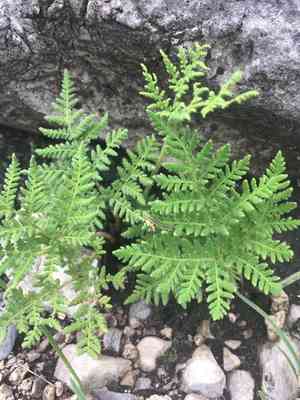
Cheilanthes feei is a resilient fern thriving in stony regions and dry climates, recognized for its appealing, delicate fronds. Effective propagation of Cheilanthes feei is accomplished via division. Gently divide the plant clusters during their initial growth phase to prevent harm to the root system and rhizomes. Confirm their placement in a porous, sandy substrate that emulates their native surroundings, and sustain steady hydration without oversaturation.
Optimal Period for Whitefoot Lipfern Propagation
Propagation Type
Division
Propagation Season
Spring,Autumn
Tools for Whitefoot Lipfern Propagation
Sharp Garden Knife
An incisive garden knife is crucial for dividing whitefoot lipfern. It's used to precisely sever the plant's root system without causing extensive harm. This ensures each segment possesses sufficient roots to support new development, vital for successful plant establishment.
Hand Fork
A hand fork is useful for gently loosening the soil around whitefoot lipfern prior to division. This implement facilitates lifting the plant from the ground without tearing rhizomes or delicate roots, thereby preserving the health of the divisions.
Root Washing Tray
A root washing tray enables cultivators to delicately cleanse soil from whitefoot lipfern roots before division. Clean roots aid in identifying optimal division points and minimize the chance of disease transmission.
Potting Mix
A well-draining potting mixture is necessary for planting whitefoot lipfern divisions. Utilizing a mix that retains adequate moisture while allowing surplus water to escape prevents root rot and fosters robust growth.
Watering Can with Fine Rose
A watering can equipped with a fine rose disperses water gently and uniformly, ensuring newly divided whitefoot lipfern plants receive sufficient moisture without dislodging soil or causing root damage.
Labeling Stakes
Labeling stakes assist in tracking whitefoot lipfern divisions and their planting dates. Proper labeling can also help monitor the progress and success rate of each division.
Rooting Hormone
While not always required, a rooting hormone can accelerate root development in whitefoot lipfern divisions. It may be particularly beneficial when dealing with more challenging or slow-to-root segments.
How to Propagate Whitefoot Lipfern?
Propagation Type
Easy
Post-Propagation Care for Whitefoot Lipfern
How to Care for Your Newly Propagated Whitefoot Lipfern?
Following propagation, whitefoot lipfern demands consistent attention to ensure establishment and vigorous growth. Water regularly without over-saturating, and maintain appropriate soil moisture. Initially provide a shaded or partially shaded environment, gradually introducing more sunlight. Monitor for pests and diseases, remove any dead fronds, and apply a balanced, slow-release fertilizer after a few weeks to encourage strong root development and vibrant foliage.
Common Errors to Avoid When Propagating Whitefoot Lipfern
Overwatering
This plant is drought-tolerant and prefers dry conditions. Excessive water can lead to root rot and fungal infections.
Improper Soil Selection
Using soil that retains too much moisture can suffocate the roots and cause mold growth.
Inadequate Light
Whitefoot lipfern requires ample sunlight. Low light conditions can result in weak, leggy growth.
Crowded Planting
Planting too many ferns in one space can restrict air circulation, promoting disease and hindering growth.
Neglect of Spore Viability
Using old or improperly stored spores can lead to low germination rates.
Tips For Propagating Whitefoot Lipfern
Use Well-Draining Soil
Choose a sandy or rocky soil mix to ensure excess moisture drains away quickly.
Water Sparingly
Allow the soil to dry out between waterings. This mimics whitefoot lipfern's natural arid environment.
Provide Bright, Indirect Light
Place whitefoot lipfern in a spot with plenty of indirect sunlight to encourage healthy growth.
Avoid Overcrowding
Space out plants properly to maintain good air circulation and reduce the risk of disease.
Use Fresh Spores
Collect and use fresh spores for better germination rates. Store them properly if not used immediately.



