How to Propagate Cobwebby indian paintbrush?
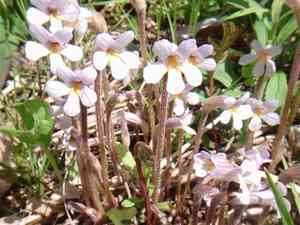
Castilleja linariifolia, a perennial herb, is recognized for its vivid, brightly colored bracts. When multiplying Castilleja linariifolia, planting seeds proves to be an efficient method. To achieve the best results, prepare soil that drains effectively and confirm that the seeds are only lightly covered. Maintain consistent soil moisture without over-saturating it. Seed sprouting can be improved by cold-stratifying the seeds for a short duration prior to planting. Adequate air movement assists in averting fungal problems.
Optimal Time for Cobwebby Indian Paintbrush Propagation
Propagation Method
Seeding
Propagation Period
Spring
Tools for Cobwebby Indian Paintbrush Propagation
Seed Trays
Seed trays offer a controlled setting for planting cobwebby indian paintbrush seeds, ensuring proper spacing and easy monitoring.
Seed Compost
Utilizing a premium, well-draining seed compost supplies vital nutrients and an ideal growth medium for the delicate cobwebby indian paintbrush seeds.
Humidity Dome
A humidity dome maintains the required moisture levels to promote germination and prevent seed desiccation.
Labeling Stakes
Labels help track planting dates and specific varieties or batches of cobwebby indian paintbrush, aiding in better germination progress observation.
Misting Bottle
A misting bottle allows for gentle irrigation of seeds without dislodging them, ensuring uniform moisture distribution in the seed tray.
Heat Mat
A heat mat provides consistent warmth to the seed tray, encouraging quicker and more even germination, particularly in cooler climates where soil temperature might be insufficient.
Seed Dibber
A seed dibber assists in creating uniform planting holes for cobwebby indian paintbrush seeds, ensuring consistent planting depth and spacing, which is vital for even germination.
Grow Lights
Grow lights ensure cobwebby indian paintbrush seedlings receive adequate light if natural sunlight is insufficient, supporting robust, healthy development.
How to Propagate Cobwebby Indian Paintbrush?
Propagation Difficulty
Simple
Caring for Newly Propagated Cobwebby Indian Paintbrush
Caring for Newly Propagated Cobwebby Indian Paintbrush
After propagation, gradually acclimate cobwebby indian paintbrush to outdoor conditions by slowly increasing sun exposure over several days. Plant in a well-draining location with partial to full sunlight. Maintain moderate watering, allowing the soil to dry slightly between sessions to prevent root rot. Regularly check for pests and diseases, and consider mulching to help retain soil moisture and suppress weeds. Fertilize sparingly with a balanced fertilizer, as cobwebby indian paintbrush typically thrives with minimal nutrient input.
Common Propagation Errors for Cobwebby Indian Paintbrush
Overwatering
This plant prefers well-drained soil and can suffer from root rot if consistently given too much water.
Incorrect Soil Type
Using overly rich soil can impede cobwebby indian paintbrush's growth, as it prefers leaner, sandier soil.
Ignoring Host Plants
Cobwebby indian paintbrush is often hemiparasitic and relies on proximity to suitable host plants for nutrients.
Direct Sunlight Exposure
While cobwebby indian paintbrush needs light, excessive direct sunlight can cause stress or scorching, especially in its early growth stages.
Tips for Propagating Cobwebby Indian Paintbrush
Well-Drained Soil
Ensure soil drains well to prevent waterlogging and root rot.
Proper Soil Composition
Use sandy or gritty soil that mimics cobwebby indian paintbrush's natural environment.
Host Plants
Plant cobwebby indian paintbrush near compatible host plants like grasses or another suitable choice to provide essential nutrients.
Light Management
Provide bright but indirect sunlight during early growth stages to avoid plant stress.



