How to Propagate Nuttall's toothwort?
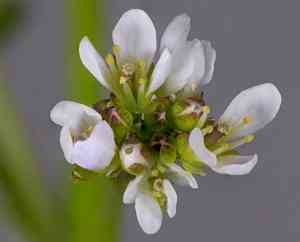
Cardamine nuttallii is a perennial herb from the mustard family, valued for its subtle, white to light pink blossoms. To propagate, plant seeds in a substrate that drains well, is cool, and retains moisture. Sprouting can be facilitated by gently covering the seeds with earth and ensuring they remain continuously damp. This particular variety thrives in areas with full or partial shade.
Optimal Time for Nuttall's Toothwort Propagation
Propagation Method
Seeding
Propagation Period
Spring
Tools for Nuttall's Toothwort Propagation
Seed Trays
Seed trays are crucial for sowing nuttall's toothwort seeds, offering a controlled environment for sprouting. Their individual sections separate seedlings, reducing competition for nutrients and space.
Seed Starting Mix
A seed starting mix is essential for sowing nuttall's toothwort seeds. This blend is typically sterile and fine, ensuring good drainage and aeration, vital for seed germination and seedling growth.
Misting Bottle
A misting bottle is used to maintain consistent moisture in the seed starting mix without over-saturating it. Gentle misting prevents disturbing the tiny seeds and delicate nuttall's toothwort seedlings.
Heating Mat
A heating mat can be used to maintain a steady, warm temperature, which benefits the germination of nuttall's toothwort seeds. Consistent warmth speeds up germination and promotes uniform growth.
Humidity Dome
A humidity dome helps maintain high humidity levels around nuttall's toothwort seedlings, crucial during early growth stages. It reduces water loss and stress, leading to healthier young plants.
Labels and Waterproof Markers
Labels and waterproof markers are vital for tracking different seed varieties being sown. Accurate labeling ensures nuttall's toothwort seedlings are correctly identified and properly cared for.
Fine Mesh Sieve
Using a fine mesh sieve to cover sown seeds with a thin layer of fine soil or vermiculite ensures tiny nuttall's toothwort seeds aren't buried too deep, aiding better germination rates.
Soft-Tip Tweezers
Soft-tip tweezers help handle nuttall's toothwort seeds gently without damage. They are especially useful for very small seeds or fragile seedlings.
How to Propagate Nuttall's Toothwort?
Propagation Type
Simple
Caring for Your Newly Propagated Nuttall's Toothwort
Caring for Your Newly Propagated Nuttall's Toothwort
After sprouting, nuttall's toothwort seedlings should be gradually acclimated to outdoor conditions before transplanting. Keep them in a shaded area, slowly exposing them to more light. Plant them in a spot with well-draining soil and partial to full shade, mimicking their natural woodland habitat. Continue to keep the soil moist and apply a mulch layer to help retain moisture.
Common Mistakes to Avoid When Propagating Nuttall's Toothwort
Incorrect soil conditions
Using soil that is too compact or lacks proper drainage can lead to root rot or poor root development.
Excessive watering
Overwatering can cause roots to become waterlogged and decay, severely impeding growth.
Neglecting seed stratification
Failure to stratify seeds can result in low germination rates as the seeds require a cold period to break dormancy.
Ignoring spacing requirements
Overcrowding plants can lead to competition for resources, resulting in weak growth and increased disease susceptibility.
Tips For Propagating Nuttall's Toothwort
Well-drained soil
Ensure the soil drains well to prevent root rot and encourage healthy root development.
Moderate watering
Water sparingly but consistently to keep the soil moist without becoming waterlogged.
Seed stratification
Stratify seeds by exposing them to a cold period before planting to improve germination rates.
Proper spacing
Plant seeds or transplants with adequate spacing to ensure each plant has sufficient access to light, nutrients, and air circulation.



