How to Propagate Baker's stickyseed?
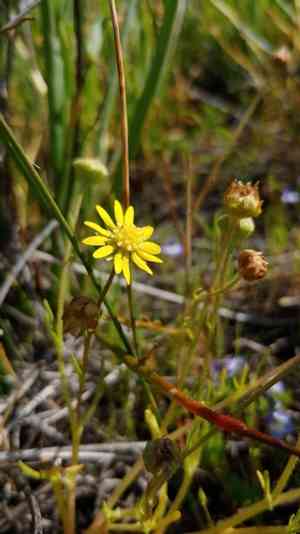
Baker's stickyseed, a species within the Asteraceae family, flourishes in damp grasslands and seasonal wetland environments. For propagation, direct seeding into well-draining, sandy or clay-loam substrates that are known to sustain indigenous plant life is recommended. Maintain adequate hydration without oversaturation. Gently embed the seeds onto the soil's top layer, as they require illumination for successful sprouting. Always acquire seeds responsibly to safeguard natural populations.
When Is the Best Time to Propagate Baker's Stickyseed?
Propagation Type
Sowing
Propagation Season
Spring
What Tools Are Used in Baker's Stickyseed Propagation?
Seed Trays
Seed trays offer a controlled setting for planting baker's stickyseed seeds, keeping them organized and separate. Their divided design aids in tracking germination rates and simplifies transplanting once seedlings are strong enough.
Fine Seed Starting Mix
A fine seed starting mix creates ideal conditions for baker's stickyseed seeds, providing good air circulation and moisture retention without compaction. This is vital for small seeds, which require a light yet consistent moisture source for proper germination.
Humidity Dome
A humidity dome is crucial for maintaining appropriate moisture levels around seedlings. This tool establishes a microclimate that prevents the delicate baker's stickyseed seedlings from drying out, encouraging robust and steady development.
Spray Bottle
A spray bottle delivers a gentle mist of water, preventing disturbance to baker's stickyseed seeds and seedlings. This minimizes the risk of washing away seeds or harming fragile roots, ensuring consistent moisture levels.
Heating Mat
Heating mats can provide steady warmth from below, which is especially helpful for encouraging faster germination in baker's stickyseed. This tool ensures the soil stays at an ideal temperature, increasing the likelihood of successful seedling growth.
Labeling Stakes
Labeling stakes are essential for tracking different baker's stickyseed seedlings, particularly in a shared or varied propagation setup. Accurate labeling assists in monitoring progress and precisely planning subsequent care activities.
Planting Dibber
A planting dibber helps create precise holes for sowing baker's stickyseed seeds at the correct depth. This tool ensures seeds are not planted too deep or too shallow, which is critical for their germination success.
Fine Sieve
A fine sieve is used to cover baker's stickyseed seeds with a thin layer of soil or vermiculite after sowing. This protects the seeds without burying them too deeply, maintaining the right conditions for light and moisture during germination.
How to Propagate Baker's Stickyseed?
Propagation Type
Simple
How to Care for Your Newly Propagated Baker's Stickyseed?
How to Care for Your Newly Propagated Baker's Stickyseed?
Once baker's stickyseed seedlings are established, gradually expose them to more sunlight. Carefully transplant them into larger containers or directly into the garden, ensuring they are in well-draining soil with ample space to prevent crowding. Water moderately, allowing the soil to dry slightly between waterings. Monitor for pests and ensure good air circulation around the plants to reduce fungal infection risks. Fertilize lightly with a balanced, slow-release fertilizer as needed to support healthy growth.
Common Mistakes to Avoid When Propagating Baker's Stickyseed
Overwatering
Excessive moisture can lead to root rot and fungal diseases, which can be fatal to baker's stickyseed.
Inadequate Lighting
Insufficient light can impede photosynthesis, resulting in poor growth and propagation failure.
Improper Soil Mix
Using soil that lacks proper drainage can cause waterlogging, negatively impacting root health.
Neglecting Temperature
Extreme temperatures can stress the plant, leading to weak or unsuccessful propagation.
Ignoring Pest Control
Pests can harm young plants or seeds, reducing propagation success.
Tips For Propagating Baker's Stickyseed
Moisture Management
Ensure well-draining soil to prevent water accumulation around the roots. Water moderately to keep the soil slightly moist.
Optimal Lighting
Place baker's stickyseed in a location with sufficient indirect sunlight to promote healthy growth.
Suitable Soil Mix
Use a soil mix that includes organic matter and sand to improve drainage.
Stable Temperature
Maintain a consistent temperature range to provide a conducive environment for growth.
Regular Monitoring
Keep an eye out for pests and diseases, and take timely action to address any issues.



