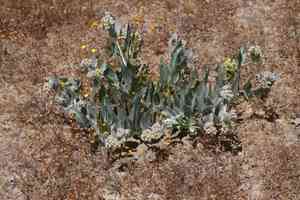
The Parish's woolly milkweed Plant Advantage: Maximizing Home and Office Appeal and Wellness
1
This botanical specimen offers substantial benefits to local pollinators, particularly bees and butterflies.
2
It flourishes in dry, sandy ground and is an ideal selection for water-wise landscapes.
3
The flora contributes significantly to preserving ecological diversity within its natural environments.
What Makes Parish's woolly milkweed an Ecological Powerhouse?
A Keystone Species for Pollinators
Parish's woolly milkweed is a vital plant for various pollinators, including monarch butterflies and diverse bee species. The plant's distinct flower structure offers a rich nectar source, crucial for these pollinators' survival and reproduction. As many insect populations decline due to habitat loss and pesticide use, Parish's woolly milkweed provides a sanctuary and a reliable food source, playing a key role in the ecological network.
Supporting Native Biodiversity
By fostering the growth of Parish's woolly milkweed, gardeners and ecologists help preserve native biodiversity. This plant often acts as a host for specific insect species, creating a micro-ecosystem wherever it's planted. The presence of Parish's woolly milkweed can also help control invasive species, which frequently outcompete native plants and disrupt local ecosystems. Thus, adding Parish's woolly milkweed to landscapes can promote a healthier, more balanced environment.
How Can Parish's woolly milkweed Enhance Your Garden?
Drought-Tolerant Landscaping
One of Parish's woolly milkweed's key attributes is its capacity to flourish in dry, sandy soils. This makes it an ideal inclusion for xeriscapes and water-wise gardens. With increasing concerns about water scarcity, particularly in arid regions, Parish's woolly milkweed's minimal water needs are a significant advantage. Gardeners can enjoy a vibrant, functional plant without extensive irrigation.
Aesthetic Appeal
Beyond its ecological advantages, Parish's woolly milkweed offers considerable visual appeal. Its fuzzy foliage and delicate blossoms add texture and color to gardens, making it an attractive choice for gardeners aiming to create dynamic landscapes. The plant's flowers draw butterflies and other pollinators, bringing movement and life to any garden setting, making it both beneficial and beautiful.
How Does Parish's woolly milkweed Contribute to Soil Health?
Enhancing Soil Structure
Parish's woolly milkweed plays a significant role in improving soil structure. Its deep root systems help break up compacted soil, increase aeration, and encourage water infiltration. This can be especially advantageous in areas with heavy, clay-like soils where drainage issues are common. By planting Parish's woolly milkweed, gardeners can naturally enhance soil conditions without relying on synthetic solutions.
Nutrient Cycling
The presence of Parish's woolly milkweed in an ecosystem aids in nutrient cycling. As the plant grows and decomposes, it adds organic matter to the soil, enriching it with vital nutrients. This organic matter serves as sustenance for beneficial soil microorganisms, which in turn help break down soil particles and release nutrients that are more readily available to other plants. This creates a sustainable cycle that boosts overall soil fertility.
Why Is Parish's woolly milkweed Important for Sustainable Landscaping?
Reducing Dependency on Irrigation
Parish's woolly milkweed is an excellent choice for sustainable landscaping practices. Its low water requirements mean it can lessen the overall reliance on irrigation systems. By incorporating Parish's woolly milkweed into landscape designs, homeowners and garden managers can significantly decrease water usage, which is both economically and environmentally beneficial.
Low Maintenance Requirements
In addition to its water-saving benefits, Parish's woolly milkweed is a low-maintenance plant. It does not require frequent fertilization or pest control, reducing the need for chemical inputs. This makes it a sustainable option for gardeners seeking to create eco-friendly landscapes with minimal effort and resources.



