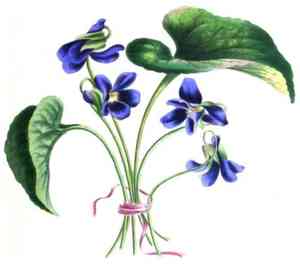
Small white violet (Viola macloskeyi)
Also known as: Macloskey's violet
The Small White Violet (Viola macloskeyi) is an ideal ground cover for gardens due to its rapid growth and spreading stolons. It thrives in wet, moist environments, necessitating similar conditions for home cultivation. Historically, the Cherokee tribe utilized this violet to repel pests in their cornfields.
In This Article
Attributes of Small white violet
Lifespan
Perennial
Plant Type
Herb
Plant Height
1.3 cm to 13 cm
Spread
10 cm to 15 cm
Leaf Color
Green
Flower Size
1-1.5 cm
Flower Color
White Purple
Images of Small white violet
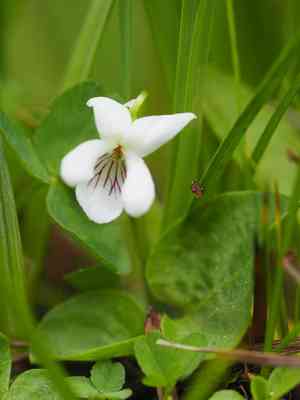
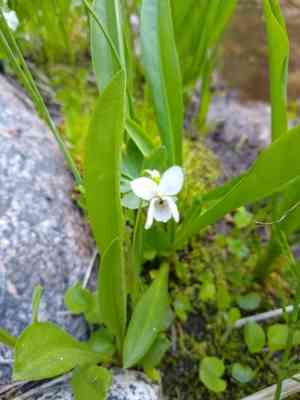
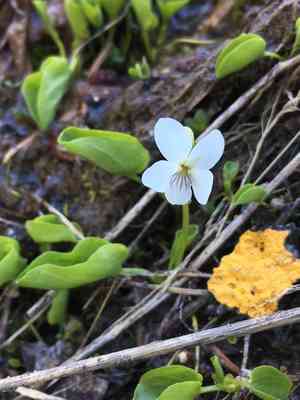
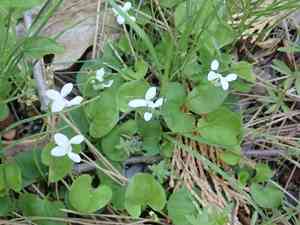
Quickly Identify Small white violet
1
Distinct white flowers with purple-striped bottom petal, emitting sweet fragrance.
2
Heart-shaped basal leaves with prominent palmate veins and finely serrated edges.
3
Short, near stemless stem with delicate green structure, less than 0.1 inch (2.5 mm) thick.
Scientific Classification of Small white violet
Phylum
Vascular plants
Class
Dicotyledons
Order
Malpighiales
Family
Violet
Genus
Violets
Species
Small white violet
Planting and Growing of Small white violet
Care Difficulty
Easy
Watering Schedule
Every 4 days
Sunlight Requirements
Full shade
Sunshine Duration
8-12 hours
Ideal Temperature
50-70℉
Soil Type
Potting Mix, Peat Mix
Soil pH
5.5-7.5
Fertilizer Type
Balanced
Pruning Season
Spring, Summer
Pruning Area
Branches, Leaves
Pruning Frequency
2 times a year
Repotting Season
Spring
Pot Type
Plastic, Ceramic
 How to Water Small white violet?
For Viola macloskeyi, it's essential to ensure the soil is consistently moist but not waterlogged. Typically, around 150 milliliters per watering session is sufficient, as it allows the moisture to reach the root zone without causing root rot or waterlogged soil conditions.
What are the symptoms of an underwatered Small white violet?
›
What should I do if my Small white violet is not getting enough water?
›
What are the symptoms of an overwatered Small white violet?
›
How to save an overwatered Small white violet?
›
 What Are the Sunlight Requirements for Small white violet?
Viola macloskeyi performs best under partial sun to full shade conditions. This range mimics its natural habitat, providing balance between light and protection. The ideal light ensures optimal growth, lush foliage, and increased flower production.
More About Sunlight Requirements Techniques→
Why does Viola macloskeyi prefer shade?
›
What can I do to ensure ideal lighting for Viola macloskeyi?
›
What benefits does ideal lighting bring to this plant?
›
 What Is the Ideal Temperature Range for Small white violet?
The ideal temperature range for Viola macloskeyi is generally between 50 to 70 degrees Fahrenheit. Within this range, the plant can perform optimal photosynthesis, thereby ensuring healthy growth and vibrant blooms. This range mimics the natural conditions in the plant's native habitat and provides a stable environment that reduces stress and maximizes nutrient uptake.
 What Soil is Best for Small white violet?
Viola macloskeyi thrives in soil that retains moisture well, as it keeps the roots cool and hydrated. This helps the plant withstand dry spells and reduces watering frequency. Rich, well-drained soil ensures a steady supply of nutrients, essential for the healthy growth and vibrant blooms of Viola macloskeyi. This supports robust plant development and resilience against diseases. Soil with good aeration is crucial for Viola macloskeyi, as it allows air to reach the roots, preventing root rot and promoting strong growth. It aids in the efficient uptake of nutrients.
 How to Fertilize Small white violet?
For Viola macloskeyi, apply a diluted liquid fertilizer at half strength, using about 1 teaspoon per gallon of water. This concentration provides ample nutrients without the risk of over-fertilization, ensuring healthy growth while minimizing any potential harm from nutrient excess.
 How to Prune Small white violet?
Begin by identifying any dead, diseased, or damaged foliage and remove these carefully with clean, sharp scissors. Next, trim back any overgrown stems to ensure even and attractive growth. Remove no more than a third of the plant at a time to prevent stress. Finally, shape the plant as desired for aesthetic purposes, focusing on retaining a natural look.
More About Pruning Techniques→
 How to Propagate Small white violet plant?
1
Collect mature seeds from the plant after the flowers have faded and seeds have dried. Ensure the seeds are clean and dry before storing or sowing them.
2
Fill the seed tray with a sterile seed starting mix. Moisten the soil lightly, ensuring it is evenly moist but not waterlogged, to promote successful germination.
3
Place the seeds on the soil surface and lightly press them into the mixture. Cover them with a thin layer of soil, roughly three times the seed diameter, and mist gently.
4
For division, water the plant thoroughly a day before, and gently remove it from its pot. Use a knife to divide the root ball into smaller sections, ensuring each has healthy roots and shoots.
5
Prepare pots with suitable potting mix, plant each division at the same depth it was growing previously, and water it thoroughly to settle the soil around the roots.
 How to Repot Small white violet plant?
1
Repotting Viola macloskeyi is necessary when you notice roots poking out of the drainage holes, or if the plant's growth has significantly slowed down. Ideally, repot during the growing seasons of spring or summer, when the plant is actively developing, ensuring a smoother transition and minimal stress.
2
Select a pot that is slightly larger than the current one, ideally one or two inches bigger in diameter. Opting for a pot with good drainage will prevent waterlogging. A slightly larger pot allows space for the roots to expand, encouraging healthier growth without overwhelming the plant.
3
A moist, well-draining soil is crucial for this delicate species. Aim for a soil mix that retains moisture but doesn't stay soggy, to mimic its natural habitat. Incorporate organic matter to improve nutrition, supporting robust plant health and vibrant flowering.
Learn More About Small white violet Diseases
Anthracnose
Bacterial Leaf Spot
Bacterial Wilt
Crown Gall
Cyst Nematode
Damping-off
Downy Mildew
Drought Stress
Fusarium Wilt
Gray Mold
Leaf Curl
Leaf Spot
Mosaic
Nutrient Deficiency
Nutrient Toxicity
Powdery Mildew
Root Rot
Root-knot Nematode
Rusts
Sooty Mold
Spider Mites
Temperature Stress
Thrips Damage
White Mold



