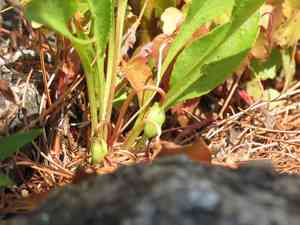
Bog white violet (Viola lanceolata)
Also known as: Water violet, Lance-leaved violet
The White Wood Aster (*Eurybia divaricata*) is a small plant native to North America. Known for its delicate white petals, it is frequently used as an ornamental plant due to its attractive appearance.
In This Article
Attributes of Bog white violet
Lifespan
Perennial
Plant Type
Herb
Plant Height
10 cm to 15 cm
Spread
15 cm
Leaf Color
Green Gray Silver
Flower Size
2.5 cm
Flower Color
White Purple Lavender
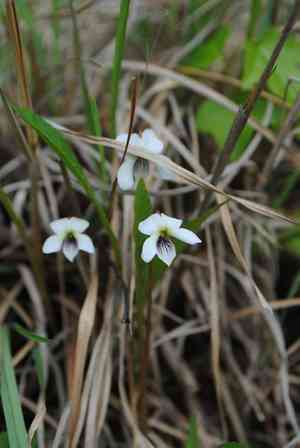
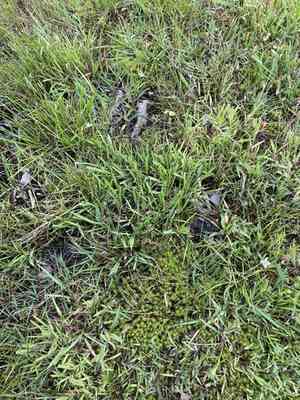
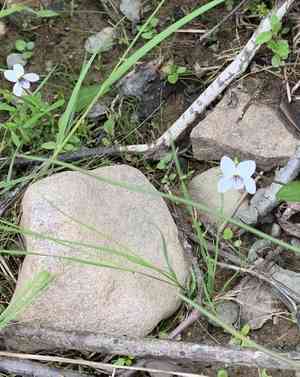
Images of Bog white violet
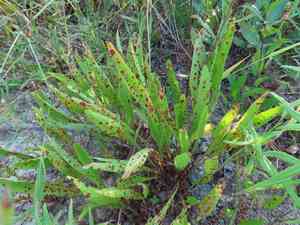
Quickly Identify Bog white violet
1
Delicate white flowers with purple veins on lower petal, 1/2 to 3/4 inches (1.3 to 1.9 cm) in diameter.
2
Smooth, reddish stem measuring 1-2 mm in thickness, lacking hairiness and branching.
3
Distinctive oblong light green fruit capsules splitting into three segments, containing small dark brown seeds.
4
Elongated heart-shaped basal leaves with smooth margins, bright green color, and visible veins.
5
Creeping growth habit with runners, reaching a height of 3 to 6 inches (7.5 to 15 cm).
Scientific Classification of Bog white violet
Phylum
Vascular plants
Class
Dicotyledons
Order
Malpighiales
Family
Violet
Genus
Violets
Species
Bog white violet
Planting and Growing of Bog white violet
Care Difficulty
Easy
Watering Schedule
Every 4 days
Sunlight Requirements
Partial sun
Sunshine Duration
6-10 hours
Ideal Temperature
60-75℉
Soil Type
Potting Mix, Peat Mix
Soil pH
4.5-6.5
Fertilizer Type
Balanced
Pruning Season
Spring, Summer
Pruning Area
Branches, Leaves
Pruning Frequency
2 times a year
Repotting Season
Spring
Pot Type
Plastic, Ceramic
 How to Water Bog white violet?
Viola lanceolata benefits from consistent moisture but dislikes being waterlogged. Watering should adhere to the principle of keeping the soil evenly moist yet not soaked. A thorough watering, ensuring the soil absorbs but no excessive runoff occurs, is ideal.
What are the symptoms of an underwatered Bog white violet?
›
What should I do if my Bog white violet is not getting enough water?
›
What are the symptoms of an overwatered Bog white violet?
›
How to save an overwatered Bog white violet?
›
 What Are the Sunlight Requirements for Bog white violet?
Partial sunlight with 4-6 hours of exposure daily ensures that Viola lanceolata thrives. These light conditions support photosynthesis, improving growth and flowering capacity while minimizing stress injuries from excessive light.
More About Sunlight Requirements Techniques→
What is the best type of lighting for Viola lanceolata?
›
How can I achieve the best lighting conditions?
›
What are the benefits of ideal light conditions for my plant?
›
 What Is the Ideal Temperature Range for Bog white violet?
For optimal growth, Viola lanceolata thrives in temperatures ranging from 60 to 75°F. This range ensures the plant receives adequate warmth without excessive heat, promoting healthy leaf production and flowering. Maintaining this range helps to replicate its native habitat conditions.
 What Soil is Best for Bog white violet?
Viola lanceolata thrives in soils that can retain moisture without becoming waterlogged. This characteristic enables the plant to maintain hydration levels essential for its growth and blooming, especially in warmer climates. The presence of a rich mixture of organic matter in the soil promotes the healthy growth of Viola lanceolata. Nutrient-rich soils support vibrant foliage and prolific flowering by providing the necessary minerals and nutrients. Good drainage is vital for Viola lanceolata to prevent root rot and other fungal diseases. Properly drained soil ensures that excess water does not build up around the roots, keeping them healthy and functional.
 How to Fertilize Bog white violet?
For Viola lanceolata, a delicate touch is essential when it comes to fertilization. Use a balanced liquid fertilizer at half strength once every two weeks during its growing season. Solid fertilizer should be applied sparingly, just once every four months, using a slow-release formula. Overfeeding this plant can lead to foliage damage and poor bloom production.
 How to Prune Bog white violet?
Use a pair of sharp, clean scissors or pruning shears to ensure precise cuts on Viola lanceolata. Ensure that your tools are sanitized before each use to prevent the spread of disease across plants. This step is critical for maintaining the overall health and aesthetic of your plant collection. Begin the pruning process by cutting away any dead or discolored leaves. This first step clears away potential disease carriers and makes spotting healthy growth easier. Always cut at the leaf base to minimize the chances of pests or infections entering through the cut site. Trim your Viola lanceolata to maintain a balanced and visually appealing shape. This often involves cutting back longer stems to encourage even growth. By maintaining control over the plant's size and shape, you aid ventilation and light penetration, crucial factors for a thriving plant.
More About Pruning Techniques→
 How to Propagate Bog white violet plant?
1
Fill the seed tray with a high-quality potting mix. Moisten the soil before sowing the seeds to provide the optimal environment for germination.
2
Evenly distribute the seeds over the soil surface. Lightly cover with a thin layer of soil, ensuring the seeds have light exposure for better germination.
3
Carefully dig out the plant and gently separate the root ball into sections, ensuring each section has sufficient roots. Replant immediately in appropriately prepared soil.
 How to Repot Bog white violet plant?
1
Viola lanceolata should be repotted when you notice roots growing out of the drainage holes, indicating that the plant is root-bound. Another sign is the soil drying out more quickly than usual, suggesting the plant needs a larger space to thrive. Repotting during its active growth season in spring or summer is ideal, as this allows the plant to recover more swiftly.
2
Select a pot that is one size larger than the current one to give Viola lanceolata ample room to grow. The pot should have adequate drainage holes to prevent waterlogging, which can lead to root rot. A ceramic or clay pot can help manage excess moisture due to its porous nature, promoting a healthier root environment.
3
Opt for a light, well-draining compost that retains enough moisture to keep the roots hydrated without becoming soggy. A mix containing peat moss, perlite, and vermiculite can provide the necessary aeration and drainage. This ensures the roots receive adequate oxygen, which is crucial for vigorous growth.



