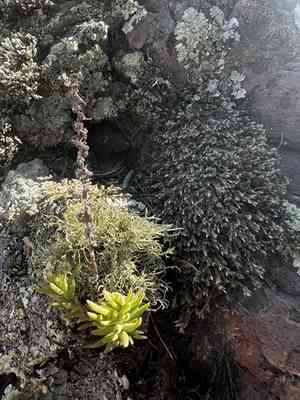
Rat's-tail succulent (Villadia squamulosa)
Also known as: None
The rat's-tail succulent, characterized by its dense, rosette-forming fleshy leaves, flourishes in dry, rocky settings. This hardy plant is well-adapted to arid conditions, storing water in its thick leaves to endure periods of drought. Occasionally, it produces soft-hued flowers that not only add a touch of beauty but also attract pollinators. The rat's-tail succulent is a prime example of a plant thriving in tough, challenging environments.
In This Article
Attributes of Rat's-tail succulent
Lifespan
Perennial
Plant Type
Herb
Plant Height
0 mm to 30 cm
Spread
Approximately 5 cm
Leaf Color
Green with potential reddish hues
Flower Size
Small, around 1 cm
Flower Color
White or pink
Images of Rat's-tail succulent
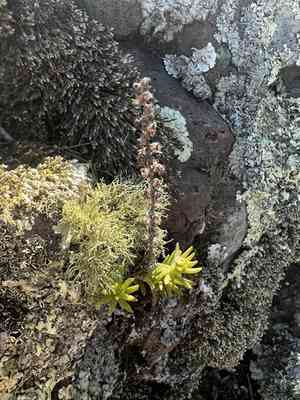
Quickly Identify Rat's-tail succulent
1
Villadia squamulosa can be identified by its small, densely packed rosettes of fleshy leaves, which may have a reddish tinge. The leaves are typically lance-shaped and may have a scale-like appearance.
Scientific Classification of Rat's-tail succulent
Phylum
Vascular plants
Class
Dicotyledons
Order
Saxifragales
Family
Stonecrop
Genus
Villadia
Species
Rat's-tail succulent
Planting and Growing of Rat's-tail succulent
Care Difficulty
Easy
Watering Schedule
Every day
Sunlight Requirements
Full sun
Sunshine Duration
4-8 hours
Ideal Temperature
65-75℉
Soil Type
Potting Mix, Peat Mix
Soil pH
6.5-7.5
Fertilizer Type
Balanced
Pruning Season
Spring, Summer
Pruning Area
Branches, Leaves
Pruning Frequency
2 times a year
Repotting Season
Spring
Pot Type
Plastic, Ceramic
 How to Water Rat's-tail succulent?
When watering Villadia squamulosa, ensure the soil is moist without being soggy. A light watering of about 50 ml allows for slow absorption into the root system. Water deeply but wait for the soil to fully dry out before the next watering, preventing root rot.
What are the symptoms of an underwatered Rat's-tail succulent?
›
What should I do if my Rat's-tail succulent is not getting enough water?
›
What are the symptoms of an overwatered Rat's-tail succulent?
›
How to save an overwatered Rat's-tail succulent?
›
 What Are the Sunlight Requirements for Rat's-tail succulent?
Villadia squamulosa ideally requires full to partial sun, contributing to effective photosynthesis and vibrant foliage. Ample light fosters healthier growth habits.
Question: How much sun does Villadia squamulosa need?
›
Question: What is the best way to position Villadia squamulosa for optimal light?
›
Question: What benefits does ideal light provide to Villadia squamulosa?
›
 What Is the Ideal Temperature Range for Rat's-tail succulent?
The ideal temperature range for Villadia squamulosa is between 65°F and 75°F. This range supports optimal growth and overall plant health by closely mimicking its natural habitat conditions. Providing consistent care within this range ensures the plant's metabolic processes function at their best, aiding in nutrient uptake and moisture balance.
 What Soil is Best for Rat's-tail succulent?
Villadia squamulosa thrives in well-drained soil that prevents root rot and ensures healthy growth. Adequate drainage allows for necessary air exchange and reduces waterlogging. This plant benefits from a nutrient-rich soil to provide essential minerals that support vigorous growth and vibrant foliage. A balanced supply of nutrients boosts the plant's resilience. While not waterlogged, the soil should retain some moisture to supply the plant during dry spells. This balance helps maintain the plant's hydration status without drowning it.
 How to Fertilize Rat's-tail succulent?
For Villadia squamulosa, moderation is key. Apply a diluted, balanced liquid fertilizer at half the standard strength. When using slow-release granules, aim for about 1/4 to 1/2 teaspoon per plant each application.
 How to Prune Rat's-tail succulent?
To prune Villadia squamulosa, first sterilize your scissors or pruning tools to prevent disease. Focus on removing any leggy, damaged or dead stems. Trim back stems to maintain a bushy shape. Make your cuts just above a leaf node to encourage branching. Always aim for a well-balanced appearance, ensuring each cut helps shape the plant towards its natural form.
 How to Propagate Rat's-tail succulent plant?
1
Select healthy, disease-free plants to gather cuttings. Use pruning shears to cut 4-6 inch segments of vegetative growth without flowers and remove the lower leaves before planting the cutting in soil.
2
Prepare a well-draining soil mix by combining sand and perlite. This mix keeps moisture levels just right, avoiding waterlogging and providing optimal conditions for root growth.
3
Dip the end of the cutting into rooting hormone before planting it an inch deep in the prepared soil mix. Ensure it is placed vertically and is stable for effective root development.
 How to Repot Rat's-tail succulent plant?
1
Repotting Villadia squamulosa is best done when the plant outgrows its current pot, particularly if roots are visible through drainage holes or the plant looks top-heavy. These signs typically indicate that it needs more space to continue thriving.
2
Select a pot that is slightly larger than the current one, with ample drainage holes. A terracotta pot is ideal as it allows excess moisture to evaporate, reducing the risk of root rot, which is crucial for this succulent species.
3
Opt for a well-draining, gritty soil mix designed for succulents. This type of soil prevents water from saturating the roots, mimicking the plant's natural environment and promoting its healthy growth.



