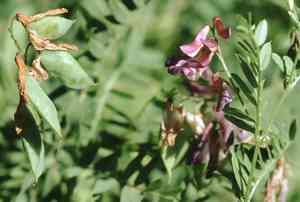
Upright vetch (Vicia orobus)
Also known as: Bitter vetch
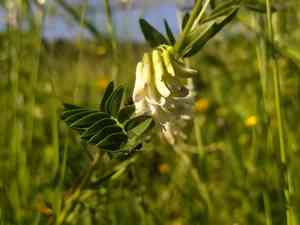
Upright vetch is a perennial herb commonly located in upland areas such as sloping meadows, cliff edges, and alongside stream banks. It is characterized by its tall, self-supporting growth and distinctive drooping flowers with purple veins that blossom throughout the summer. This plant notably lacks tendrils, which differentiates it from some other vetch species.
In This Article
Attributes of Upright vetch
Lifespan
Perennial
Plant Type
Herb
Plant Height
Around 30-60 cm
Spread
N/A
Leaf Color
Green
Flower Size
Approximately 1-2 cm
Flower Color
White Pink Purple
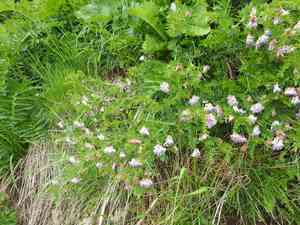
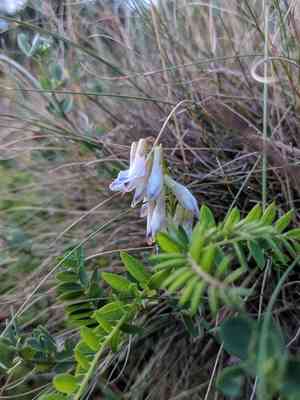
Images of Upright vetch
Quickly Identify Upright vetch
1
To identify Vicia orobus, look for its climbing stems that can reach up to 60 cm in length. The plant has pinnate leaves with multiple pairs of leaflets and terminal tendrils. Its flowers are pea-like, usually purple or violet, and bloom in clusters.
Scientific Classification of Upright vetch
Phylum
Vascular plants
Class
Dicotyledons
Order
Fabales
Family
Legume
Genus
Vetches
Species
Upright vetch
Planting and Growing of Upright vetch
Care Difficulty
Easy
Watering Schedule
Every 4 days
Sunlight Requirements
Partial sun
Sunshine Duration
4-6 hours
Ideal Temperature
60-75℉
Soil Type
Potting Mix, Peat Mix
Soil pH
6.5-7.5
Fertilizer Type
Balanced
Pruning Season
Spring, Summer
Pruning Area
Branches, Leaves
Pruning Frequency
2 times a year
Repotting Season
Spring
Pot Type
Plastic, Ceramic
 How to Water Upright vetch?
For Vicia orobus, the watering amount should be around 200 ml each time. This ensures the plant gets enough moisture without becoming waterlogged. The soil should be moist to the touch but not soggy. Always check that excess water can drain away to avoid root rot.
What are the symptoms of an underwatered Upright vetch?
›
What should I do if my Upright vetch is not getting enough water?
›
What are the symptoms of an overwatered Upright vetch?
›
How to save an overwatered Upright vetch?
›
 What Are the Sunlight Requirements for Upright vetch?
Vicia orobus thrives best in partial sun, benefiting from both morning and late afternoon sunlight. This balanced light exposure supports photosynthesis and overall plant health, aiding in vibrant foliage and flower development.
More About Sunlight Requirements Techniques→
How much light does Vicia orobus need?
›
How to achieve ideal lighting for Vicia orobus?
›
What are the benefits of ideal lighting for Vicia orobus?
›
 What Is the Ideal Temperature Range for Upright vetch?
What is the ideal temperature range for Vicia orobus? The ideal temperature range for Vicia orobus is between 60°F and 75°F. In this range, the plant efficiently carries out photosynthesis, maintains optimal metabolism, and demonstrates healthy growth and blooming patterns. Keeping the environment within this temperature range ensures that the plant can thrive without the risk of temperature-related stress or damage.
 What Soil is Best for Upright vetch?
Vicia orobus thrives in well-draining soil, which prevents water from collecting around the roots and causing rotting. This improves root health and promotes robust plant growth, essential for this species to flourish. This plant prefers fertile soil rich in organic matter. The presence of nutrients encourages better flowering and a denser foliage, contributing to a more vigorous and attractive plant overall. A neutral pH soil ensures that essential nutrients are readily available for Vicia orobus, improving nutrient uptake and hence promoting optimal plant health and resistance to diseases.
 How to Fertilize Upright vetch?
For Vicia orobus, use a balanced liquid fertilizer diluted to half strength once per application. This ensures the plant receives adequate nutrients without overwhelming it. Use approximately 150-200 mL of this solution per plant, ensuring even distribution around the root zone.
 How to Prune Upright vetch?
Begin by inspecting the plant for any dead, damaged, or crossing branches. Start trimming these away with your pruning shears. Focus on cutting just above a leaf node to encourage new growth. As you prune, maintain the natural shape of the plant, ensuring it doesn't become overly dense in the center, which could restrict airflow. As you prune, check for signs of pests or diseases such as discolored leaves or unusual growths. Early detection and removal of affected parts can prevent widespread problems in your plant.
More About Pruning Techniques→
 How to Propagate Upright vetch plant?
1
Fill a seed tray with sterile potting soil, ensuring it's evenly spread. Lightly water the soil to moisten it but avoid it becoming soggy. This prepares a suitable foundation for seeds to germinate.
2
Sow Vicia orobus seeds on the surface of the prepared soil, spacing them to allow room for growth. Cover the seeds with a thin layer of soil. It's important to label your trays to keep track of different species.
3
Place the seed tray in a warm, well-lit area. Regularly check soil moisture and mist as needed to keep it moist but not wet. Maintain consistent temperatures around 18-22°C for best germination results.
 How to Repot Upright vetch plant?
1
Vicia orobus needs repotting when you notice the roots are circling the pot or emerging through drainage holes, a clear signal it’s time for a larger home. This typically happens during its active growth periods in spring or autumn.
2
Opt for a pot that's just a few inches larger in diameter than the current one to avoid excessive soil moisture. Terracotta pots provide excellent breathability which benefits root health by preventing waterlogging and promoting sturdier root systems.
3
Choose a loamy, well-draining soil mix. This ensures that the plant maintains adequate moisture levels without becoming susceptible to root rot, allowing for proper aeration and nutrient access.
Learn More About Upright vetch Diseases
Anthracnose
Bacterial Leaf Spot
Bacterial Wilt
Crown Gall
Cyst Nematode
Damping-off
Downy Mildew
Drought Stress
Fusarium Wilt
Gray Mold
Leaf Spot
Mosaic
Nutrient Deficiency
Nutrient Toxicity
Powdery Mildew
Root Rot
Root-knot Nematode
Rusts
Sooty Mold
Spider Mites
Temperature Stress
Thrips Damage
White Mold



