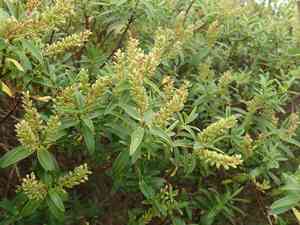
Banks peninsula hebe (Veronica strictissima)
Banks peninsula hebe is an upright perennial known for its tight clusters of small, bright blue flowers atop slender, stiff stems. This hardy species thrives in rocky, well-drained soils often found on slopes or alpine terrains, where its narrow leaves and compact growth habit reduce water loss and resist buffeting winds. Blooming in late spring through summer, banks peninsula hebe brings a splash of color to harsh landscapes.
In This Article
Attributes of Banks peninsula hebe
Lifespan
Perennial
Plant Type
Herb
Plant Height
1-2 meters
Spread
0.5-1 meters
Leaf Color
Dark green
Flower Size
1-2 cm
Flower Color
Blue, purple, or white
Images of Banks peninsula hebe
Quickly Identify Banks peninsula hebe
1
Look for the slender, upright stems and the narrow, spear-shaped leaves. The plant typically has small, tubular flowers that can be blue, purple, or white, often blooming in spike-like clusters.
Scientific Classification of Banks peninsula hebe
Phylum
Vascular plants
Class
Dicotyledons
Order
Lamiales
Family
Plantain
Genus
Speedwells
Species
Banks peninsula hebe
Planting and Growing of Banks peninsula hebe
Care Difficulty
Moderate
Watering Schedule
Every 3 days
Sunlight Requirements
Partial sun
Sunshine Duration
6-10 hours
Ideal Temperature
60-70℉
Soil Type
Potting Mix, Peat Mix
Soil pH
6.5-7.5
Fertilizer Type
Balanced
Pruning Season
Spring, Summer
Pruning Area
Branches, Leaves
Pruning Frequency
2 times a year
Repotting Season
Spring
Pot Type
Plastic, Ceramic
 How to Water Banks peninsula hebe?
For Veronica strictissima, water until the soil is evenly moist but not soggy. Ensure that the water penetrates deeply into the soil, which means approximately 200ml per watering session, enough to maintain moisture without causing waterlogging.
What are the symptoms of an underwatered Banks peninsula hebe?
›
What should I do if my Banks peninsula hebe is not getting enough water?
›
What are the symptoms of an overwatered Banks peninsula hebe?
›
How to save an overwatered Banks peninsula hebe?
›
 What Are the Sunlight Requirements for Banks peninsula hebe?
Partial sun provides balanced light exposure for Veronica strictissima, ensuring it receives adequate energy for optimal growth while avoiding the risks associated with too much sun exposure. This balance fosters healthy development and rich flowering.
Is full sun necessary?
›
How to create ideal lighting?
›
What benefits come from ideal lighting?
›
 What Is the Ideal Temperature Range for Banks peninsula hebe?
The ideal temperature range for Veronica strictissima is between 60°F and 70°F. This range offers an optimal environment for growth, allowing the plant to photosynthesize efficiently and absorb nutrients properly. Maintaining this temperature helps prevent stress and ensures maximum flowering potential.
 What Soil is Best for Banks peninsula hebe?
Veronica strictissima thrives in nutrient-rich soils that provide essential minerals for robust growth and vibrant blooms. This type of soil ensures that the plant receives all the necessary nutrients for optimal photosynthesis and development, leading to lush foliage and abundant flowering. A well-draining soil is crucial to prevent waterlogging, which Veronica strictissima is particularly sensitive to. This ensures that the roots get enough moisture without being waterlogged, reducing the risk of root rot and promoting healthier root growth and plant stability. While well-draining, the soil should still retain some moisture to provide consistency in water supply to the roots. This balance supports the plant during drier periods, ensuring steady growth without the stress of drought conditions.
 How to Fertilize Banks peninsula hebe?
For Veronica strictissima, a balanced approach to fertilization is key. It is recommended to use a balanced liquid fertilizer diluted to half strength. Apply it at a rate of approximately 1/4 cup per plant every two weeks during the growing season. For solid slow-release fertilizers, apply them in a ring around the plant, following the manufacturer's guidelines, usually at half the prescribed amount per square foot.
 How to Prune Banks peninsula hebe?
Start by examining your Veronica strictissima for any dead or wilted stems. Using sharp, clean pruning shears, cut back these stems to maintain the plant's health. Next, target any overcrowded areas, thinning them out to improve air circulation and allow light to reach all parts. This rejuvenates the plant, promoting a bushier, more attractive growth. After thinning, shape the plant to your preference, ensuring a balanced appearance. Begin pruning in early spring as new growth appears, continuing through summer until early autumn. Avoid pruning in winter when the plant is dormant. For best results, prune early in the day when the plant is less stressed from the sun. Take care to prune above a leaf node or bud to encourage new growth from where the cut is made. This helps maintain a compact shape and enhances flowering in the subsequent growing seasons.
More About Pruning Techniques→
 How to Propagate Banks peninsula hebe plant?
1
Select healthy, non-flowering shoots and make a clean cut below a node. Remove the lower leaves and dip the cut end in rooting hormone to encourage root development.
2
Prepare seed trays with a well-draining soil mix. Sow seeds lightly, covering them with a thin layer of soil. Keep the tray in a warm, well-lit area and ensure consistent moisture without waterlogging.
3
Carefully dig out the plant and gently separate the roots, ensuring each division has a good root system. Replant divisions in individual pots with fresh soil to encourage growth.
 How to Repot Banks peninsula hebe plant?
1
You should consider repotting Veronica strictissima when you notice roots growing out of the drainage holes, or when the plant appears to outgrow its current pot, showing signs of crowding or stunted growth.
2
Select a pot that is one to two inches larger in diameter than the current one. A container with ample drainage holes is ideal, helping prevent waterlogging, which can harm the roots.
3
The right soil is crucial for healthy transplanting. Opt for a well-draining potting mix that allows air circulation and retains the right amount of moisture, benefiting root growth and preventing fungal infections.



