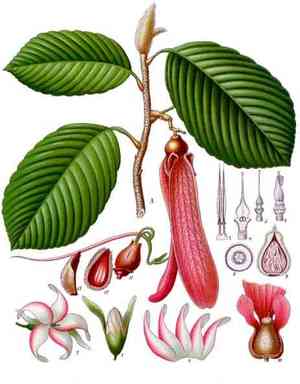
Vatica mangachapoi (Vatica mangachapoi)
Also known as: Synonym Vatica souletiana, Vatica waltonii
Vatica mangachapoi, a tall and slender tree, is classified as endangered largely due to extensive exploitation for its valuable wood. The demand for its timber, commonly used in construction, has led to a significant decline in its population. This overharvesting, coupled with the destruction of its natural habitat, has placed the species at serious risk, necessitating its inclusion on the endangered species list.
In This Article
Attributes of Vatica mangachapoi
Lifespan
Perennial
Plant Type
Tree
Plant Height
7 m to 25 m
Spread
3 cm to 5 cm
Leaf Color
Dark green
Flower Size
4 cm to 8 cm
Flower Color
White
Images of Vatica mangachapoi
Quickly Identify Vatica mangachapoi
1
Identify Vatica mangachapoi by its dark, ridged bark, large leathery leaves that are oval-shaped, and its small yellow to white flowers that grow in clusters. The fruit is a nut-like capsule.
Scientific Classification of Vatica mangachapoi
Phylum
Vascular plants
Class
Dicotyledons
Order
Mallows, rock-roses, and allies
Family
Meranti
Genus
Vatica
Species
Vatica mangachapoi
Planting and Growing of Vatica mangachapoi
Care Difficulty
Hard
Watering Schedule
Every 4 days
Sunlight Requirements
Partial sun
Sunshine Duration
6-10 hours
Ideal Temperature
75-86℉
Soil Type
Potting Mix, Peat Mix
Soil pH
5.5-7
Fertilizer Type
Balanced
Pruning Season
Spring, Summer
Pruning Area
Branches, Leaves
Pruning Frequency
2 times a year
Repotting Season
Spring
Pot Type
Plastic, Ceramic
 How to Water Vatica mangachapoi?
Vatica mangachapoi benefits from a watering routine that ensures the soil is thoroughly moist, but not soggy. Aim for about 500 milliliters per watering session to maintain optimal soil moisture, ensuring the water penetrates deeply enough to reach the roots without creating waterlogged conditions that can lead to root rot.
What are the symptoms of an underwatered Vatica mangachapoi?
›
What should I do if my Vatica mangachapoi is not getting enough water?
›
What are the symptoms of an overwatered Vatica mangachapoi?
›
How to save an overwatered Vatica mangachapoi?
›
 What Are the Sunlight Requirements for Vatica mangachapoi?
Vatica mangachapoi thrives in partial to full sun environments. The ideal light range significantly contributes to its photosynthetic efficiency, promoting vibrant foliage and robust flowering throughout its life cycle.
Question: What is the optimal light intensity for Vatica mangachapoi?
›
Question: How can Vatica mangachapoi benefit from more sunlight?
›
Question: What if Vatica mangachapoi does not receive enough sunlight?
›
 What Is the Ideal Temperature Range for Vatica mangachapoi?
Vatica mangachapoi flourishes best in environments where the temperature remains between 75 and 86 degrees Fahrenheit. In this range, the plant is able to photosynthesize efficiently and grow at an optimal rate, ensuring lush foliage and healthy development. Maintaining these temperatures supports the biological processes crucial for the plant's vitality.
 What Soil is Best for Vatica mangachapoi?
Vatica mangachapoi thrives best in well-drained soil to prevent waterlogging, which can lead to root rot. Ensuring good drainage allows the plant to absorb nutrients effectively, promoting healthier growth and blossoming. Incorporating organic matter like compost or well-rotted manure enriches the soil, providing essential nutrients and improving soil structure. This organic addition enhances the plant's vigor and resilience against pests. Maintaining a balance of moisture is crucial for Vatica mangachapoi. Soils that retain some moisture without becoming swampy support steady growth. Mulching can be a great strategy to achieve this balance.
 How to Fertilize Vatica mangachapoi?
For Vatica mangachapoi, it is crucial to ensure an adequate amount of nutrients to maintain its vibrant health. Typically, for each application of liquid fertilizer, use a solution diluted to half the recommended strength to avoid burning the roots. Soil-bound nutrients should be lightly supplemented with a balanced slow-release granule; a handful is generally enough per square meter of soil once a year.
 How to Prune Vatica mangachapoi?
Start by identifying dead, damaged, or diseased branches, which should be pruned first. These branches are a drain on the plant's resources and can harbor diseases that might spread to healthier parts. Make clean cuts at a 45-degree angle just above a node or bud facing outward. This encourages new growth to expand outward and enhances the overall shape, ensuring sufficient light penetration and air circulation within the canopy. After pruning, water the Vatica mangachapoi thoroughly to help it recover. Consider applying a balanced slow-release fertilizer to encourage robust new growth and fortify the plant against potential stress from the pruning process.
More About Pruning Techniques→
 How to Propagate Vatica mangachapoi plant?
1
Choose healthy seeds and soak them in water for 24 hours to enhance germination. Select a seed tray and fill it with moist seed-starting mix.
2
Select a healthy plant and use pruning shears to cut a 6-8 inch section of the stem. Remove leaves from the lower half to prevent rot during rooting.
3
Choose compatible rootstock and scion. Carefully make matching cuts in both parts and bind them together securely. Ensure the graft union is tightly held in place as it heals.
 How to Repot Vatica mangachapoi plant?
1
Look for signals such as slowed growth, roots emerging from drainage holes, or water sitting on the surface. These indicate the plant needs more space, meaning it's time for a new pot.
2
Select a pot that is 2 inches larger in diameter than the current one. Ensure it has good drainage holes to prevent waterlogging, which can lead to root rot.
3
Opt for a well-draining mix, ideally a combination of peat, perlite, and a bit of sand. This type of soil retains enough moisture while allowing excess water to escape, reducing the risk of overwatering.
Learn More About Vatica mangachapoi Diseases
Anthracnose
Bacterial Leaf Spot
Bacterial Soft Rot
Bacterial Wilt
Black Spot
Chemical Injury
Crown Gall
Damping-off
Downy Mildew
Drought Stress
Fusarium Wilt
Gray Mold
Leaf Spot
Mosaic
Nutrient Deficiency
Nutrient Toxicity
Powdery Mildew
Root Rot
Root-knot Nematode
Rusts
Sooty Mold
Spider Mites
Temperature Stress
Thrips Damage
White Mold



