
Hillside Blueberry (Vaccinium pallidum)
Also known as: Early Lowbush Blueberry, Cyanococcus Pallidus
The Hillside Blueberry (Vaccinium pallidum) is indigenous to central and eastern North America, often found in woodlands and along roadsides. This hardy, low-maintenance perennial shrub yields an abundance of small, sweet berries that are excellent for fresh consumption or use in pies, preserves, and jams. It also serves as a vital food source for various wildlife species.
In This Article
Attributes of Hillside Blueberry
Lifespan
Perennial
Plant Type
Shrub
Plant Height
61 cm to 91 cm
Spread
60 cm to 90 cm
Leaf Color
Green Yellow Red Gold
Flower Size
2.5 cm
Flower Color
White Pink Purple
Images of Hillside Blueberry
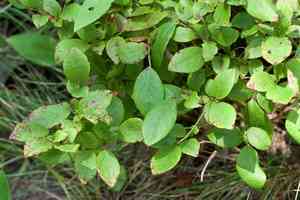
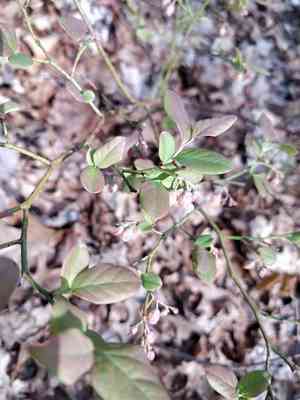
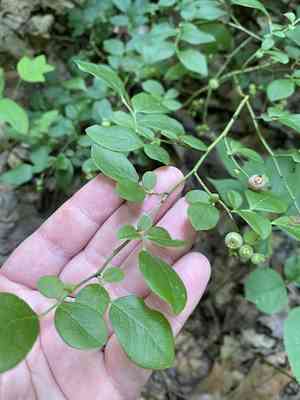
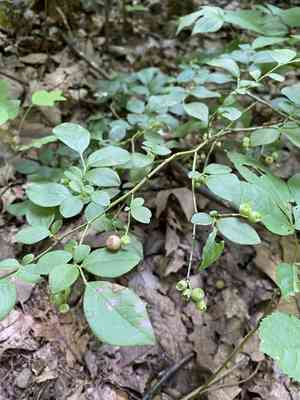
Quickly Identify Hillside Blueberry
1
Bell-shaped white flowers in tight clusters in late spring.
2
Small, sweet, blue-black berries ripening in mid-summer.
3
Smooth, yellowish-green stem with warty dots.
4
Oval leaves with serration potential, turning red in fall.
5
Slender trunk with smooth green to green-red bark.
Scientific Classification of Hillside Blueberry
Phylum
Vascular plants
Class
Dicotyledons
Order
Ericales
Family
Heath
Genus
Blueberries
Species
Hillside Blueberry
Planting and Growing of Hillside Blueberry
Care Difficulty
Easy
Watering Schedule
Every 2 days
Sunlight Requirements
Partial sun
Sunshine Duration
6-8 hours
Ideal Temperature
60-75℉
Soil Type
Potting Mix, Peat Mix
Soil pH
4-5.5
Fertilizer Type
Balanced
Pruning Season
Spring, Summer
Pruning Area
Branches, Leaves
Pruning Frequency
2 times a year
Repotting Season
Spring
Pot Type
Plastic, Ceramic
 How to Water Hillside Blueberry?
Vaccinium pallidum, commonly known as the Blue Ridge Blueberry, requires about 200 ml of water per watering session. The ideal watering strategy is to ensure the soil remains moist but not soggy, as these plants prefer consistent moisture without waterlogging.
What are the symptoms of an underwatered Hillside Blueberry?
›
What should I do if my Hillside Blueberry is not getting enough water?
›
What are the symptoms of an overwatered Hillside Blueberry?
›
How to save an overwatered Hillside Blueberry?
›
 What Are the Sunlight Requirements for Hillside Blueberry?
Partial sun exposure of 4 to 6 hours mimics its natural environment, fostering resilience in foliage and fruitful yields. It maintains the plant's natural growth rhythm.
More About Sunlight Requirements Techniques→
How to achieve ideal lighting?
›
Where to place the plant indoors?
›
Effect of ideal lighting on the plant?
›
 What Is the Ideal Temperature Range for Hillside Blueberry?
The ideal temperature range for the cultivation of Vaccinium pallidum is between 60°F and 75°F. Maintaining your plants within this range ensures optimal growth and fruiting. This range provides the right balance of warmth and coolness needed for their native environment replication.
 What Soil is Best for Hillside Blueberry?
Vaccinium pallidum thrives best in soil rich in organic matter, which ensures good drainage and provides a plethora of nutrients essential for the plant's growth and fruit production. Organic matter also helps retain moisture, which is crucial during dry periods. Good drainage is vital as it prevents waterlogging, which can suffocate roots and lead to root rot. A well-drained soil allows roots to breathe and access the necessary oxygen, leading to healthier plant growth. The plant prefers acidic soil with a pH range between 4.0 and 5.5. This acidity is crucial as it makes essential nutrients more available, supporting robust foliage and abundant fruiting, hence maximizing the plant's potential.
 How to Fertilize Hillside Blueberry?
For Vaccinium pallidum, it's important to use a balanced fertilizer with a ratio such as 10-10-10. Apply about one tablespoon of liquid fertilizer diluted in a gallon of water for young plants, and increase slightly as the plant matures, ensuring not to over-fertilize.
 How to Prune Hillside Blueberry?
Begin by identifying branches that are dead, damaged, or diseased; these should be removed first. Next, target older, thicker stems, as these can inhibit new growth. Use clean, sharp pruning shears to make cuts at a 45-degree angle to prevent water accumulation. Aim to remove around 1/4 of the oldest growth to encourage balance and light penetration throughout the plant. Finish by trimming any branches that are crossing or too dense to ensure that light reaches all parts of the bush.
More About Pruning Techniques→
 How to Propagate Hillside Blueberry plant?
1
Select a suitable seed-starting mix that is lightweight and well-draining. Fill seed trays with this mix, leaving a small space from the top to ensure they can hold water without overflowing. Water the soil lightly before planting seeds.
2
For cutting propagation, choose healthy stems that are not flowering. Using sharp pruning shears, cut a section of about 4-6 inches. Remove the leaves from the lower half of the cutting and dip the end in rooting hormone to boost root development.
3
Division is ideal during the plant’s early growth phase. Carefully dig up the plant, ensuring its roots are not damaged. Divide the root mass into smaller sections with identifiable shoots, replanting them in prepared soil immediately.
 How to Repot Hillside Blueberry plant?
1
You should consider repotting Vaccinium pallidum when you notice roots coming out of the drainage holes or the plant appears top-heavy and easily tips over. Additionally, if growth seems stunted despite proper care, it might be time to give your plant a fresh start in a new pot.
2
Select a pot that is 1-2 inches larger in diameter than the current pot. It should have ample drainage holes to prevent waterlogging, which can lead to root rot. A slightly wider pot will also provide room for the roots to spread, promoting healthier growth for your Vaccinium pallidum.
3
Choose an acidic, well-draining soil mix specifically designed for acidic-loving plants like blueberries. This mix typically includes peat moss, pine bark, and sand, which ensures proper drainage and prevents soil compaction, allowing the roots to thrive.



