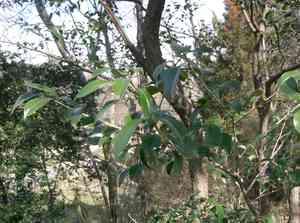
Sea bilberry (Vaccinium bracteatum)
Also known as: Chinese Bayberry, Chinese Bilberry
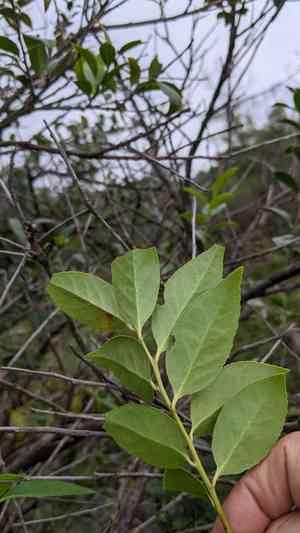
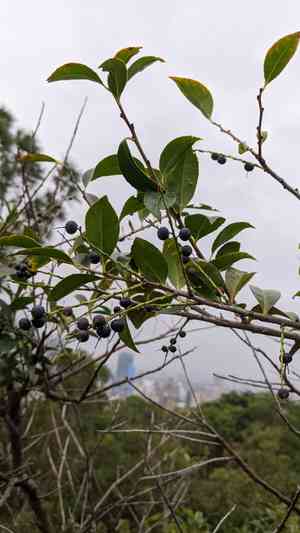
The branches start off with a delicate fuzz but later turn smooth and pale. The leaves are oval, somewhat thick, and leathery with a shiny top surface. The veins create a subtle, net-like pattern due to their slight indentation. The leaf edges are finely serrated. Around summer, white, cocoon-like flowers appear. The inflorescences typically emerge from the previous year's leaf buds, extending somewhat sideways and accompanied by numerous small leaves. The plant produces small, round berries that turn black-purple when ripe and are edible.
In This Article
Attributes of Sea bilberry
Lifespan
Perennial
Plant Type
Tree, Shrub
Plant Height
2 m to 9 m
Spread
0.5 - 2 meters
Leaf Color
Green
Flower Size
4 cm to 10 cm
Flower Color
White Pink
Images of Sea bilberry
Quickly Identify Sea bilberry
1
This plant can be identified by its leathery, evergreen leaves, which are lanceolate to ovate. It produces small, white to pinkish flowers in clusters, and its fruit is a small, berry-like drupe that turns dark purple to black when ripe.
Scientific Classification of Sea bilberry
Phylum
Vascular plants
Class
Dicotyledons
Order
Heathers and allies
Family
Heath
Genus
Blueberries
Species
Sea bilberry
Planting and Growing of Sea bilberry
Care Difficulty
Easy
Watering Schedule
Every 3 days
Sunlight Requirements
Partial sun
Sunshine Duration
6-12 hours
Ideal Temperature
60-75℉
Soil Type
Potting Mix, Peat Mix
Soil pH
4.5-6
Fertilizer Type
Balanced
Pruning Season
Spring, Summer
Pruning Area
Branches, Leaves
Pruning Frequency
2 times a year
Repotting Season
Spring
Pot Type
Plastic, Ceramic
 How to Water Sea bilberry?
Vaccinium bracteatum requires a delicate balance in its water intake. Each watering session should aim for approximately 400 milliliters of water. The goal is to allow the soil to become evenly moist without becoming soggy, ensuring that the roots are both hydrated and aerated sufficiently.
What are the symptoms of an underwatered Sea bilberry?
›
What should I do if my Sea bilberry is not getting enough water?
›
What are the symptoms of an overwatered Sea bilberry?
›
How to save an overwatered Sea bilberry?
›
 What Are the Sunlight Requirements for Sea bilberry?
Vaccinium bracteatum thrives best in partial sun, ideally receiving 4 to 6 hours of sunlight daily. Providing this amount of light ensures robust growth and berry production while maintaining vibrant, healthy leaves.
More About Sunlight Requirements Techniques→
How much sun does it need?
›
Where is the best place to plant it?
›
What measures ensure ideal light exposure?
›
 What Is the Ideal Temperature Range for Sea bilberry?
Vaccinium bracteatum thrives best within a temperature range of 60 to 75°F. This range ensures optimal photosynthesis and metabolic activities, promoting healthy growth and vibrant foliage. The plant is native to regions with mild, warm climates, making this temperature range critical for mimicking its natural habitat in a controlled setting.
 What Soil is Best for Sea bilberry?
Vaccinium bracteatum thrives in well-draining soil, as it prevents root rot and allows oxygen to reach the roots effectively. This soil condition is crucial for promoting healthy growth and fruit production. Rich in organic matter, the soil enhances the plant's growth by supplying essential nutrients. A nutrient-dense soil promotes robust leaf development and overall plant vigor, ensuring a bountiful harvest. The plant requires consistently moist soil without waterlogging. This condition helps maintain the plant's health by ensuring a regular supply of water, crucial for physiological processes like photosynthesis.
 How to Fertilize Sea bilberry?
Vaccinium bracteatum thrives on a balanced amount of fertilizer. While the plants require nutrients to flourish, overfeeding can be detrimental. Use a balanced NPK fertilizer at a rate of 1 tablespoon per gallon of water for liquid fertilizers, ensuring it is evenly distributed across the planting area.
 How to Prune Sea bilberry?
Begin by examining the plant to identify the main branches and the natural structure. This will help you understand where to prune to enhance its form and remove any unwanted growth or crowded branches. Start by cutting away any dead or diseased branches. Use sharp, clean pruning shears to make clean cuts. This allows the plant to focus energy on healthy growth and reduces the risk of disease spread. Shape the plant by trimming back overgrown or straggly branches. Thin out the center if it's becoming too dense to allow light and air to penetrate. This promotes healthy flower and fruit development. Trim back new growth to encourage bushier development. Focus on the ends of branches to stimulate more branching, which can lead to a fuller appearance and potentially more blossoms.
More About Pruning Techniques→
 How to Propagate Sea bilberry plant?
1
Collect ripe berries from the plant and gently crush them to extract the seeds. Wash the seeds thoroughly to remove any flesh, and then dry them before storing until ready to plant.
2
Take a cutting of about 10-15 cm from a healthy plant. Remove the lower leaves and dip the cut end in rooting hormone. Place the cutting into a pot filled with moist potting mix or sand.
3
Once seedlings have at least two sets of true leaves and are sturdy enough to handle, they can be transplanted into larger containers or directly into the garden. Ensure they are placed in well-draining soil.
 How to Repot Sea bilberry plant?
1
Recognize the right time to repot Vaccinium bracteatum when you notice roots emerging from drainage holes or if the plant appears root-bound. Another strong indicator is the slow growth rate or yellowing leaves, suggesting it's struggling with limited space.
2
Select a pot that is one size larger than the current one with ample drainage holes. This ensures proper root expansion and prevents water from accumulating, which can lead to root rot. Clay pots are ideal, allowing excess moisture to escape.
3
Opt for a well-draining acidic soil mixture to facilitate optimal growth. Acidic soil matches Vaccinium bracteatum's natural habitat, thus improving nutrient absorption and ensuring the plant thrives.



