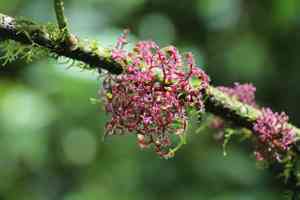
Nettle tree (Urera baccifera)
Also known as: Ortiga
The shrub nettle tree is commonly used as a hedge or natural fence due to its dense growth and stinging foliage, which deters intruders. Native to Central America, it also provides strong fibers that can be harvested for various uses, making it a multifunctional plant.
In This Article
Attributes of Nettle tree
Lifespan
Perennial
Plant Type
Tree, Shrub
Plant Height
5 m
Spread
4 m
Leaf Color
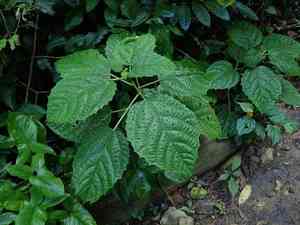
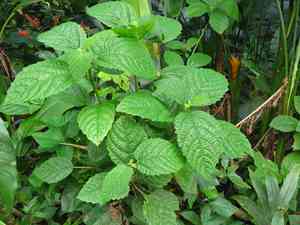
Green
Flower Size
Small, approximately 0.5 cm
Flower Color
Pink Purple
Images of Nettle tree
Quickly Identify Nettle tree
1
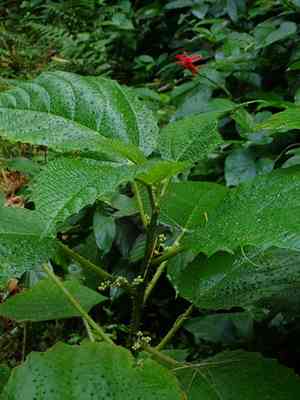
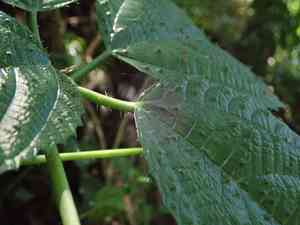
This plant can be identified by its serrated leaves with stinging hairs and small greenish flowers that turn into red or orange berries.
Scientific Classification of Nettle tree
Phylum
Vascular plants
Class
Dicotyledons
Order
Rosales
Family
Nettle
Genus
Urera
Species
Nettle tree
Planting and Growing of Nettle tree
Care Difficulty
Moderate
Watering Schedule
Every 2 days
Sunlight Requirements
Full shade
Sunshine Duration
6-10 hours
Ideal Temperature
70-85℉
Soil Type
Potting Mix, Peat Mix
Soil pH
5-7
Fertilizer Type
Balanced
Pruning Season
Spring, Summer
Pruning Area
Branches, Leaves
Pruning Frequency
2 times a year
Repotting Season
Spring
Pot Type
Ceramic, Plastic
 How to Water Nettle tree?
Urera baccifera thrives with consistent moisture, but avoid waterlogging its roots. Water until the top inch of soil is moist but not soggy, ensuring good drainage. This mimics its natural environment and promotes healthy root development.
What are the symptoms of an underwatered Nettle tree?
›
What should I do if my Nettle tree is not getting enough water?
›
What are the symptoms of an overwatered Nettle tree?
›
How to save an overwatered Nettle tree?
›
 What Are the Sunlight Requirements for Nettle tree?
Urera baccifera ideally suits environments that offer partial sun, ensuring steady growth and robust foliage in natural dappled light conditions.
Optimal Sun Exposure
›
Protective Measures
›
Regular Monitoring
›
 What Is the Ideal Temperature Range for Nettle tree?
The ideal temperature range for Urera baccifera is between 70°F and 85°F. This range allows the plant to thrive, promoting optimal growth and stability. Maintaining these temperatures means the plant is less likely to experience stress, which could negatively affect its health and vitality.
 What Soil is Best for Nettle tree?
Urera baccifera thrives in soils with excellent drainage, preventing root rot and waterlogging, thus promoting healthy root development. This plant benefits from a nutrient-rich soil, which supports vigorous growth and vibrant foliage, enhancing its ornamental value. The soil should retain adequate moisture to keep the plant hydrated between waterings, contributing to its overall health and resilience.
 How to Fertilize Nettle tree?
Urera baccifera typically benefits from a balanced fertilizer regime, requiring approximately one teaspoon of liquid fertilizer per gallon of water or half a cup of slow-release granular fertilizer per plant, based on its growth stage and environmental conditions.
 How to Prune Nettle tree?
Begin by searching for any dead or damaged branches. These can be identified by discoloration, unusual brittleness, or signs of disease. Removing them prevents the spread of pests or diseases and allows the plant to channel its energy into healthy growth. Gently shape Urera baccifera by trimming overgrown areas. Use sharp pruning shears to cut just above a leaf node or bud to stimulate new growth. Aim for a balanced look, maintaining the plant’s natural form without over-pruning. Always sterilize your pruning tools before beginning the process. A quick dip in a solution of one part bleach to nine parts water will prevent the spread of diseases. Clean tools after each use, especially if you notice any sap.
More About Pruning Techniques→
 How to Propagate Nettle tree plant?
1
Collect seeds from mature Urera baccifera fruits, clean them, and allow them to dry. Sow seeds evenly in a tray filled with well-draining soil mixture and cover lightly with soil. Water gently to avoid dislodging the seeds.
2
Select healthy stems and cut segments of around 10-15 cm long. Remove the lower leaves and dip the cut end in rooting hormone to enhance root development. Prepare pots filled with a suitable potting mix for planting the cuttings.
3
Place the seed trays or cutting pots in a warm location with indirect light. Ensure consistent moisture but avoid waterlogging. As seedlings or cuttings develop, gradually acclimate to stronger light and outdoor conditions.
 How to Repot Nettle tree plant?
1
Urera baccifera, commonly known as Scratchbush, shows signs of needing a repot when its roots start to circle the pot or emerge through the drainage holes. Scattered yellowing leaves and stunted growth can also be indicators. The best time to repot is when the plant is actively growing, ideally during spring or early summer, when it can quickly recover and establish itself in new soil.
2
Selecting the perfect pot for Urera baccifera involves choosing one that is just a couple of inches larger in diameter than the current pot. This encourages gradual growth and prevents excessive water retention. Ensure the pot has sufficient drainage holes, as excess water can rot the roots. A heavy base pot is beneficial as it provides stability to this bushy plant, reducing the risk of tipping over.
3
A well-draining potting mix is imperative for Urera baccifera. Such a medium typically contains ingredients like perlite or sand mixed with peat or coconut coir. This type of soil mimics its natural habitat, ensuring the roots are aerated and not waterlogged, thus preventing root rot and promoting vigorous growth.
Toxicity
Ingestion, skin exposure
WARNING
The judgment on toxicity and danger is for reference only. We DO NOT GUARANTEE any accuracy of such judgment. Therefore, you SHALL NOT rely on such judgment. It is IMPORTANT TO SEEK PROFESSIONAL ADVICE in advance when necessary.
Learn More About Nettle tree Diseases
Anthracnose
Bacterial Leaf Spot
Bacterial Soft Rot
Bacterial Wilt
Black Spot
Chemical Injury
Crown Gall
Cyst Nematode
Damping-off
Downy Mildew
Drought Stress
Fusarium Wilt
Gray Mold
Leaf Curl
Leaf Spot
Mosaic
Nutrient Deficiency
Nutrient Toxicity
Powdery Mildew
Root Rot
Root-knot Nematode
Rusts
Sooty Mold
Spider Mites
Temperature Stress
Thrips Damage
White Mold



