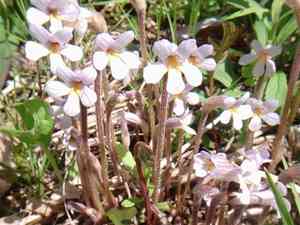
Dwarf owl's-clover (Triphysaria pusilla)
Also known as: Dwarf Owl's Clover
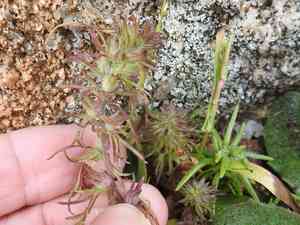
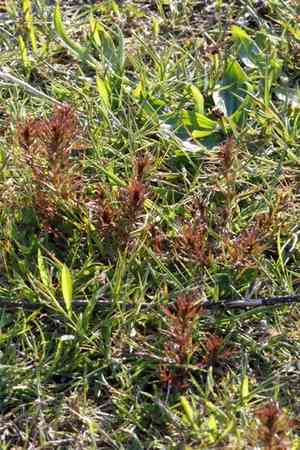
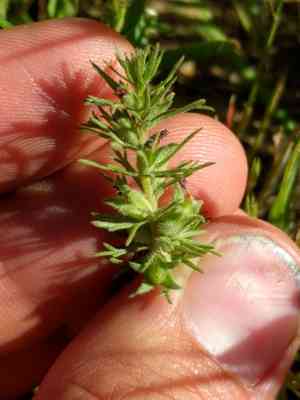
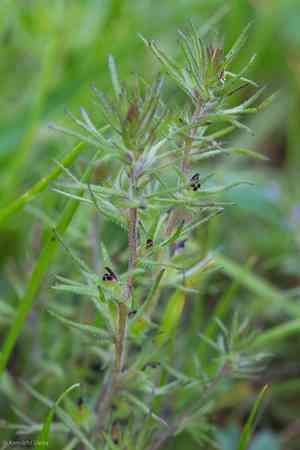
Triphysaria pusilla, also known as dwarf owl's-clover, is a small annual herb characterized by a hairy, multibranched stem that can grow up to 20 centimeters in height. The stems are typically brownish or purple. Its leaves, which can be green, red, or purple, measure up to 3 centimeters in length and are segmented into several narrow, pointed lobes.
In This Article
Attributes of Dwarf owl's-clover
Lifespan
Annual
Plant Height
2.5 cm to 15 cm
Spread
N/A
Leaf Color
Green
Flower Size
0.5-1 cm
Flower Color
Purple or white
Images of Dwarf owl's-clover
Quickly Identify Dwarf owl's-clover
1
Look for small, delicate plants with purple or white flowers having a distinctive owl-like shape. The leaves are linear and finely dissected.
Scientific Classification of Dwarf owl's-clover
Phylum
Vascular plants
Class
Dicotyledons
Order
Lamiales
Family
Broomrape
Genus
Owl's-clovers
Species
Dwarf owl's-clover
Planting and Growing of Dwarf owl's-clover
Care Difficulty
Moderate
Watering Schedule
Every 2 days
Sunlight Requirements
Partial sun
Sunshine Duration
6-10 hours
Ideal Temperature
60-75℉
Soil Type
Potting Mix, Peat Mix
Soil pH
6.5-7.5
Fertilizer Type
Balanced
Pruning Season
Spring, Summer
Pruning Area
Branches, Leaves
Pruning Frequency
2 times a year
Repotting Season
Spring
Pot Type
Plastic, Ceramic
 How to Water Dwarf owl's-clover?
Triphysaria pusilla prefers moderate watering, which means ensuring the soil is just moist but not waterlogged. The principle is to water until about 150ml of water has been absorbed by the soil, which is enough to reach the root zone without causing excess saturation. You should aim to notice a slight dampness without the formation of puddles.
What are the symptoms of an underwatered Dwarf owl's-clover?
›
What should I do if my Dwarf owl's-clover is not getting enough water?
›
What are the symptoms of an overwatered Dwarf owl's-clover?
›
How to save an overwatered Dwarf owl's-clover?
›
 What Are the Sunlight Requirements for Dwarf owl's-clover?
Triphysaria pusilla performs best under partial sunlight, benefiting from 4 to 6 hours of filtered sunlight daily. An ideal balance ensures vibrant colors, strong growth, and optimal flowering potential, enhancing its overall appeal.
How much light does Triphysaria pusilla need?
›
How to achieve ideal lighting for Triphysaria pusilla?
›
What's the benefit of ideal light for Triphysaria pusilla?
›
 What Is the Ideal Temperature Range for Dwarf owl's-clover?
For optimal growth and health of Triphysaria pusilla, maintaining a temperature range between 60°F and 75°F is crucial. This range ensures the plant's metabolic processes function efficiently, promoting vigorous growth and vibrant foliage.
 What Soil is Best for Dwarf owl's-clover?
Triphysaria pusilla thrives in well-drained soils that prevent root rot and ensure adequate nutrient uptake. Ensuring drainage mimics its natural habitat, supporting healthy growth and vibrant blooms. This plant benefits from a nutrient-rich soil that facilitates robust growth. A well-balanced soil mixture supports its development, ensuring it receives the essential minerals for optimal floristic displays. Soil that retains some moisture without becoming waterlogged is ideal. It helps Triphysaria pusilla remain hydrated, especially in its flowering phase, leading to more resilient and vibrant plants.
 How to Fertilize Dwarf owl's-clover?
For Triphysaria pusilla, consider using a balanced fertilizer with an N-P-K ratio close to 10-10-10. Apply the liquid fertilizer at half strength to avoid over-fertilizing this delicate species, ensuring it receives appropriate nutrition for optimal growth.
 How to Prune Dwarf owl's-clover?
When pruning Triphysaria pusilla, start by using clean, sharp scissors or pruning shears. Focus on removing any dead or yellow leaves as well as any stems that appear weak or sickly. This allows the plant to redirect its energy into healthy growth. Cut just above a node to encourage new growth and shape the plant to your desired form. Prune at an angle to reduce the risk of disease entering the plant at the cutting site.
More About Pruning Techniques→
 How to Propagate Dwarf owl's-clover plant?
1
Start by preparing a well-draining soil mix and filling your seedling trays. Make sure to moisten the soil slightly before sowing the seeds to encourage germination.
2
Scatter the seeds evenly over the soil surface. Lightly press them into the soil without burying them too deep, as they need light to germinate. Cover with a fine layer of soil or sand.
3
Place the trays in a warm, bright location or under grow lights. Maintain a consistent temperature and humidity level to facilitate uniform germination and growth.
 How to Repot Dwarf owl's-clover plant?
1
Triphysaria pusilla shows signs like stunted growth and root-bound conditions when it needs repotting. These are clear indications that the roots have run out of space and the soil might be depleted of nutrients. The perfect time to repot is also when the plant has just completed its blooming cycle, ensuring it has enough energy to recover from the process.
2
Select a pot that is just slightly larger than the current one, with excellent drainage holes. Terracotta pots are ideal for Triphysaria pusilla as they allow the soil to dry out between waterings. This prevents root rot and provides an aerated environment for the roots to thrive. A snug fit ensures the plant focuses energy on growth rather than sprawling roots.
3
Choose a well-draining sandy soil mix, ideal for Triphysaria pusilla's needs for both aeration and water retention. The right soil not only supports healthy growth but also ensures that the roots receive sufficient oxygen while retaining the necessary moisture. Such a mix prevents waterlogging, reducing the risk of root rot, and promotes robust plant health.



