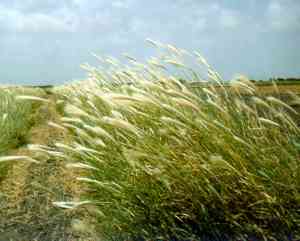
False rhodes grass (Trichloris crinita)
Also known as: false Rhodes grass, Australian beard grass
Trichloris crinita, commonly called false Rhodes grass, is a grass species indigenous to the Americas. Its native range includes the southwestern United States, northern Mexico, and regions of Argentina.
In This Article
Attributes of False rhodes grass
Lifespan
Perennial
Plant Type
Grass
Plant Height
30 cm to 91 cm
Spread
35 to 50 cm
Leaf Color
Green
Flower Size
1 to 2 cm per flower head
Flower Color
Greenish to brown
Images of False rhodes grass
Quickly Identify False rhodes grass
1
Identify Trichloris crinita by its coarse, wiry leaves and upright growth habit. It forms dense tufts and can reach up to 1 meter in height. The seed heads are distinctive, comprising several spikes that radiate from a central point, giving a star-like appearance.
Scientific Classification of False rhodes grass
Phylum
Vascular plants
Class
Monocotyledons
Order
Poales
Family
Grass
Genus
False rhodes grass
Species
False rhodes grass
Planting and Growing of False rhodes grass
Care Difficulty
Moderate
Watering Schedule
Every 2 days
Sunlight Requirements
Full sun
Sunshine Duration
6-10 hours
Ideal Temperature
75-85℉
Soil Type
Potting Mix, Peat Mix
Soil pH
6.5-7.5
Fertilizer Type
Balanced
Pruning Season
Spring, Summer
Pruning Area
Branches, Leaves
Pruning Frequency
2 times a year
Repotting Season
Spring
Pot Type
Plastic, Terracotta
 How to Water False rhodes grass?
For Trichloris crinita, water should be applied until the top 5-7 cm of soil is moist but not overly saturated. This plant is native to arid regions and prefers a balance between drying out and adequate hydration.
What are the symptoms of an underwatered False rhodes grass?
›
What should I do if my False rhodes grass is not getting enough water?
›
What are the symptoms of an overwatered False rhodes grass?
›
How to save an overwatered False rhodes grass?
›
 What Are the Sunlight Requirements for False rhodes grass?
Trichloris crinita flourishes best under full to partial sunlight arrangements. Ideal light regimens foster photosynthesis, enhancing structural integrity, promoting dense foliage, and ensuring vibrant color and healthy seed generation.
Optimal Sun Exposure
›
Partial Sun Solutions
›
Benefits of Adequate Sunlight
›
 What Is the Ideal Temperature Range for False rhodes grass?
Trichloris crinita thrives best within an ideal temperature range of 75 to 85 degrees Fahrenheit. This range ensures optimal growth and metabolic function, allowing the plant to photosynthesize efficiently and maintain robust health. Consistency in this temperature band is crucial to avoid stress, which can lead to stunted growth and reduced vitality.
 What Soil is Best for False rhodes grass?
Trichloris crinita thrives in well-drained soil conditions, which prevent waterlogging and root rot. This ensures that roots have access to oxygen and nutrients, promoting healthy growth and vigor. This plant benefits from soil rich in organic matter, providing essential nutrients that enhance its growth. Organic amendments like compost improve soil structure and fertility, offering long-term benefits. Maintaining a soil pH between 6.5 and 7.5 ensures optimal nutrient uptake. This balance helps prevent nutrient deficiencies that could stunt growth or cause chlorosis in Trichloris crinita.
 How to Fertilize False rhodes grass?
For Trichloris crinita, a moderate amount of fertilizer is usually adequate. Use about one tablespoon of slow-release granular fertilizer per square foot of soil. Liquid fertilizer should be diluted to half strength to prevent root burn.
 How to Prune False rhodes grass?
While Trichloris crinita can be pruned throughout the growing seasons, focus mainly on Spring and Summer when the plant is actively growing. Using clean, sharp tools, start by cutting back any brown, withered stems and leaves. Be careful not to trim too much at once; removing about a third of the biomass at a time will prevent shock and promote steady regrowth. When pruning Trichloris crinita, aim to maintain its natural shape. This species tends to grow in attractive clumps, so trimming should enhance rather than alter this form. Use your hands to gently part the grass, allowing you to see and select which parts need cutting carefully.
More About Pruning Techniques→
 How to Propagate False rhodes grass plant?
1
Start by selecting healthy seeds from a reputable source. Clean them and treat them with a fungicide to prevent fungal infections during germination.
2
Use a well-draining potting mix for seeds or a nutrient-rich garden soil for divisions. Ensure the soil is free from contaminants and pests.
3
Sow seeds on the surface of the soil and cover lightly. Water gently to avoid disturbing the seeds. For divisions, plant them at the same depth they were growing originally and water thoroughly.
 How to Repot False rhodes grass plant?
1
Trichloris crinita shows clear signs when repotting is required. If the roots are visibly growing out of the container, or if the growth has visibly slowed despite regular care, it is time to think about repotting. Ideally, you should look to repot in spring or summer when the plant is active and can quickly recover.
2
Selecting the appropriate pot is crucial for the healthy growth of Trichloris crinita. Opt for a pot just one size larger than the current one to prevent waterlogging. A pot with excellent drainage is essential to avoid root rot, ensuring the health and vitality of your plant.
3
Trichloris crinita thrives in a well-drained, sandy soil mix. This type of soil allows for adequate air circulation to the roots and prevents water retention, which could lead to root rot. Mixing in some perlite or coarse sand ensures the soil remains light and airy, promoting healthy root growth.
Learn More About False rhodes grass Diseases
Anthracnose
Bacterial Leaf Spot
Bacterial Wilt
Black Spot
Chemical Injury
Damping-off
Downy Mildew
Drought Stress
Fusarium Wilt
Gray Mold
Leaf Spot
Mosaic
Nutrient Deficiency
Nutrient Toxicity
Powdery Mildew
Root Rot
Root-knot Nematode
Rusts
Sooty Mold
Spider Mites
Temperature Stress
Thrips Damage
White Mold



