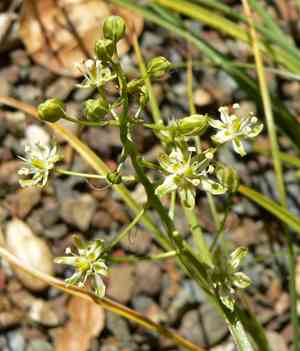
Smallflower deathcamas (Toxicoscordion micranthum)
Also known as: none
Smallflower deathcamas is a modest wildflower commonly located in grasslands, meadows, and prairies. It produces small clusters of white to pale pink flowers, which bloom above narrow, grass-like foliage. This plant thrives in moderate climates and is often found in well-drained soils with full sun to partial shade. Although its delicate flowers might be easily missed, they contribute to the local ecosystem by attracting a variety of pollinators. The species name 'micranthum' reflects the diminutive size of its flowers.
In This Article
Attributes of Smallflower deathcamas
Lifespan
Perennial
Plant Type
Herb
Plant Height
0 mm to 91 cm
Spread
n/a
Leaf Color
Green
Flower Size
5-10 mm
Flower Color
White or greenish
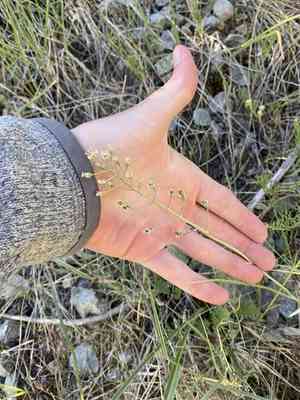
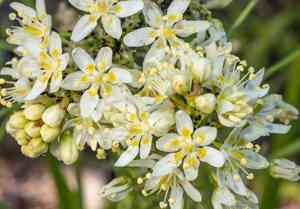
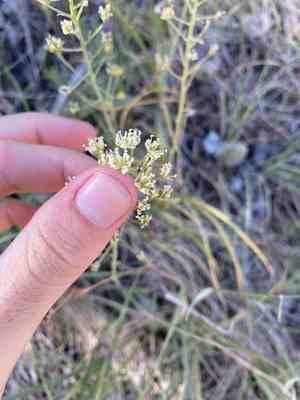
Images of Smallflower deathcamas
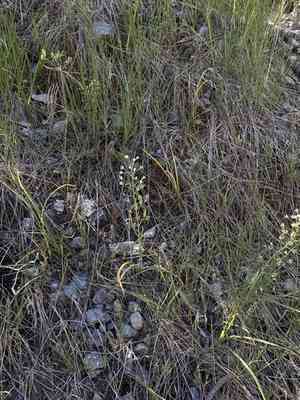
Quickly Identify Smallflower deathcamas
1
Identify Toxicoscordion micranthum by its small white or greenish flowers arranged in a spike-like cluster, and its long, narrow leaves that grow from the base of the plant.
Scientific Classification of Smallflower deathcamas
Phylum
Vascular plants
Class
Monocotyledons
Order
Liliales
Family
Bunchflower
Genus
Death camas
Species
Smallflower deathcamas
Planting and Growing of Smallflower deathcamas
Care Difficulty
Hard
Watering Schedule
Every 2 days
Sunlight Requirements
Partial sun
Sunshine Duration
6-10 hours
Ideal Temperature
60-75℉
Soil Type
Potting Mix, Peat Mix
Soil pH
5.5-7.5
Fertilizer Type
Balanced
Pruning Season
Spring, Summer
Pruning Area
Branches, Leaves
Pruning Frequency
2 times a year
Repotting Season
Spring
Pot Type
Plastic, Ceramic
 How to Water Smallflower deathcamas?
Ensure that each watering session allows for 200ml of water to be evenly distributed throughout the soil. The amount is crucial as it permits the soil to be thoroughly moistened without causing it to become soggy, ensuring nutrients are well absorbed.
What are the symptoms of an underwatered Smallflower deathcamas?
›
What should I do if my Smallflower deathcamas is not getting enough water?
›
What are the symptoms of an overwatered Smallflower deathcamas?
›
How to save an overwatered Smallflower deathcamas?
›
 What Are the Sunlight Requirements for Smallflower deathcamas?
Toxicoscordion micranthum prefers a blend of partial sun and full sun environments, ideally soaking in around 6 to 8 hours of sunlight. This range is critical to fostering robust growth and vibrant flowers.
Optimal sun exposure
›
Managing partial sun environments
›
Sunlight quality benefits
›
 What Is the Ideal Temperature Range for Smallflower deathcamas?
Toxicoscordion micranthum grows best within a temperature range of 60°F to 75°F. This range provides optimal conditions for metabolic processes essential for healthy growth and development. Maintaining temperatures within this range ensures efficient nutrient uptake and photosynthesis, contributing to robust foliage and flowering.
 What Soil is Best for Smallflower deathcamas?
Toxicoscordion micranthum thrives in well-drained soils, preventing waterlogging which can lead to root rot. Ensuring good drainage helps maintain healthy root systems and promotes overall plant vigor. A soil rich in organic matter supports better nutrient availability for Toxicoscordion micranthum. It helps improve soil structure, water retention, and provides essential nutrients, enhancing the plant's growth and resilience. This plant prefers a soil pH range between 5.5 and 7.5, maintaining vital nutrient uptake and biological activity. This pH balance ensures optimal growth and helps prevent nutrient deficiencies.
 How to Fertilize Smallflower deathcamas?
When fertilizing Toxicoscordion micranthum, it is crucial to avoid over-fertilizing as it is not a heavy feeder. A balanced 10-10-10 liquid fertilizer should be diluted to half its strength, and 250ml should be applied per plant during the active growing season.
 How to Prune Smallflower deathcamas?
Focus on removing dead, damaged, or diseased foliage first. Look for yellowed or wilted leaves and trim them near the base. After addressing problematic areas, shape the plant by trimming excessively long stems. Cut at a slight angle above a node to encourage outward growth. After pruning, provide adequate water and monitor the plant over a few weeks for new growth or signs of stress that need addressing.
More About Pruning Techniques→
 How to Propagate Smallflower deathcamas plant?
1
Collect mature seeds from Toxicoscordion micranthum after the flowering season. Look for seed pods that are dry and brown but have not yet opened fully. This indicates that the seeds inside are mature and ready for harvest.
2
Fill a seed tray with a well-draining seed-starting mix. Scatter the seeds evenly across the surface and cover them lightly with soil. Water gently using a misting bottle to ensure the seeds are not disturbed.
3
Place the seed tray in a warm and bright location, but out of direct sunlight. Maintain a consistent temperature and moisture level for successful germination, usually around 18-22°C (64-72°F).
 How to Repot Smallflower deathcamas plant?
1
Signs it's time to repot Toxicoscordion micranthum include roots circling the bottom of the pot, soil drying out too quickly, or reduced growth. Repot during active growth in spring or early summer for best results.
2
Select a pot that's slightly larger than the current one, with good drainage holes to prevent waterlogging. A correctly sized pot ensures balanced growth and reduces the risk of root rot, keeping the plant healthier.
3
Use well-draining sandy mix since it mimics this plant's natural habitat, preventing root rot and improving aeration. A lighter soil helps avoid compacted conditions, allowing roots to establish quickly.
Toxicity
Ingestion of the plant
WARNING
The judgment on toxicity and danger is for reference only. We DO NOT GUARANTEE any accuracy of such judgment. Therefore, you SHALL NOT rely on such judgment. It is IMPORTANT TO SEEK PROFESSIONAL ADVICE in advance when necessary.
Learn More About Smallflower deathcamas Diseases
Anthracnose
Bacterial Leaf Spot
Bacterial Soft Rot
Bacterial Wilt
Black Spot
Chemical Injury
Crown Gall
Cyst Nematode
Damping-off
Downy Mildew
Drought Stress
Fusarium Wilt
Gray Mold
Leaf Spot
Mosaic
Nutrient Deficiency
Nutrient Toxicity
Powdery Mildew
Root Rot
Root-knot Nematode
Rusts
Sooty Mold
Spider Mites
Temperature Stress
Thrips Damage
White Mold



