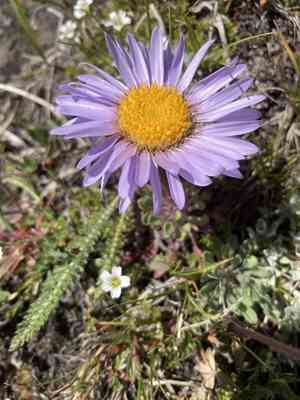
Parry's townsend daisy (Townsendia parryi)
Also known as: Parry's Townsend Daisy
The Alpine Aster is a hardy, perennial wildflower perfectly suited for alpine and subalpine environments. It features striking, daisy-like flowers with yellow centers and petals that can be white to pinkish. This plant prospers in rocky, well-drained soils, with its compact growth and narrow leaves helping to reduce moisture loss, making it well-adapted to withstand harsh conditions.
In This Article
Attributes of Parry's townsend daisy
Lifespan
Biennial, Perennial
Plant Type
Herb
Plant Height
5 cm to 30 cm
Spread
Variable, generally forming a small mat
Leaf Color
Green, often hairy
Flower Size
1-2 cm
Flower Color
White to pink with yellow centers
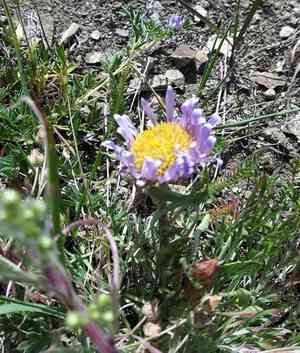
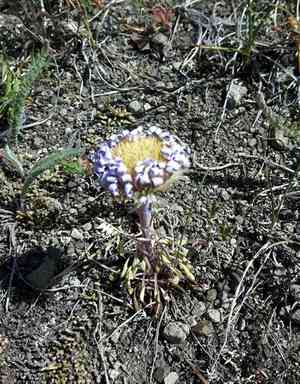
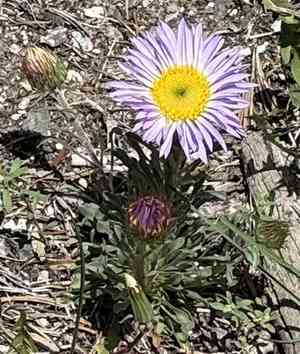
Images of Parry's townsend daisy
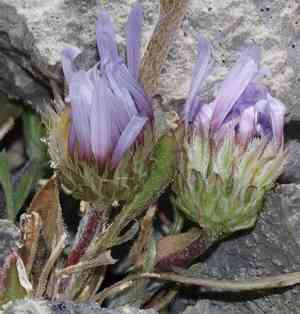
Quickly Identify Parry's townsend daisy
1
This plant can be identified by its low, mat-forming growth habit, basal rosette of hairy leaves, and solitary flower heads with white to pinkish ray florets and yellow disc florets.
Scientific Classification of Parry's townsend daisy
Phylum
Vascular plants
Class
Dicotyledons
Order
Asterales
Family
Daisy
Genus
Townsend daisy
Species
Parry's townsend daisy
Planting and Growing of Parry's townsend daisy
Care Difficulty
Hard
Watering Schedule
Every 2 days
Sunlight Requirements
Full sun
Sunshine Duration
4-8 hours
Ideal Temperature
60-70℉
Soil Type
Potting Mix, Peat Mix
Soil pH
6.5-7.5
Fertilizer Type
Balanced
Pruning Season
Spring, Summer
Pruning Area
Branches, Leaves
Pruning Frequency
2 times a year
Repotting Season
Spring
Pot Type
Plastic, Ceramic
 How to Water Parry's townsend daisy?
For Townsendia parryi, the watering amount needs to maintain a delicate balance by ensuring the soil is moist without being waterlogged. You should aim to deliver around 250 milliliters of water, allowing the soil to absorb moisture down to its deeper layers. This ensures that the roots can access the water, promoting healthy growth and vibrant blooms.
What are the symptoms of an underwatered Parry's townsend daisy?
›
What should I do if my Parry's townsend daisy is not getting enough water?
›
What are the symptoms of an overwatered Parry's townsend daisy?
›
How to save an overwatered Parry's townsend daisy?
›
 What Are the Sunlight Requirements for Parry's townsend daisy?
This plant thrives under full or partial sun conditions, ideally receiving 6 to 8 hours of light per day. Ample sunlight optimizes blooming, maintains plant health, and enhances its aesthetic appeal.
What type of light does Townsendia parryi prefer?
›
How can you ensure it receives ideal light conditions?
›
What are the benefits of optimal lighting for Townsendia parryi?
›
 What Is the Ideal Temperature Range for Parry's townsend daisy?
The ideal temperature range for Townsendia parryi is between 60°F and 70°F. This range provides the optimal conditions for growth and flowering. Maintaining a steady temperature within this range can promote consistent growth patterns and vibrant blooms.
 What Soil is Best for Parry's townsend daisy?
Townsendia parryi thrives in well-drained soils as it prevents waterlogging, which can cause root rot. Good drainage allows the roots to breathe and promotes healthy growth. For optimal growth, this plant prefers a nutrient-rich substrate. Nutrients provide the essential elements required for photosynthesis, vitality, and blooming. While nutrient-rich, the soil should also maintain moderate fertility. Over-fertilization can lead to excess foliage and weak flowering, reducing aesthetic appeal.
 How to Fertilize Parry's townsend daisy?
For Townsendia parryi, fertilizer should be applied sparingly to prevent nutrient overload. Use a balanced, half-strength liquid fertilizer, mixed to a quarter of the recommended dosage on the package, ensuring gradual nutrient release without overwhelming the plant.
 How to Prune Parry's townsend daisy?
Begin pruning Townsendia parryi after its flowering period in spring. Use clean, sharp shears to remove any dead or damaged stems. Trim back the plant by up to one-third, focusing on maintaining a symmetrical shape. This promotes healthy new growth and prepares the plant for seasonal changes. Deadheading is crucial for Townsendia parryi to increase bloom production. Gently clip off spent flowers at the base of their stems. This practice redirects the plant's energy from seed production to flowering, resulting in a more vibrant and prolonged flowering season.
More About Pruning Techniques→
 How to Propagate Parry's townsend daisy plant?
1
Sow the seeds of Townsendia parryi on a seed tray filled with a well-draining growing medium. Lightly cover them with soil and water gently. Ensure they are spaced adequately to prevent overcrowding during germination.
2
Water the seeds lightly but regularly to maintain consistent soil moisture. Use a spray bottle for gentle watering to avoid displacing seeds. Maintaining high humidity around the seed tray can aid in faster germination.
3
Place the seed trays in a location with plenty of indirect sunlight. Ideally, maintain the temperature between 65-75°F for optimal germination, avoiding extreme temperature fluctuations.
 How to Repot Parry's townsend daisy plant?
1
You should consider repotting Townsendia parryi when you notice slower growth or roots starting to circle the pot. Another clear sign is when water drains too quickly through the pot and the soil seems to dry out faster than usual.
2
Selecting a slightly larger pot with excellent drainage is crucial. A terracotta pot is often ideal because it allows excess moisture to evaporate, preventing root rot, which is especially important for this drought-tolerant plant.
3
Opt for a well-draining potting mix, preferably one with sandy or gritty components. This helps prevent overwatering issues and provides the arid conditions that Townsendia parryi thrives on, mimicking its natural rocky habitats.
Learn More About Parry's townsend daisy Diseases
Anthracnose
Bacterial Leaf Spot
Bacterial Soft Rot
Bacterial Wilt
Chemical Injury
Cyst Nematode
Damping-off
Downy Mildew
Drought Stress
Fusarium Wilt
Gray Mold
Leaf Spot
Mosaic
Nutrient Deficiency
Nutrient Toxicity
Powdery Mildew
Root Rot
Root-knot Nematode
Rusts
Sooty Mold
Spider Mites
Temperature Stress
Thrips Damage
White Mold



