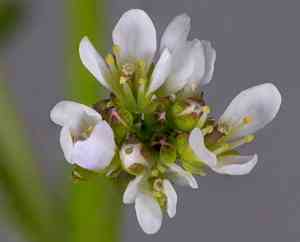
Tehipite valley jewelflower (Streptanthus fenestratus)
Also known as: Fenestrate Jewelflower
The Tehipite Valley jewelflower has unique window-pane leaves with translucent tissue that allows sunlight to penetrate, enhancing photosynthesis in low-light conditions. This plant also boasts clusters of greenish flowers with a hint of purple, standing out against its gray-green foliage. Its slender form and ability to flourish in rocky terrains demonstrate its resilience and specialized adaptations for survival.
In This Article
Attributes of Tehipite valley jewelflower
Lifespan
Annual
Plant Height
20-60 cm
Spread
Approximately 10 cm
Leaf Color
Green
Flower Size
1-2 cm
Flower Color
Purple to lavender
Images of Tehipite valley jewelflower
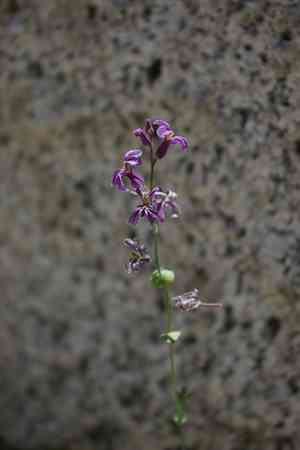
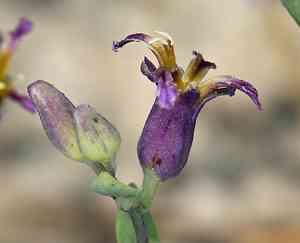
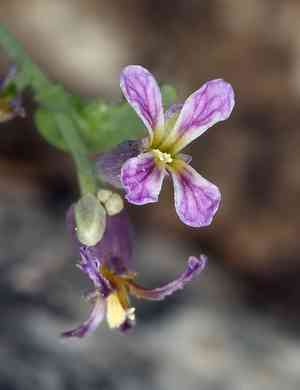
Quickly Identify Tehipite valley jewelflower
1
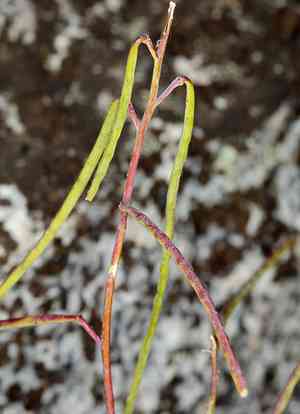
The plant can be identified by its tall, slender stem, and its unique flowers featuring window-like translucent areas. The purple to lavender flowers have four petals with a central spot that appears almost window-like.
Scientific Classification of Tehipite valley jewelflower
Phylum
Vascular plants
Class
Dicotyledons
Order
Brassicales
Family
Cruciferae
Genus
Streptanthus
Species
Tehipite valley jewelflower
Planting and Growing of Tehipite valley jewelflower
Care Difficulty
Hard
Watering Schedule
Every 2 days
Sunlight Requirements
Partial sun
Sunshine Duration
4-8 hours
Ideal Temperature
65-75℉
Soil Type
Potting Mix, Peat Mix
Soil pH
6.5-7.5
Fertilizer Type
Balanced
Pruning Season
Spring, Summer
Pruning Area
Branches, Leaves
Pruning Frequency
Once a year
Repotting Season
Spring
Pot Type
Plastic, Ceramic
 How to Water Tehipite valley jewelflower?
For Streptanthus fenestratus, ensure the soil remains slightly moist but not waterlogged. A good rule is to aim for about 250 ml of water per session. It's important to water evenly around the plant, allowing the roots to absorb the moisture properly.
What are the symptoms of an underwatered Tehipite valley jewelflower?
›
What should I do if my Tehipite valley jewelflower is not getting enough water?
›
What are the symptoms of an overwatered Tehipite valley jewelflower?
›
How to save an overwatered Tehipite valley jewelflower?
›
 What Are the Sunlight Requirements for Tehipite valley jewelflower?
Streptanthus fenestratus requires partial sun exposure for optimal health and development, ensuring balanced photosynthesis and nutrient absorption which enhances vigor and bloom production.
Optimal Light Duration
›
Ideal Light Source
›
Efficient Light Distribution
›
 What Is the Ideal Temperature Range for Tehipite valley jewelflower?
The ideal temperature range for Streptanthus fenestratus is between 65°F and 75°F. These temperatures provide optimal growth and conditions that mimic the plant's natural habitat, promoting healthy development and flowering. Maintaining the environment within this range ensures the plant can efficiently carry out its metabolic processes, resulting in robust growth and vigor.
 What Soil is Best for Tehipite valley jewelflower?
Streptanthus fenestratus thrives in well-drained soil to prevent root rot. The loam and sandy loam mix provides excellent drainage, ensuring the roots get sufficient oxygen and reducing the chances of fungal infections. This plant prefers a nutrient-rich soil, which loam naturally provides. A rich soil composition supports healthy foliage and robust growth, enhancing the overall vitality and blooming potential of Streptanthus fenestratus. Soil that retains some moisture without becoming waterlogged is ideal. This ensures the plant receives an even water supply, maintaining hydration during dry spells without drowning the roots.
 How to Fertilize Tehipite valley jewelflower?
For Streptanthus fenestratus, it is pivotal to apply fertilizers with care. Given its sensitivity, use only a light application of liquid fertilizer, approximately half the recommended dose for most herbaceous plants. When using a slow-release fertilizer, a modest spoonful per cultivated area is sufficient. Balancing nutrient input without overwhelming the plant ensures optimal growth.
 How to Prune Tehipite valley jewelflower?
Begin by sterilizing your pruning shears with alcohol to prevent the spread of disease. Identify any dead or wilted leaves first and remove them close to the base. Trim back any overly long stems to your desired shape — this aids in keeping the plant compact and encourages the growth of new branches. Remember to cut at a 45-degree angle to promote water runoff and prevent rot.
More About Pruning Techniques→
 How to Propagate Tehipite valley jewelflower plant?
1
Fill the seed tray with a quality potting mix, leaving some space at the top. Lightly water the soil to ensure it's moist but not soggy.
2
Sprinkle the seeds evenly over the moist soil surface. Cover them with a thin layer of potting mix, taking care not to bury them too deeply.
3
Place the seed tray in a warm, sunny location and maintain consistent moisture by misting regularly. Keep the tray covered with a plastic dome to retain humidity.
 How to Repot Tehipite valley jewelflower plant?
1
Streptanthus fenestratus should be repotted when you notice roots emerging from the drainage holes or the plant seems to be struggling with growth. These signs indicate that the current pot is too small, and it’s time to give the plant more room to flourish. Spring and Autumn are ideal seasons as the plant is most receptive to change during these periods.
2
Select a pot that is one to two inches wider in diameter than the current one to accommodate growth without overwhelming the plant. Ensure it has sufficient drainage holes to prevent waterlogging, which can lead to root rot. Terra cotta pots are ideal due to their breathability, allowing moisture to evaporate and reducing root issues.
3
Opt for a well-draining, sandy loam mix to ensure excess water can flow away from the roots. This type of soil mimics the plant's natural habitat, providing the necessary nutrients while preventing issues like root rot. A sandy loam mixture will keep the roots aerated and healthy.



