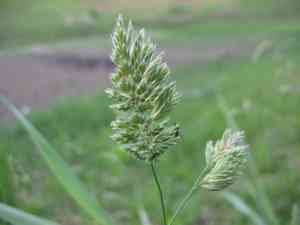
Broadfruit bur-reed (Sparganium eurycarpum)
Also known as: Giant bur reed, Broad-fruit burr-reed
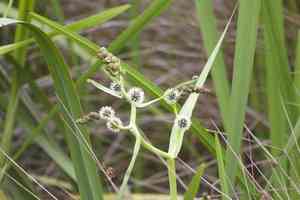
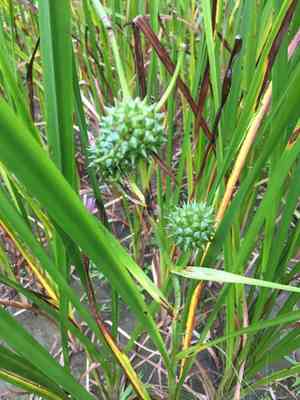
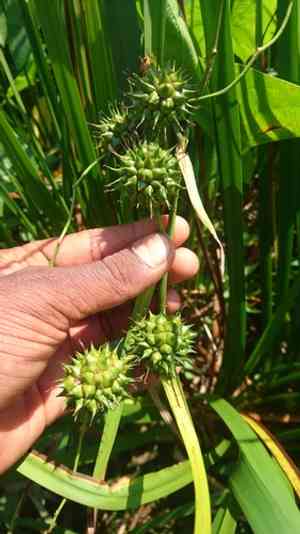
Broadfruit bur-reed (Sparganium eurycarpum) is a perennial wildflower that typically reaches a height of 61 to 183 cm. It blooms in the summer, producing both male and female flowers. The male flowers are round, yellow clusters, while the female flowers, situated below, are two-parted and also yellow. The fruit forms in the female flowers, developing a beak-like tip, and it turns brown as it matures, filled with seeds.
In This Article
Attributes of Broadfruit bur-reed
Lifespan
Perennial
Plant Type
Herb
Plant Height
61 cm to 1.8 m
Spread
90 cm
Leaf Color
Green
Flower Size
1.9 cm to 3 cm
Flower Color
White Yellow Green
Images of Broadfruit bur-reed
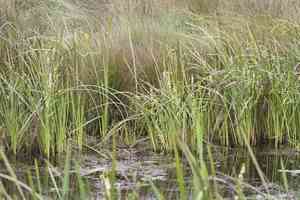
Quickly Identify Broadfruit bur-reed
1
This species can be identified by its long, grass-like leaves and spherical flower heads. The stems are erect, and the male and female flowers are found on the same plant but in separate, conspicuous clusters.
Scientific Classification of Broadfruit bur-reed
Phylum
Vascular plants
Class
Monocotyledons
Order
Poales
Family
Cattail
Genus
Bur-reeds
Species
Broadfruit bur-reed
Planting and Growing of Broadfruit bur-reed
Care Difficulty
Easy
Watering Schedule
Every 8 days
Sunlight Requirements
Full sun
Sunshine Duration
6-10 hours
Ideal Temperature
68-77℉
Soil Type
Potting Mix, Peat Mix
Soil pH
6.5-7.5
Fertilizer Type
Balanced
Pruning Season
Spring, Summer
Pruning Area
Branches, Leaves
Pruning Frequency
2 times a year
Repotting Season
Spring
Pot Type
Plastic, Ceramic
 How to Water Broadfruit bur-reed?
The watering amount for Sparganium eurycarpum should ideally be around 500 ml per instance. The goal is to keep the soil consistently moist without waterlogging it. Aim to water until moisture penetrates about 6 inches into the soil, ensuring sufficient hydration without drowning the plant.
What are the symptoms of an underwatered Broadfruit bur-reed?
›
What should I do if my Broadfruit bur-reed is not getting enough water?
›
What are the symptoms of an overwatered Broadfruit bur-reed?
›
How to save an overwatered Broadfruit bur-reed?
›
 What Are the Sunlight Requirements for Broadfruit bur-reed?
Sparganium eurycarpum flourishes best in full to partial sunlight conditions. Ideal lighting maximizes photosynthesis, boosting growth, flowering, and ecological benefits such as supporting fauna.
What is the best light condition for Sparganium eurycarpum?
›
How can you achieve these lighting conditions?
›
What are the benefits of ideal lighting conditions?
›
 What Is the Ideal Temperature Range for Broadfruit bur-reed?
The ideal temperature range for Sparganium eurycarpum is between 68°F and 77°F. In this range, the plant can photosynthesize efficiently and carry out cellular processes at an optimal level, supporting healthy growth and development.
 What Soil is Best for Broadfruit bur-reed?
Sparganium eurycarpum thrives in nutrient-rich substrates that provide essential minerals for growth. High organic matter content ensures consistent nutrient availability, promoting vigorous plant health and resilience against diseases. This plant requires a moisture-retentive medium that helps maintain consistent soil moisture levels. Adequate water retention prevents desiccation and provides the aquatic-like conditions that are ideal for its growth and reproduction. Soil with good aeration is crucial for this plant, facilitating efficient root respiration. Proper oxygen availability in the soil aids root metabolism and improves overall plant vitality, helping it cope with environmental stresses.
 How to Fertilize Broadfruit bur-reed?
Sparganium eurycarpum, known as giant bur-reed, appreciates a moderate amount of fertilization. It thrives best with a balanced application of nutrients. For liquid fertilizers, ensure a concentration that doesn't exceed 1 tablespoon per gallon of water. For slow-release fertilizers, a modest quantity of approximately 0.5 pounds per 100 square feet is recommended. Always adjust the amount based on environmental conditions and plant responses.
 How to Prune Broadfruit bur-reed?
Be cautious not to over-prune as doing so might lead to shock or excessive stress for the plant. Aim to remove no more than one-third of the plant at a time. Keep an eye on the plant after pruning to ensure that new growth is healthy and to prevent any potential pest infestation. This will also ensure the plant is not showing signs of shock. Immediately dispose of the pruned material, especially if it shows signs of disease or pest, to prevent contamination of the healthy parts of your plant or surrounding vegetation.
More About Pruning Techniques→
 How to Propagate Broadfruit bur-reed plant?
1
Begin by selecting healthy seeds and preparing seed trays with a mix of fine soil and compost. Water the soil lightly to ensure it is damp but not waterlogged. Place the seeds evenly spaced apart on the soil surface, lightly covering them with a thin layer of soil.
2
During early summer or spring, dig around the mature Sparganium eurycarpum plant using a garden fork. Gently lift the root mass and separate clumps by hand or with a clean knife, ensuring each division has roots and shoots for successful propagation.
3
Once seeds have germinated and developed enough roots, or divisions have been separated, transplant them into larger pots or directly into the garden. Ensure the planting site or pots have well-drained soil and are in a partially shaded area.
 How to Repot Broadfruit bur-reed plant?
1
Sparganium eurycarpum should be repotted if you notice its roots crowding the pot or if the plant shows signs of stress like wilting or yellowing leaves. This typically happens every 2-3 years, usually in spring or summer when the plant is growing actively.
2
Select a pot that is one to two inches larger in diameter than the current one. Ensure it has good drainage to prevent root rot. A slightly larger pot encourages growth without overwhelming the plant, allowing the roots to spread comfortably.
3
Opt for a moist, loamy soil mix to retain adequate moisture while providing proper drainage. This is essential for Sparganium eurycarpum, as it naturally thrives in wetland environments. A well-chosen soil mix promotes healthy root development and plant vigor.
Learn More About Broadfruit bur-reed Diseases
Anthracnose
Bacterial Leaf Spot
Bacterial Soft Rot
Bacterial Wilt
Damping-off
Downy Mildew
Drought Stress
Fusarium Wilt
Gray Mold
Leaf Spot
Mosaic
Nutrient Deficiency
Nutrient Toxicity
Powdery Mildew
Root Rot
Root-knot Nematode
Rusts
Sooty Mold
Spider Mites
Temperature Stress
Thrips Damage
White Mold



