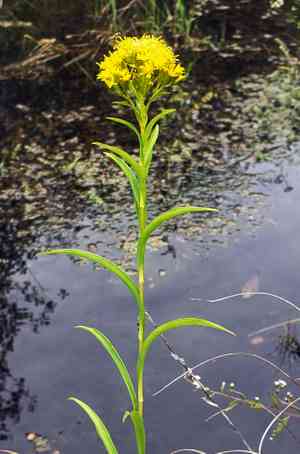
Riddell's goldenrod (Solidago riddellii)
Also known as: Riddell's Goldenrod
Riddell's goldenrod (Solidago riddellii) is a hardy perennial known for its tall, unbranched stems and narrow, lance-shaped leaves. It produces vibrant yellow flower clusters in late summer, offering essential nectar for pollinators. This plant excels in wet meadows and prairies, thanks to its deep root system that enables it to endure waterlogged soils, making it a robust choice for native plant gardens.
In This Article
Attributes of Riddell's goldenrod
Lifespan
Perennial
Plant Type
Herb
Plant Height
61 cm to 91 cm
Spread
Not typically measured for herbaceous plants
Leaf Color
Green
Flower Size
Less than 1 inch (2.5 cm)
Flower Color
Yellow
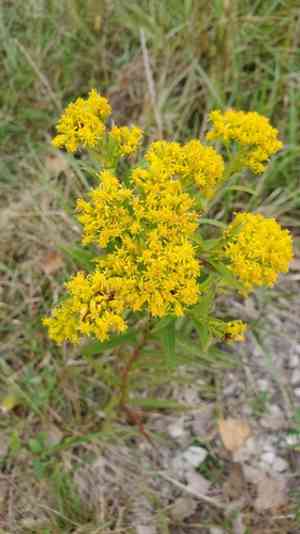
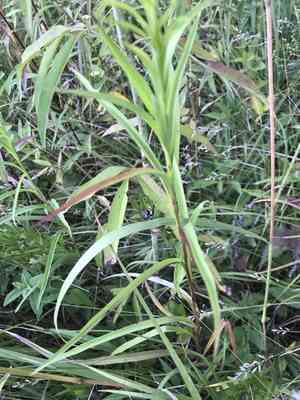
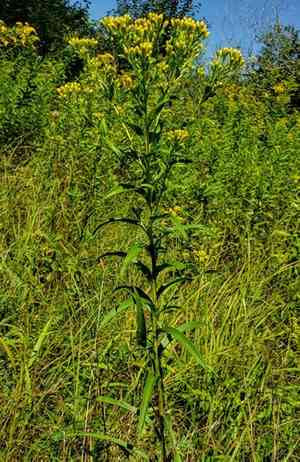
Images of Riddell's goldenrod
Quickly Identify Riddell's goldenrod
1
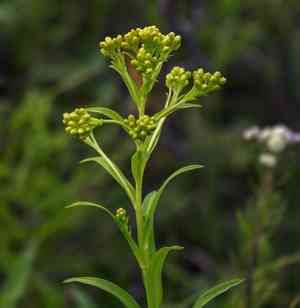
The plant can be identified by its narrow, lanceolate leaves that are typically folded, giving them a distinctive appearance. The inflorescence is a dense, flat-topped cluster of bright yellow flowers.
Scientific Classification of Riddell's goldenrod
Phylum
Vascular plants
Class
Dicotyledons
Order
Asterales
Family
Daisy
Genus
Goldenrods
Species
Riddell's goldenrod
Planting and Growing of Riddell's goldenrod
Care Difficulty
Easy
Watering Schedule
Every 3 days
Sunlight Requirements
Full sun
Sunshine Duration
4-10 hours
Ideal Temperature
60-75℉
Soil Type
Potting Mix, Peat Mix
Soil pH
6-7.5
Fertilizer Type
Balanced
Pruning Season
Spring, Summer
Pruning Area
Branches, Leaves
Pruning Frequency
2 times a year
Repotting Season
Spring
Pot Type
Plastic, Ceramic
 How to Water Riddell's goldenrod?
For Solidago riddellii, the watering amount should be around 500 milliliters per application. This plant thrives with soil that is consistently moist but well-drained. Water thoroughly until the soil is moistened to about a depth of 2 inches, ensuring excess water can drain away.
What are the symptoms of an underwatered Riddell's goldenrod?
›
What should I do if my Riddell's goldenrod is not getting enough water?
›
What are the symptoms of an overwatered Riddell's goldenrod?
›
How to save an overwatered Riddell's goldenrod?
›
 What Are the Sunlight Requirements for Riddell's goldenrod?
Solidago riddellii prefers full to partial sun exposure, benefiting from 6 to 8 hours of sunlight. This light range ensures the plant showcases its vibrant, dense blooms and maintains strong structural growth.
How much light does Solidago riddellii need?
›
What solutions can provide ideal light conditions?
›
What benefits does ideal lighting bring?
›
 What Is the Ideal Temperature Range for Riddell's goldenrod?
Solidago riddellii thrives in temperatures ranging from 60°F to 75°F. This range ensures optimal growth, allowing the plant to photosynthesize efficiently and maintain robust health. Temperatures within this range simulate its natural habitat, fostering both vegetative and flowering stages.
 What Soil is Best for Riddell's goldenrod?
Solidago riddellii thrives in moist soils that retain water well but also drain efficiently. This balance avoids root rot while providing necessary hydration, enhancing the plant's growth and flowering ability. A nutrient-rich loam boosts the growth of Solidago riddellii by supplying essential minerals. This support ensures vibrant foliage and robust flowering, making it a favorite among pollinators. While preferring moisture, the soil must not be soggy. Adequate drainage helps prevent waterlogging, protecting the root structure and promoting sturdy stem development.
 How to Fertilize Riddell's goldenrod?
For Solidago riddellii, it is advisable to use a balanced fertilizer with a ratio such as 10-10-10. When using liquid fertilizer, mix it in water at half the recommended strength; apply approximately 200 ml per plant to avoid overfeeding.
 How to Prune Riddell's goldenrod?
Begin by assessing the plant for any dead or damaged stems from the winter. Use clean, sharp pruning shears to remove these sections, cutting back to healthy growth. This initial spring pruning will spur new growth and set the stage for a flourishing summer bloom. During summer, perform maintenance pruning by deadheading spent blooms. This helps redirect the plant's energy toward producing new flowers rather than seed, prolonging the blooming period. Additionally, trim any stems that detract from the desired shape of the plant. In autumn, cut back the plant after flowering has finished. Remove about one-third of the plant's height to keep it compact and prepare it for winter dormancy. Removing the spent blooms and tidying the foliage ensures the plant stays vigorous and ready for next spring.
More About Pruning Techniques→
 How to Propagate Riddell's goldenrod plant?
1
Start by filling a seed tray with a well-draining potting mix. Sow the seeds evenly on the surface and lightly cover them with soil. Mist the tray to maintain moisture and place it in a location with indirect sunlight.
2
For cuttings, choose healthy stems and make a clean cut just below a leaf node. Remove lower leaves and dip the cut end in rooting hormone. Plant in moist soil and cover with a plastic bag to retain humidity.
3
Dig up the mature plant and carefully separate the root clumps. Each division should have a robust set of roots and healthy shoots. Plant the divisions at the same depth as they were originally growing.
 How to Repot Riddell's goldenrod plant?
1
Solidago riddellii usually displays signs it needs repotting when its roots begin circling the base of its current pot or protruding from the drainage holes. Spring and early summer, when the plant is actively growing, are the best times for repotting. Repotting during this period ensures rapid recovery and reduces transplant shock.
2
Select a new pot that is one size larger than the current one, with adequate drainage holes. A ceramic or terracotta pot aids in moisture absorption, keeping the soil from becoming waterlogged. These materials also provide stability for the tall stems of Solidago riddellii, preventing it from tipping over easily.
3
Opt for a sandy, well-draining soil mix that mimics its natural habitat. This composition provides the necessary aeration and prevents root rot by allowing excess water to escape. Enriched with organic matter, this soil type supports healthy root development and robust plant growth.
Learn More About Riddell's goldenrod Diseases
Anthracnose
Bacterial Leaf Spot
Bacterial Wilt
Chemical Injury
Cyst Nematode
Damping-off
Downy Mildew
Drought Stress
Fusarium Wilt
Gray Mold
Leaf Spot
Mosaic
Nutrient Deficiency
Nutrient Toxicity
Powdery Mildew
Root Rot
Root-knot Nematode
Rusts
Sooty Mold
Spider Mites
Temperature Stress
Thrips Damage
White Mold



