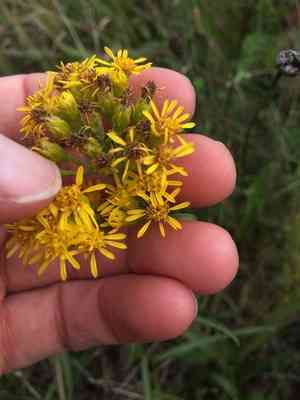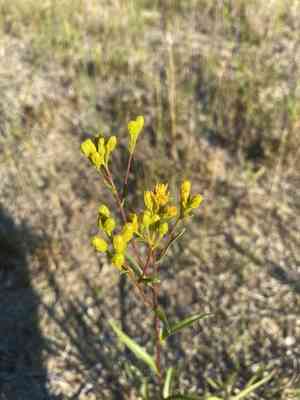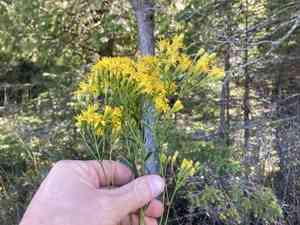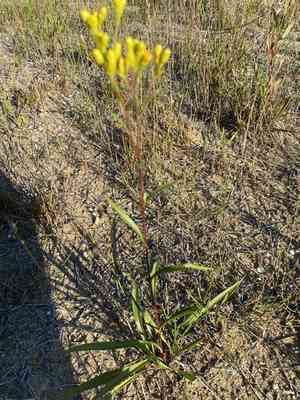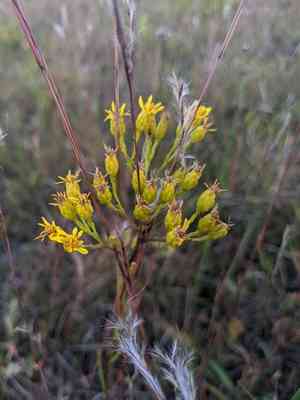
Houghton's goldenrod(Solidago houghtonii)

Houghton's goldenrod (Solidago houghtonii)

Also known as: Houghton's Goldenrod

Houghton's goldenrod (Solidago houghtonii) is identifiable by its bright yellow flower clusters and narrow, lanceolate leaves. Typically standing 10-50 cm tall, it often forms basal rosettes and blooms in late summer, contrasting vividly with nearby vegetation.

Preferred growing conditions include:
- Habitat: Alvar grasslands, Great Lakes shores, and calcareous rock outcrops.
- Soil: Well-drained, sandy or gravelly soils rich in calcium.
- Light: Prefers full sun to partial shade.
- Moisture: Thrives in moist environments but tolerates brief dry periods.

As a threatened species, Houghton's goldenrod is crucial for local pollinators and requires conservation efforts to protect its natural habitats.

Attributes of Houghton's goldenrod

Lifespan
Perennial
Plant Type
Herb
Plant Height
30 cm to 91 cm
Spread
Approximately 30 centimeters (12 inches)
Leaf Color
Green
Flower Size
1-2 centimeters (0.4-0.8 inches)
Flower Color
Yellow

ForwardPlant - Identify plants with a snap

Identify and diagnose plants, get toxicity alerts, and explore safety guides for all types of fungi.

Try for Free

Images of Houghton's goldenrod

Houghton's goldenrod(Solidago houghtonii)

Quickly Identify Houghton's goldenrod

1
Look for its bright yellow flower clusters that bloom in late summer and early fall. The plant typically grows in sandy or rocky soils near lakeshores. Leaves are alternate and lance-shaped.

Scientific Classification of Houghton's goldenrod

Phylum
Vascular plants
Class
Dicotyledons
Order
Asterales
Family
Daisy
Genus
Goldenrods
Species
Houghton's goldenrod

Planting and Growing of Houghton's goldenrod

Care Difficulty
Easy
Watering Schedule
Every 2 days
Sunlight Requirements
Full sun
Sunshine Duration
4-8 hours
Ideal Temperature
60-75℉
Soil Type
Potting Mix, Peat Mix
Soil pH
6.5-7.5
Fertilizer Type
Balanced
Pruning Season
Spring, Summer
Pruning Area
Branches, Leaves
Pruning Frequency
2 times a year
Repotting Season
Spring
Pot Type
Plastic, Ceramic

water icon How to Water Houghton's goldenrod?

When watering Solidago houghtonii, aim for about 300 milliliters per session. Ensure the soil feels moist but not saturated. The goal is to mimic natural rainfall, providing this plant with the moisture it needs without drowning the roots.
What are the symptoms of an underwatered Houghton's goldenrod? ›
What should I do if my Houghton's goldenrod is not getting enough water? ›
What are the symptoms of an overwatered Houghton's goldenrod? ›
How to save an overwatered Houghton's goldenrod? ›

sunlight icon What Are the Sunlight Requirements for Houghton's goldenrod?

Sunlight Requirements: Full sun, Partial sun
Duration of light: 6-8 hours daily
Solidago houghtonii thrives best with full sun or partial sun conditions. Optimal light promotes healthy photosynthesis, resulting in lush growth and abundant flowering.
What is the ideal sunlight condition for Solidago houghtonii? ›
How can I provide the ideal lighting conditions? ›
What benefits does ideal lighting bring? ›

temperature icon What Is the Ideal Temperature Range for Houghton's goldenrod?

Ideal Temperature: 60 ~ 75℉
Solidago houghtonii thrives best within a temperature range of 60°F to 75°F. This range provides a suitable environment for photosynthesis and growth, ensuring healthy development. Maintaining consistent temperatures within this range can prevent stress and promote optimal blooming.

soil icon What Soil is Best for Houghton's goldenrod?

Soil type: Sandy loam, Calcareous soil
Soil PH: 6.5 ~ 7.5
Solidago houghtonii thrives best in well-drained soils that prevent water from pooling around the roots. This condition ensures that the roots have access to air and nutrients, preventing root rot and promoting healthy growth. Soil rich in organic matter provides essential nutrients for the plant, enhancing its vibrant yellow blooms. These nutrients support robust growth and vitality, enabling the plant to endure and flourish even in challenging conditions. While not overly demanding, Solidago houghtonii benefits from soil with moderate fertility levels. This balance ensures that it receives enough nutrients without the risk of excessive vegetative growth, which can impede flowering.

fertilize icon How to Fertilize Houghton's goldenrod?

Fertilizer type: Balanced
For Solidago houghtonii, it's important not to over-fertilize, as it can thrive in moderately fertile soil. A recommended amount is about 1/4 cup of balanced 10-10-10 granular fertilizer per plant annually. This amount supports healthy growth without overwhelming the plant.

prune icon How to Prune Houghton's goldenrod?

Pruning Time: Spring, Summer
Start by identifying any dead or damaged stems and flowers, cutting them back to the base of the plant or to the next healthy set of leaves. This ensures old or unhealthy growth does not sap energy from the plant. After removing unhealthy stems, focus on shaping your Solidago houghtonii for aesthetic appeal. Cut back sprawling growth to maintain a tidy appearance, aiming for a balanced shape that complements the surrounding garden landscape. To control the height and encourage bushier growth, perform a gentle trim on the top of the plant. Prune one-third of the top growth, which encourages lateral sprouting and results in a more robust and compact plant structure. More About Pruning Techniques→

propagate icon How to Propagate Houghton's goldenrod plant?

Propagate Time: Early spring, Late spring
1
Collect viable Solidago houghtonii seeds during its flowering season. Allow seeds to dry completely and store them in a cool, dry place until early spring. This natural dormancy period increases germination success.
2
In early spring, sow seeds in a seed tray filled with a moistened seed-starting mix. Cover seeds lightly with soil and ensure consistent moisture and temperature around 20°C. Germination typically occurs within two weeks.
3
In late spring, identify a mature Solidago houghtonii plant for division. Use a spade to lift the whole plant and gently tease apart the roots into smaller sections. Each section should have healthy roots and shoots for successful establishment.
More About Propagating Techniques→

repot icon How to Repot Houghton's goldenrod plant?

Repotting frequency: Every 2-3 years
1
Look for signs such as roots spiraling around the base, water draining too quickly, or stunted growth. These are clear indicators that Solidago houghtonii needs a new home. Typically, repotting during active growth in spring or early summer is optimal for acclimatization.
2
Select a pot that is one size larger than the current one with ample drainage holes. A slightly wider pot encourages root expansion without overwhelming the plant, contributing to better stability and nutrient absorption.
3
Opt for a well-draining sandy loam mixture, rich in organic matter. This type of soil prevents waterlogging while retaining necessary moisture, promoting healthy root development and providing adequate nutrients for growth.

ForwardPlant - Identify plants with a snap

Find the best spots for them to optimize their health, simply using your phone.

Try for Free