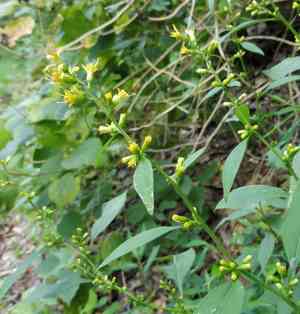
Zigzag Goldenrod (Solidago flexicaulis)
Also known as: Zigzag Goldenrod, Broadleaf Goldenrod
The Zigzag Goldenrod (Solidago flexicaulis) is named for the unique zigzag pattern of its stems. In late summer, it blooms with small yellow flowers. Despite common misconceptions, its pollen is not a major cause of hay fever.
In This Article
Attributes of Zigzag Goldenrod
Lifespan
Perennial
Plant Type
Herb
Plant Height
15 cm to 90 cm
Spread
30 cm to 90 cm
Leaf Color
Green Yellow Variegated
Flower Size
2.5 cm
Flower Color
Yellow
Images of Zigzag Goldenrod
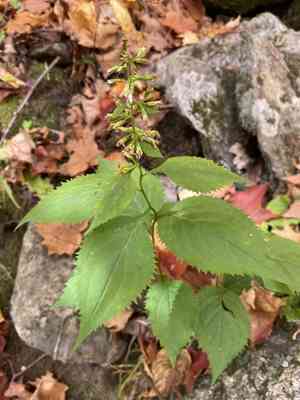
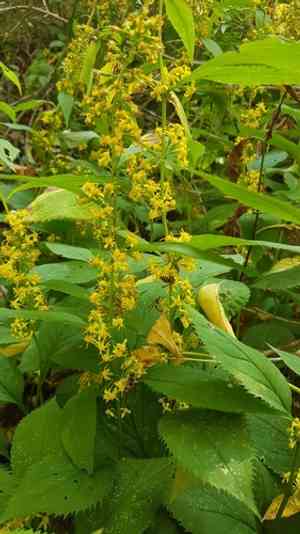
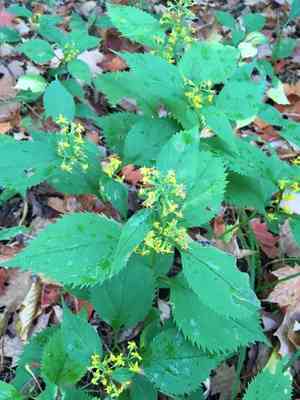
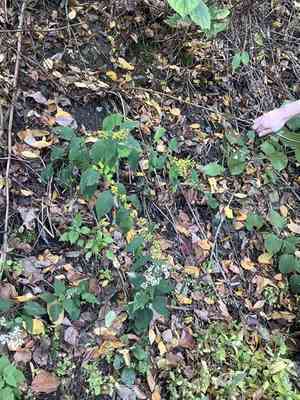
Quickly Identify Zigzag Goldenrod
1
This plant can be identified by its zigzagging stems, broad egg-shaped leaves with toothed edges, and the clusters of small, bright yellow flowers that appear late in the growing season.
Scientific Classification of Zigzag Goldenrod
Phylum
Vascular plants
Class
Dicotyledons
Order
Asterales
Family
Daisy
Genus
Goldenrods
Species
Zigzag Goldenrod
Planting and Growing of Zigzag Goldenrod
Care Difficulty
Easy
Watering Schedule
Every 2 days
Sunlight Requirements
Partial sun
Sunshine Duration
4-6 hours
Ideal Temperature
60-75℉
Soil Type
Potting Mix, Peat Mix
Soil pH
5.5-7.5
Fertilizer Type
Balanced
Pruning Season
Spring, Summer
Pruning Area
Branches, Leaves
Pruning Frequency
2 times a year
Repotting Season
Spring
Pot Type
Plastic, Ceramic
 How to Water Zigzag Goldenrod?
Solidago flexicaulis, also known as zigzag goldenrod, requires about 500 ml of water per session. The goal is to keep the soil consistently moist but not soggy. It's important to water deeply so the water reaches the root zone.
What are the symptoms of an underwatered Zigzag Goldenrod?
›
What should I do if my Zigzag Goldenrod is not getting enough water?
›
What are the symptoms of an overwatered Zigzag Goldenrod?
›
How to save an overwatered Zigzag Goldenrod?
›
 What Are the Sunlight Requirements for Zigzag Goldenrod?
Solidago flexicaulis benefits from partial sunlight to full shade, where lighting conditions favor its growth and flowering. Such environments optimize chlorophyll production, crucial for its vigor and bloom.
More About Sunlight Requirements Techniques→
What is the best lighting environment?
›
How to ensure the plant gets ideal light?
›
What are the benefits of ideal lighting?
›
 What Is the Ideal Temperature Range for Zigzag Goldenrod?
For optimal growth, Solidago flexicaulis, commonly known as broadleaf goldenrod, thrives in moderate temperatures. Ideally, they should be cultivated in an environment where temperatures are consistently maintained between 60 to 75 °F. This range ensures that the plant's metabolic processes function efficiently, promoting healthy growth and vibrant blooms.
 What Soil is Best for Zigzag Goldenrod?
Solidago flexicaulis thrives in soil that retains moisture well. This means having a medium that doesn't dry out quickly, as consistent moisture helps support its robust flowering and leaf growth. Rich soil full of organic matter boosts the nutrient availability necessary for the plant's vigorous growth and vibrant blooms, ensuring that it reaches its maximum ornamental potential. While moisture is crucial, excellent drainage prevents waterlogging, which can lead to root rot. Ensuring your soil drains properly will keep the roots healthy and free from excess moisture damage.
 How to Fertilize Zigzag Goldenrod?
For Solidago flexicaulis, it's essential to apply fertilizer sparingly. Use about half the recommended dose on the package, accounting for the plant's moderate nutritional needs. Excess fertilizer can harm the plant, so always err on the side of caution.
 How to Prune Zigzag Goldenrod?
Begin by identifying any dead or damaged stems, which should be removed first. Next, cut back old, woody stems to encourage new growth. Trim the plant to shape it as desired, ensuring that it maintains an open structure for good air circulation. When cutting, make your cuts at a 45-degree angle, just above a leaf node. This encourages healthy growth and minimizes the risk of disease. Remove no more than one-third of the plant at once to ensure it retains enough energy to recover.
More About Pruning Techniques→
 How to Propagate Zigzag Goldenrod plant?
1
Collect seeds from mature Solidago flexicaulis plants in late autumn and store them in a cool, dry place. Before sowing, stratify the seeds by chilling them in a refrigerator for 4-6 weeks to simulate winter conditions.
2
Sow the stratified seeds in a seed tray filled with a well-draining potting mix in early spring. Lightly cover the seeds with soil and mist them with water. Ensure the seeds are exposed to indirect sunlight for germination.
3
In early spring, carefully dig out a mature Solidago flexicaulis plant using a garden fork. Divide the root clumps into smaller sections, ensuring that each section has healthy roots and shoots. Replant the divisions at the same depth in well-prepared soil.
 How to Repot Zigzag Goldenrod plant?
1
Look for signs such as roots growing out of the drainage holes, the plant's growth slowing considerably, or soil drying out too quickly. These indicate that it's time to give your Solidago flexicaulis more room to thrive by repotting.
2
Choose a pot that is 2 to 3 inches larger in diameter than the current one. This ensures adequate space for root growth, promoting healthy plant development. Opt for pots with drainage holes to prevent water accumulation and root rot.
3
Pick a well-draining and fertile soil mix. This type of soil provides ample nutrients and prevents water logging, which is essential for Solidago flexicaulis, as waterlogged conditions can damage its roots and stunt growth.
Toxicity
Ingestion
WARNING
The judgment on toxicity and danger is for reference only. We DO NOT GUARANTEE any accuracy of such judgment. Therefore, you SHALL NOT rely on such judgment. It is IMPORTANT TO SEEK PROFESSIONAL ADVICE in advance when necessary.
Learn More About Zigzag Goldenrod Diseases
Anthracnose
Bacterial Leaf Spot
Bacterial Soft Rot
Bacterial Wilt
Black Spot
Chemical Injury
Crown Gall
Cyst Nematode
Damping-off
Downy Mildew
Drought Stress
Fusarium Wilt
Gray Mold
Leaf Spot
Mosaic
Nutrient Deficiency
Nutrient Toxicity
Powdery Mildew
Root Rot
Root-knot Nematode
Rusts
Sooty Mold
Spider Mites
Temperature Stress
Thrips Damage
White Mold



