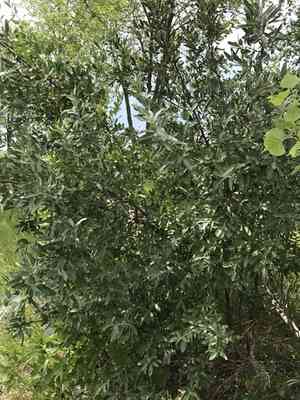
Silver buffaloberry (Shepherdia argentea)
Also known as: Buffaloberry, Silver Buffaloberry
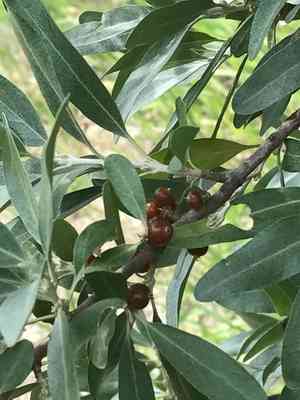
The Silver buffaloberry (Shepherdia argentea) is a deciduous shrub characterized by its silvery-green leaves. It commonly grows in thickets throughout eastern and central North America. The plant produces small, red stone fruits, often mistaken for berries. These fruits contain saponins, compounds that can be harmful if ingested in significant amounts.
In This Article
Attributes of Silver buffaloberry
Lifespan
Perennial
Plant Type
Tree, Shrub
Plant Height
2.5 m to 3.5 m
Spread
2.5 m to 3.5 m
Leaf Color
Silver Gray
Flower Size
2.5 cm
Flower Color
Yellow Green
Images of Silver buffaloberry
Quickly Identify Silver buffaloberry
1
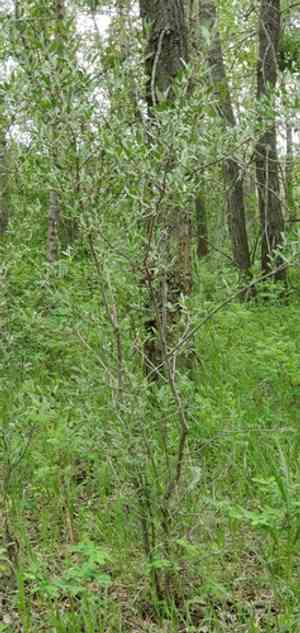
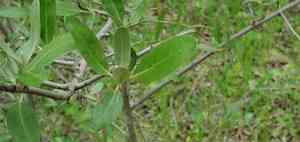
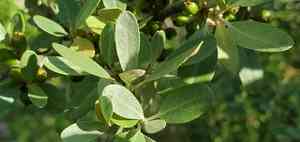
Silver-hued leaves with rounded tips and acute/wedge-shaped bases, 1-2 inches (2.5-5 cm) long.
2
Distinctive bright-red berries, 1/4-1/3 inch (6.35-8.47 mm) in diameter, with single seeds.
3
Thorny stem covered in silvery scales, slender and branching erratically, shedding scales after 2 years.
4
Exfoliating bark on trunk, rough texture revealing grayish brown layers, distinctive peeling pattern.
5
Spring-blooming yellowish female flowers, 0.1-0.2 inches (2.5-5 mm) long, lacking significant scent.
Scientific Classification of Silver buffaloberry
Phylum
Vascular plants
Class
Dicotyledons
Order
Rosales
Family
Oleaster
Genus
Bullberry
Species
Silver buffaloberry
Planting and Growing of Silver buffaloberry
Care Difficulty
Easy
Watering Schedule
Every 2 days
Sunlight Requirements
Full sun
Sunshine Duration
4-8 hours
Ideal Temperature
50-80℉
Soil Type
Potting Mix, Peat Mix
Soil pH
6.5-7.5
Fertilizer Type
Balanced
Pruning Season
Spring, Summer
Pruning Area
Branches, Leaves
Pruning Frequency
2 times a year
Repotting Season
Spring
Pot Type
Plastic, Ceramic
 How to Water Silver buffaloberry?
Shepherdia argentea, also known as silver buffalo berry, appreciates a moderate amount of water, but it’s essential to avoid waterlogging. Aim to give about 500 ml of water every two weeks, making sure that the water reaches the root zone without pooling. Sticking to this amount helps maintain the plant's health by providing sufficient moisture while preventing root rot.
What are the symptoms of an underwatered Silver buffaloberry?
›
What should I do if my Silver buffaloberry is not getting enough water?
›
What are the symptoms of an overwatered Silver buffaloberry?
›
How to save an overwatered Silver buffaloberry?
›
 What Are the Sunlight Requirements for Silver buffaloberry?
Shepherdia argentea prefers full to partial sun. Ideal light conditions enhance robust growth and vibrant fruit yield, utilizing the full spectrum of sunlight effectively.
More About Sunlight Requirements Techniques→
How much sunlight does Shepherdia argentea need daily?
›
What are some methods to ensure Shepherdia argentea gets enough sunlight?
›
What benefits does Shepherdia argentea experience from ideal lighting?
›
 What Is the Ideal Temperature Range for Silver buffaloberry?
The ideal temperature range for cultivating Shepherdia argentea is between 50°F and 80°F. This range promotes optimal growth and fruit production, providing the right conditions for the plant's physiological processes. Maintaining this temperature range helps in avoiding temperature-related stress, which could otherwise hinder the plant's overall health.
 What Soil is Best for Silver buffaloberry?
Shepherdia argentea thrives in well-drained soils that prevent waterlogging. Proper drainage ensures the roots receive enough oxygen, which is crucial for plant health and growth. While not overly demanding, Nutrient-rich soils support healthier growth for Shepherdia argentea by ensuring it has access to essential minerals and nutrients. The soil should retain enough moisture without becoming waterlogged. This balance helps maintain steady growth and prevents the roots from drying out or rotting.
 How to Fertilize Silver buffaloberry?
Shepherdia argentea, commonly known as silver buffaloberry, requires careful attention to fertilizer amounts to support its hardiness. When applying fertilizer, use a balanced formulation, such as a 10-10-10 NPK, and ensure each application is about half a cup per mature shrub. Too much can stress the plant, while too little might lead to underperformance.
 How to Prune Silver buffaloberry?
Begin by removing any dead, diseased, or damaged branches. Look for discolored wood or lack of foliage as indicators. Cutting these first prevents disease spread and redirects energy to healthier branches. To ensure adequate air circulation and light penetration, selectively remove some of the older, thicker branches. Aim to cut these branches close to the main stem to stimulate new growth from the base. Gently trim around the sides and the top of the plant to enhance its natural form. Make cuts just above a node or bud facing outward to encourage new branches to grow away from the centre, preventing overcrowding. Regularly step back to evaluate your work. This practice helps maintain a uniform appearance and prevents over-pruning. Seeing the plant whole ensures you meet both structural and aesthetic goals.
More About Pruning Techniques→
 How to Propagate Silver buffaloberry plant?
1
Harvest ripe berries from the Shepherdia argentea plant in autumn, clean the seeds to remove any pulp and store them in a cool, dry place until you are ready to plant in spring.
2
Choose healthy stems and cut them to about 4-6 inches long. Remove the lower leaves to prevent rotting and dip the cut end in rooting hormone to encourage root growth.
3
Plant seeds or cuttings into a propagation tray filled with moist soil or a suitable growing medium. Ensure the soil remains moist but not waterlogged to prevent fungal issues.
 How to Repot Silver buffaloberry plant?
1
Look for signals such as roots emerging from the drainage holes or if the plant appears to be top-heavy. These signs indicate that the Shepherdia argentea has outgrown its current pot. Repotting should ideally occur in spring or summer when the plant is actively growing.
2
Select a new pot that is one size larger than the current one to provide room for root growth. A pot with drainage holes is essential to prevent waterlogging, which can lead to root rot. A slightly larger pot helps avoid excessive soil, which retains too much moisture.
3
Opt for a well-draining sandy soil mix to mimic the plant's natural habitat. This type of soil prevents water stagnation, allowing the roots to breathe and thrive. Adding perlite or coarse sand can improve drainage and aeration further.



