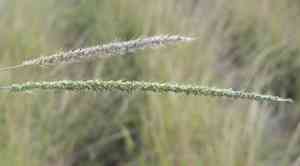
Plains bristlegrass (Setaria vulpiseta)
Also known as: Yellow Bristle Grass
This perennial grass reaches heights of approximately 91 to 122 cm. Upon maturity, it exhibits a yellow hue. The leaves, which can extend up to 25 cm in length, are covered in fine hairs and feature a ligule made of hair-like structures. The inflorescence is slender and can grow up to 13 cm long.
In This Article
Attributes of Plains bristlegrass
Lifespan
Perennial
Plant Type
Grass
Plant Height
91 cm to 1.8 m
Spread
N/A
Leaf Color
Green
Flower Size
N/A
Flower Color
N/A
Images of Plains bristlegrass
Quickly Identify Plains bristlegrass
1
The identification of Setaria vulpiseta can be done by observing its bristly seed heads that have a yellowish hue. The leaves are linear and can grow up to 20 cm long.
Scientific Classification of Plains bristlegrass
Phylum
Vascular plants
Class
Monocotyledons
Order
Poales
Family
Grass
Genus
Bristle grasses
Species
Plains bristlegrass
Planting and Growing of Plains bristlegrass
Care Difficulty
Easy
Watering Schedule
Every 3 days
Sunlight Requirements
Full sun
Sunshine Duration
4-6 hours
Ideal Temperature
60-75℉
Soil Type
Potting Mix, Peat Mix
Soil pH
6-7.5
Fertilizer Type
Balanced
Pruning Season
Spring, Summer
Pruning Area
Branches, Leaves
Pruning Frequency
2 times a year
Repotting Season
Spring
Pot Type
Plastic, Ceramic
 How to Water Plains bristlegrass?
Setaria vulpiseta thrives best when the soil remains consistently yet lightly moist. Aim for about 500 ml of water per session, ensuring the soil is moist but not waterlogged. It's vital to check that water drains well, so there's no standing water at the plant's base.
What are the symptoms of an underwatered Plains bristlegrass?
›
What should I do if my Plains bristlegrass is not getting enough water?
›
What are the symptoms of an overwatered Plains bristlegrass?
›
How to save an overwatered Plains bristlegrass?
›
 What Are the Sunlight Requirements for Plains bristlegrass?
Setaria vulpiseta prospers best under full to partial sun conditions, typically 5 to 8 hours daily, promoting robust growth and vibrant, lush foliage.
How much sunlight does Setaria vulpiseta ideally need?
›
How to ensure Setaria vulpiseta gets its ideal lighting?
›
What are the benefits of ideal lighting for Setaria vulpiseta?
›
 What Is the Ideal Temperature Range for Plains bristlegrass?
The ideal temperature range for Setaria vulpiseta, commonly known as foxtail grass, is between 60°F and 75°F. This range provides optimal conditions for photosynthesis, growth, and overall plant health, minimizing stress and maximizing the plant's energy efficiency.
 What Soil is Best for Plains bristlegrass?
Setaria vulpiseta thrives in well-drained soils. This kind of soil allows water to flow freely, preventing waterlogging and promoting healthy root development. This plant flourishes in moderately fertile soils that provide sufficient nutrients. Well-balanced soil composition supports healthy plant growth and robust foliage. While well-drained, the soil should also retain some moisture to ensure that the plant remains hydrated, especially during dry periods, boosting its resilience.
 How to Fertilize Plains bristlegrass?
For Setaria vulpiseta, a balanced liquid fertilizer diluted to half the recommended strength should be used. Apply approximately 100-150 ml per plant each feeding to ensure even nutrient distribution.
 How to Prune Plains bristlegrass?
To prune Setaria vulpiseta, start by identifying any damaged or discolored stems. Use sharp shears to cut these back to the base. Next, trim back the excess growth, focusing on keeping the shape natural and balanced. Remove seed heads to encourage leaf growth. After pruning, water the plant thoroughly to help it recover from the stress. Apply a balanced fertilizer to support new growth and maintain soil health.
 How to Propagate Plains bristlegrass plant?
1
Fill the seed tray with potting mix and scatter the Setaria vulpiseta seeds evenly on top. Cover them lightly with a thin layer of soil and water gently to ensure uniform moisture without disturbing the seeds.
2
Place the seed tray in a warm location with indirect sunlight. Maintain a consistent temperature around 20°C (68°F) and keep the soil moist by misting it regularly.
3
Once seedlings have developed a few true leaves and are strong enough to handle, they can be transplanted into individual pots or directly into the garden soil, ensuring they have enough space to grow.
 How to Repot Plains bristlegrass plant?
1
Setaria vulpiseta needs repotting when the roots start growing out of the drainage holes or the soil has become compacted and is not retaining moisture well. If the plant looks top-heavy or growth has slowed despite regular care, these are further signs that repotting is necessary.
2
Choose a pot that is 1 to 2 inches larger in diameter than the current one. Select a container with good drainage holes to prevent waterlogging, which can lead to root rot. The new pot should be stable enough to support the plant's growth, preventing it from toppling over.
3
Opt for a well-draining potting mix that retains some moisture yet allows excess water to escape freely. This helps the roots breathe and reduces the risk of root rot. Including components like perlite or coarse sand can improve aeration and drainage, promoting healthy root development.



