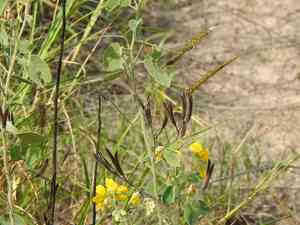
Durango senna (Senna durangensis)
Also known as: Durango Cassia
Durango senna stands out with its bushy form and striking yellow flowers that flourish in warm weather. The plant features compound leaves made up of several leaflets, optimizing sunlight absorption and aiding its survival in dry climates. Its strong root system provides stability and allows it to thrive in rocky, mountainous regions.
In This Article
Attributes of Durango senna
Lifespan
Perennial
Plant Type
Shrub
Plant Height
It typically reaches heights of 1-2 meters.
Spread
The crown diameter can span up to 1-1.5 meters.
Leaf Color
The leaves are usually green.
Flower Size
The flower diameter ranges between 2-3 centimeters.
Flower Color
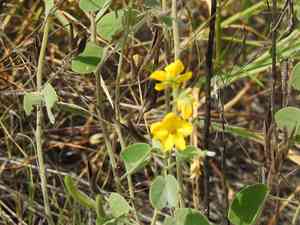
The flowers are bright yellow.
Images of Durango senna
Quickly Identify Durango senna
1
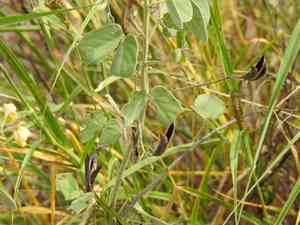
To identify Senna durangensis, look for its yellow, five-petaled flowers, pinnate leaves with multiple small leaflets, and its growth as a shrub.
Scientific Classification of Durango senna
Phylum
Vascular plants
Class
Dicotyledons
Order
Fabales
Family
Legume
Genus
Sennas
Species
Durango senna
Planting and Growing of Durango senna
Care Difficulty
Moderate
Watering Schedule
Every 2 days
Sunlight Requirements
Full sun
Sunshine Duration
4-8 hours
Ideal Temperature
65-75℉
Soil Type
Potting Mix, Peat Mix
Soil pH
6.5-7.5
Fertilizer Type
Balanced
Pruning Season
Spring, Summer
Pruning Area
Branches, Leaves
Pruning Frequency
2 times a year
Repotting Season
Spring
Pot Type
Plastic, Terracotta
 How to Water Durango senna?
For Senna durangensis, ensuring the right watering amount is crucial. The plant requires approximately 500 ml of water per session. This amount should be sufficient to keep the soil moderately moist but not waterlogged, thereby mimicking its native semi-arid conditions.
What are the symptoms of an underwatered Durango senna?
›
What should I do if my Durango senna is not getting enough water?
›
What are the symptoms of an overwatered Durango senna?
›
How to save an overwatered Durango senna?
›
 What Are the Sunlight Requirements for Durango senna?
Senna durangensis thrives under full to partial sunlight, benefiting from prolonged exposure which fuels photosynthesis and blooming. Ideal light contributes to vigorous growth and vibrant flower colors.
What is the ideal light requirement for Senna durangensis?
›
How can you achieve the ideal lighting conditions for Senna durangensis?
›
What are the benefits of providing ideal lighting conditions for Senna durangensis?
›
 What Is the Ideal Temperature Range for Durango senna?
Senna durangensis thrives best within the temperature range of 65°F to 75°F. This range ensures optimal metabolic processes, efficient nutrient uptake, and robust growth patterns. Consistent temperatures in this range also help prevent stress and potential diseases.
 What Soil is Best for Durango senna?
Senna durangensis thrives best in soil rich in nutrients, which promote robust growth and vibrant blooming. Introducing organic matter, such as compost, enhances the fertility of the soil, ultimately benefiting the plant's foliage and flower production. This plant prefers soil that allows excess water to drain easily. Well-draining soil prevents waterlogging, reducing the risk of root rot and ensuring optimal growth conditions for Senna durangensis. Balancing moisture retention in the soil is crucial. The soil must hold adequate moisture for nutrients absorption, yet not become too saturated. Well-balanced moisture levels support the plant's sustained health and vigor.
 How to Fertilize Durango senna?
Senna durangensis benefits from moderate feeding. For liquid fertilizers, apply about half the recommended amount per gallon, as too much can cause root damage. For slow-release fertilizers, use around 2-3 tablespoons per plant to ensure ample nutrients without risk of overloading.
 How to Prune Durango senna?
Begin by inspecting the base of the plant for any damaged, dead, or diseased branches. Gently trim these sections back to healthy wood to prevent the spread of decay and facilitate improved plant health. Removing these portions helps the plant allocate resources more effectively to its healthier parts. After removing diseased portions, focus on shaping the plant to encourage a balanced and airy canopy. Cut back any excess growth that inhibits light and air penetration, paying attention to remove excess growth that creates congestion within the plant framework. Thinning the interior branches helps deter mold and fungal infections while promoting a robust, visually appealing shape. If hard pruning is required, ensure that it's done sparingly and primarily during the active growing season. Hard pruning means removing a significant amount of the growth, so to minimize stress to Senna durangensis, avoid doing this frequently or outside the spring and summer growth windows.
More About Pruning Techniques→
 How to Propagate Durango senna plant?
1
Collect seeds from healthy Senna durangensis pods, ensuring they are mature and dry. This helps ensure that the seeds are viable and ready for germination.
2
Fill a seed tray with potting mix, sow the seeds evenly on the surface, and lightly cover them with more potting mix. Maintain moisture for optimal germination.
3
Place the seed tray in a warm, sunny spot, as temperature and light are critical for germination. Regularly check the moisture levels and avoid letting the seeds dry out.
 How to Repot Durango senna plant?
1
Senna durangensis shows signs it's ready for a new pot when its roots start peering out of the drainage holes or the plant's growth appears stunted despite adequate watering and light. Spring or summer is ideal for repotting, as the plant is in a growth phase and can recover quickly.
2
Opt for a pot that's only a size larger than the current one. The new pot should have ample drainage holes to prevent waterlogging, which can harm the roots. A clay or terracotta pot aids in moisture wicking, beneficial for a plant that thrives in well-drained conditions.
3
Selecting sandy, well-draining soil is crucial for Senna durangensis, mimicking its natural habitat. Such soil composition prevents root rot by allowing excess water to pass through, while still retaining necessary nutrients essential for plant growth.
Toxicity
ingestion
WARNING
The judgment on toxicity and danger is for reference only. We DO NOT GUARANTEE any accuracy of such judgment. Therefore, you SHALL NOT rely on such judgment. It is IMPORTANT TO SEEK PROFESSIONAL ADVICE in advance when necessary.
Learn More About Durango senna Diseases
Anthracnose
Bacterial Leaf Spot
Bacterial Wilt
Black Spot
Chemical Injury
Crown Gall
Cyst Nematode
Damping-off
Downy Mildew
Drought Stress
Fusarium Wilt
Gray Mold
Leaf Curl
Leaf Spot
Mosaic
Nutrient Deficiency
Nutrient Toxicity
Powdery Mildew
Root Rot
Root-knot Nematode
Rusts
Sooty Mold
Spider Mites
Temperature Stress
Thrips Damage
White Mold



