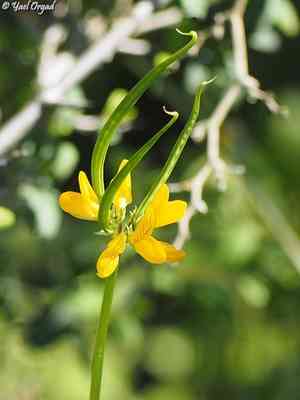
Goat pea(Securigera securidaca)

Goat pea (Securigera securidaca)

Also known as: Crown Vetch, Crestpea

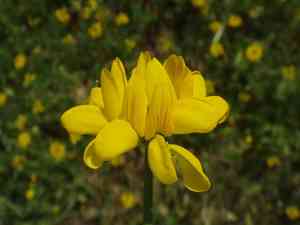
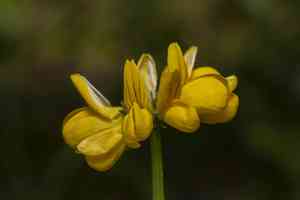
Goat pea, also known as crown vetch (Securigera varia), is a hardy perennial herb characterized by its trailing growth and clusters of pink to purple flowers. Its compound leaves have multiple leaflets, and it produces distinctive seed pods. Crown vetch thrives in well-drained soils and is often found on sunny slopes and meadows.

**Characteristics:**
- **Growth Habit:** Trailing, spreading
- **Flowers:** Pink to purple, clustered
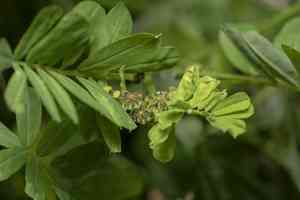
- **Leaves:** Compound with numerous leaflets
- **Roots:** Deep and extensive, aiding in soil stabilization

**Common Uses:**
- **Erosion Control:** Utilized for stabilizing slopes and preventing soil erosion due to its deep root system.
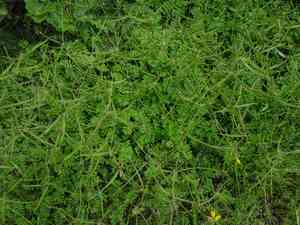
- **Ground Cover:** Ideal for covering large areas because of its dense, spreading growth.
- **Ornamental Planting:** Its attractive flowers make it suitable for gardens and landscapes.
- **Forage:** Occasionally used as forage with caution due to potential toxicity to non-ruminants.

Caution is needed as crown vetch can become invasive in some regions.

Attributes of Goat pea

Lifespan
Annual
Plant Type
Herb
Plant Height
20-70 cm (8-28 inches)
Spread
Spreading up to several meters through stolons
Leaf Color
Green
Flower Size
1-1.5 cm (0.4-0.6 inches)
Flower Color
Pink to purple

ForwardPlant - Identify plants with a snap

Identify and diagnose plants, get toxicity alerts, and explore safety guides for all types of fungi.

Try for Free

Images of Goat pea

Goat pea(Securigera securidaca)

Quickly Identify Goat pea

1
Crown Vetch can be identified by its compound leaves with 9-25 pairs of leaflets, pink to purple flower clusters, and a trailing growth habit. The flowers are pea-like in appearance and form dense clusters.

Scientific Classification of Goat pea

Phylum
Vascular plants
Class
Dicotyledons
Order
Fabales
Family
Legume
Genus
Crownvetch
Species
Goat pea

Planting and Growing of Goat pea

Care Difficulty
Easy
Watering Schedule
Every 2 days
Sunlight Requirements
Full sun
Sunshine Duration
6-10 hours
Ideal Temperature
50-77℉
Soil Type
Potting Mix, Peat Mix
Soil pH
6.5-7.5
Fertilizer Type
Balanced
Pruning Season
Spring, Summer
Pruning Area
Branches, Leaves
Pruning Frequency
2 times a year
Repotting Season
Spring
Pot Type
Plastic, Ceramic

water icon How to Water Goat pea?

Securigera securidaca prefers moderate watering. Each time you water, ensure about 200 milliliters per plant. The goal is to soak the soil thoroughly without causing waterlogging, allowing excess to drain away naturally.
What are the symptoms of an underwatered Goat pea? ›
What should I do if my Goat pea is not getting enough water? ›
What are the symptoms of an overwatered Goat pea? ›
How to save an overwatered Goat pea? ›

sunlight icon What Are the Sunlight Requirements for Goat pea?

Sunlight Requirements: Full sun, Partial sun
Duration of light: 6-8 hours daily
The plant thrives in full to partial sun, ideally receiving morning light and afternoon shade, which supports healthy growth and abundant flowering.
What is the ideal amount of sunlight for Securigera securidaca? ›
How can you ensure Securigera securidaca receives ideal lighting? ›
What benefits does ideal lighting provide for Securigera securidaca? ›

temperature icon What Is the Ideal Temperature Range for Goat pea?

Ideal Temperature: 50 ~ 77℉
The ideal temperature range for Securigera securidaca is between 50°F and 77°F. This range allows the plant to thrive by ensuring optimal metabolic processes. At these temperatures, the plant can effectively photosynthesize and absorb nutrients, thus promoting healthy growth.

soil icon What Soil is Best for Goat pea?

Soil type: Loam, Sandy loam, Calcareous soil
Soil PH: 6.5 ~ 7.5
Securigera securidaca prefers soil with excellent drainage attributes. Well-draining soil prevents waterlogging, reducing the risk of root rot and enabling the plant to access nutrients efficiently, promoting healthier growth. The plant thrives in soil with moderate fertility. This encourages steady growth without the excessive lushness that overly fertile soils can induce, which might make the plant more susceptible to pests and diseases. Securigera securidaca enjoys slightly alkaline soil conditions, up to a pH of 7.5. These conditions help enhance nutrient availability, like calcium and magnesium, which are vital for healthy foliage and stem development.

fertilize icon How to Fertilize Goat pea?

Fertilizer type: Balanced
For Securigera securidaca, use a balanced 10-10-10 NPK fertilizer. When applying liquid fertilizers, mix one tablespoon per gallon of water. For solid fertilizers, use one tablespoon per square foot of soil area.

prune icon How to Prune Goat pea?

Pruning Time: Spring, Summer
Begin by identifying dead, diseased, or damaged stems and branches. These should be the first to be removed to encourage healthy growth. Look for any parts of the plant that appear brown or have an unusual texture. Starting from the base, gently work your way up the plant, pruning off any unruly growth. This method helps maintain a natural look and promotes better air circulation through the plant. Shape the plant as desired by trimming any overgrown or long stems to encourage a bushier form. Align cuts slightly above a bud to direct new growth outward rather than inward, which can crowd the plant.

propagate icon How to Propagate Goat pea plant?

Propagate Time: Spring, Early summer
1
Soak the seeds in water for 24 hours prior to planting. This step helps to soften the seed coat, promoting faster germination by allowing water to penetrate more easily into the seed.
2
Fill seed trays or pots with potting mix and sow the seeds about 1 cm deep. Cover them lightly with soil and water thoroughly but gently to avoid displacing the seeds.
3
Place the trays or pots in a warm location with indirect sunlight. Maintain a consistent moisture level in the soil using a misting spray bottle to avoid over-watering.

repot icon How to Repot Goat pea plant?

Repotting frequency: Every 2-3 years
1
Securigera securidaca needs repotting when it shows signs of being root-bound, such as roots emerging from drainage holes or stunted growth. The best time is early spring when it’s starting its active growth phase, allowing it ample time to establish in the new environment.
2
Opt for a pot that is approximately 1-2 inches larger in diameter than the current one. Ensure it has good drainage holes to prevent waterlogging, which could lead to root rot. The right size pot prevents excessive soil that retains moisture, which can be detrimental to plant health.
3
Select well-draining sandy loam soil that mimics its natural environment. The sandy aspect ensures excellent drainage, while the loam adds essential nutrients. This combination prevents root rot by avoiding water retention and provides a rich nutrient base for healthy growth.

ForwardPlant - Identify plants with a snap

Find the best spots for them to optimize their health, simply using your phone.

Try for Free

Toxicity

Ingestion

Identify toxic plants for your safety

Learn which plants are harmful to you and your pets, and make informed choices for a safer home!

Try for Free
WARNING
The judgment on toxicity and danger is for reference only. We DO NOT GUARANTEE any accuracy of such judgment. Therefore, you SHALL NOT rely on such judgment. It is IMPORTANT TO SEEK PROFESSIONAL ADVICE in advance when necessary.