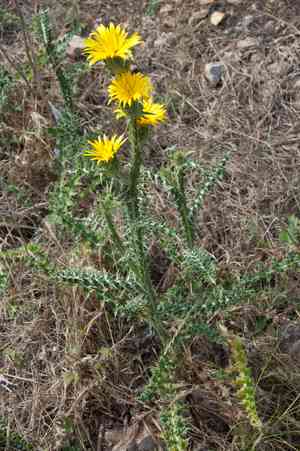
Large-flowered golden thistle (Scolymus grandiflorus)
Also known as: Golden-Thistle
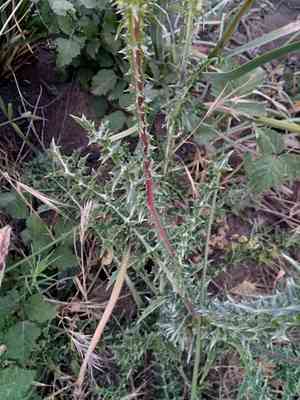
Scolymus grandiflorus is a spiny herbaceous plant, either annual or biennial, growing up to 75 cm in height and containing milky latex. Its chromosome number is 2n = 20.
In This Article
Attributes of Large-flowered golden thistle
Lifespan
Perennial
Plant Type
Herb
Plant Height
50-100 cm
Spread
Not applicable
Leaf Color
Dark green
Flower Size
3-5 cm
Flower Color
Bright yellow
Images of Large-flowered golden thistle
Quickly Identify Large-flowered golden thistle
1
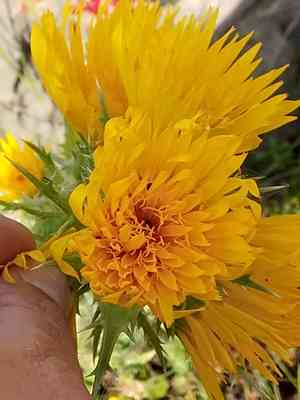
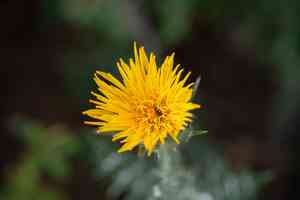
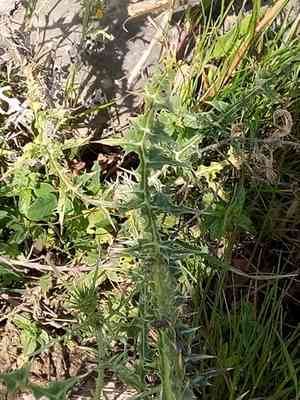
Identify this plant by its tall stems, spiny leaves, and striking yellow flower heads that display radiating strips or spines around the petals.
Scientific Classification of Large-flowered golden thistle
Phylum
Vascular plants
Class
Dicotyledons
Order
Asterales
Family
Daisy
Genus
Golden thistles
Species
Large-flowered golden thistle
Planting and Growing of Large-flowered golden thistle
Care Difficulty
Moderate
Watering Schedule
Every 2 days
Sunlight Requirements
Partial sun
Sunshine Duration
4-6 hours
Ideal Temperature
60-75℉
Soil Type
Potting Mix, Peat Mix
Soil pH
6.5-8
Fertilizer Type
Balanced
Pruning Season
Spring, Summer
Pruning Area
Branches, Leaves
Pruning Frequency
2 times a year
Repotting Season
Spring
Pot Type
Plastic, Ceramic
 How to Water Large-flowered golden thistle?
Scolymus grandiflorus thrives when watered thoroughly. Aim to saturate the soil until water drains from the bottom of the pot. This ensures the roots receive ample moisture without being waterlogged. It's crucial to allow the soil to dry out between waterings.
What are the symptoms of an underwatered Large-flowered golden thistle?
›
What should I do if my Large-flowered golden thistle is not getting enough water?
›
What are the symptoms of an overwatered Large-flowered golden thistle?
›
How to save an overwatered Large-flowered golden thistle?
›
 What Are the Sunlight Requirements for Large-flowered golden thistle?
Partial sun with ideal light exposure ensures that Scolymus grandiflorus gains sufficient energy for optimal photosynthesis, promoting full blooming and maintaining its structural integrity.
What is the best lighting condition for Scolymus grandiflorus?
›
How can you achieve ideal light conditions?
›
What are the benefits of ideal lighting for Scolymus grandiflorus?
›
 What Is the Ideal Temperature Range for Large-flowered golden thistle?
The ideal temperature range for Scolymus grandiflorus is between 60°F and 75°F. This range ensures optimal growth and vitality, promoting healthy foliage and flowering. Maintaining this temperature helps in preventing stress and facilitates proper metabolic activities within the plant. It is crucial for the plant's growth cycle, from seed germination to full bloom.
 What Soil is Best for Large-flowered golden thistle?
Scolymus grandiflorus thrives in nutrient-rich soils capable of providing consistent nourishment to support its growth and flowering. This quality ensures the plant can maximize its potential, providing robust growth and vibrant blossoms that adorn any garden setting. The plant benefits from well-drained soil conditions, which prevent root rot by allowing excess water to escape easily. Such soil conditions encourage healthy root development, crucial for the plant’s uptake of nutrients and overall vitality. Scolymus grandiflorus prefers soil with moderate moisture, avoiding both overly dry and waterlogged conditions. Maintaining this balance supports optimal health, reducing stress on the plant and fostering lush, green foliage and prolific flowering.
 How to Fertilize Large-flowered golden thistle?
For Scolymus grandiflorus, a balanced fertilizer with an NPK ratio of 10-10-10 is recommended. Use one tablespoon of liquid fertilizer diluted in one gallon of water per plant. For slow-release granules, use one teaspoon per plant.
 How to Prune Large-flowered golden thistle?
Examine Scolymus grandiflorus for any dead or damaged leaves and stems. Use sharp, clean pruning shears to make cuts above a leaf node or near the base of the plant. Pruning at these points encourages new shoots to emerge, helping the plant to maintain a balanced and healthy structure. Focus on removing the oldest and longest stems to promote new growth and prevent overcrowding. Prune away stems that cross over each other to improve air circulation through the plant's center. This step aids in reducing the risk of fungal diseases and maximizes light penetration.
More About Pruning Techniques→
 How to Propagate Large-flowered golden thistle plant?
1
Collect mature seeds from a healthy Scolymus grandiflorus plant. Clean the seeds to remove any debris and store them in a cool, dry place until sowing. Pre-soak the seeds in water for 24 hours before planting to enhance germination.
2
Select a healthy shoot from the plant and cut a 4-6 inch section just below a node. Remove the lower leaves to expose the nodes and dip the cut end in rooting hormone to promote root development.
3
Plant the seeds or cuttings in well-draining soil, ensuring they are placed at appropriate depth: seeds just below the surface and cuttings about half their length. Water adequately and cover with a plastic dome or bag to maintain humidity.
 How to Repot Large-flowered golden thistle plant?
1
Repot Scolymus grandiflorus when you notice roots circling the bottom of the pot or emerging through drainage holes. These are signs that the plant has outgrown its current home and needs more space to thrive. Additionally, if the plant's growth seems stunted or the soil condition has deteriorated, it's time for repotting to rejuvenate the root system.
2
Select a pot that is one size larger than the current one, ensuring ample space for root expansion. A pot with good drainage holes is crucial to prevent waterlogging, which can lead to root rot. The material can vary—ceramic, plastic, or terracotta—all offer different benefits. For instance, terracotta breathes better, which helps in aeration of the roots.
3
Opt for a well-drained loamy soil mix, enhanced with some organic matter for nutrients. The loamy texture allows for excellent root aeration and water retention balance, ensuring the plant doesn't sit in water for too long. Such composition mimics its natural habitat, promoting healthy growth and vibrant blooms.
Learn More About Large-flowered golden thistle Diseases
Bacterial Leaf Spot
Bacterial Soft Rot
Bacterial Wilt
Chemical Injury
Cyst Nematode
Damping-off
Downy Mildew
Drought Stress
Fusarium Wilt
Gray Mold
Leaf Spot
Mosaic
Nutrient Deficiency
Nutrient Toxicity
Powdery Mildew
Root Rot
Root-knot Nematode
Rusts
Sooty Mold
Spider Mites
Temperature Stress
Thrips Damage
White Mold



