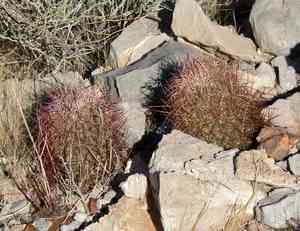
Pygmy barrel cactus(Sclerocactus johnsonii)

Pygmy barrel cactus (Sclerocactus johnsonii)

Also known as: Johnson's fishhook cactus

The pygmy barrel cactus (Echinocactus horizonthalonius) is a small, spherical cactus characterized by its dense, protective spines, which are typically gray or tan. These spines create a formidable barrier against herbivores and provide shade to reduce water loss. The cactus is known for its striking pink to magenta flowers, which stand out vividly against the stark desert scenery.

Adapted to arid conditions, the pygmy barrel cactus has developed a number of survival strategies. Its thick, rounded body serves as a reservoir for storing water, enabling it to endure prolonged periods of drought. It thrives in rocky soils and can withstand extreme temperature fluctuations common in desert environments. The ribbed structure of the cactus allows it to expand and contract efficiently, optimizing water absorption during infrequent rainfalls. Additionally, it employs CAM photosynthesis, opening its stomata at night to minimize water loss while still conducting essential photosynthetic processes.

Attributes of Pygmy barrel cactus

Lifespan
Perennial
Plant Type
Succulent
Plant Height
15 to 20 cm
Spread
Up to 10 cm
Leaf Color
N/A (cactus)
Flower Size
2 to 3 cm
Flower Color
Pink to lavender

ForwardPlant - Identify plants with a snap

Identify and diagnose plants, get toxicity alerts, and explore safety guides for all types of fungi.

Try for Free

Images of Pygmy barrel cactus

Pygmy barrel cactus(Sclerocactus johnsonii)

Quickly Identify Pygmy barrel cactus

1
Identify Sclerocactus johnsonii by its cylindrical shape, hooked central spines, and the small, funnel-shaped flowers that bloom in late spring to early summer. The stems are often covered with overlapping spines in various shades of brown and white.

Scientific Classification of Pygmy barrel cactus

Phylum
Vascular plants
Class
Dicotyledons
Order
Caryophyllales
Family
Cactuses
Genus
Hard cactus
Species
Pygmy barrel cactus

Planting and Growing of Pygmy barrel cactus

Care Difficulty
Hard
Watering Schedule
Every day
Sunlight Requirements
Full sun
Sunshine Duration
4-8 hours
Ideal Temperature
60-80℉
Soil Type
Potting Mix, Peat Mix
Soil pH
6.5-7.5
Fertilizer Type
Balanced
Pruning Season
Spring, Summer
Pruning Area
Branches, Leaves
Pruning Frequency
2 times a year
Repotting Season
Spring
Pot Type
Plastic, Ceramic

water icon How to Water Pygmy barrel cactus?

Sclerocactus johnsonii benefits from a modest watering approach. It's crucial to allow the soil to dry completely between watering sessions. Water deeply but avoid waterlogging by ensuring that excess water drains well. Typically, about 100 ml of water suffices to moisten the surrounding soil.
What are the symptoms of an underwatered Pygmy barrel cactus?
What should I do if my Pygmy barrel cactus is not getting enough water?
What are the symptoms of an overwatered Pygmy barrel cactus?
How to save an overwatered Pygmy barrel cactus?

sunlight icon What Are the Sunlight Requirements for Pygmy barrel cactus?

Sunlight Requirements: Full sun, Partial sun
Duration of light: Six to eight hours
Sclerocactus johnsonii thrives under full sun to partial sun, receiving up to eight hours of light. This promotes healthy growth, robust structure, and resistance to drought conditions typical of desert ecosystems.
What is the ideal lighting condition for Sclerocactus johnsonii?
How can I achieve these ideal lighting conditions for my Sclerocactus johnsonii?
What are the benefits of providing ideal lighting for Sclerocactus johnsonii?

temperature icon What Is the Ideal Temperature Range for Pygmy barrel cactus?

Ideal Temperature: 60 ~ 80℉
Sclerocactus johnsonii thrives best in temperatures ranging from 60°F to 80°F. These temperatures mimic its natural habitat, allowing it to experience the right balance of warmth and coolness for optimal growth. Maintaining this range ensures that the cactus can perform essential physiological functions properly, like photosynthesis and water retention.

soil icon What Soil is Best for Pygmy barrel cactus?

Soil type: Sandy soil, Sandy loam
Soil PH: 6.5 ~ 7.5
Sclerocactus johnsonii thrives in well-drained soils. Adequate drainage prevents water from pooling around the roots, which can lead to root rot. Well-drained soil mimics its natural desert habitat, allowing it to absorb moisture quickly and stay dry enough to prevent harmful fungi or bacteria. This cactus prefers soils that do not hold too many nutrients, reflecting its native conditions. It has adapted to absorb the minimal nutrients available in poor desert soils. Nutrient conserving soils support the cactus's survival strategy, preventing over-fertilization and maintaining healthy growth patterns. Sclerocactus johnsonii is suited for soils with low organic matter content. In its native environment, organic matter is sparse, and soils are mineral-rich but low in nutrients. This condition forces the plant to develop a robust root system and resist pests and diseases common in richer soils.

fertilize icon How to Fertilize Pygmy barrel cactus?

Fertilizer type: Balanced
For Sclerocactus johnsonii, use a balanced cactus fertilizer at half strength. During the growing season, apply approximately 1/4 teaspoon per gallon of water when using liquid fertilizer. With slow-release, follow package instructions tailored for cacti.

prune icon How to Prune Pygmy barrel cactus?

Pruning Time: Spring, Summer, Autumn
Before you begin pruning your Sclerocactus johnsonii, carefully inspect the plant for any dead or damaged spines and stems. These areas can often be identified by their shriveled or brownish appearance. Target these areas for removal to encourage healthy growth. Start by disinfecting your pruning shears with alcohol to prevent any potential spread of diseases. 2. Gently remove any debris from around the base of the cactus. 3. Begin pruning at the base, making clean cuts to remove dead or damaged stems. Avoid cutting into healthy tissue whenever possible. 4. Dispose of the pruned material properly to ensure it does not come into contact with the healthy parts of any plants. More About Pruning Techniques

propagate icon How to Propagate Pygmy barrel cactus plant?

Propagate Time: Spring
1
Start by cleaning the seeds to remove any residual pulp or debris. This helps in preventing mold growth during germination. You may also scarify the seeds gently using sandpaper to encourage quicker germination.
2
Sow the cleaned seeds evenly on the surface of the damp potting mix. Lightly press them into the soil without covering them completely, as they require light to germinate.
3
Place the seed tray in a warm, bright location with indirect sunlight. Maintain a consistent temperature of around 70-80°F (21-27°C). Cover with a lid to retain humidity, but ventilate periodically to prevent mold.
More About Propagating Techniques

repot icon How to Repot Pygmy barrel cactus plant?

Repotting frequency: Every 3-4 years
1
Consider repotting Sclerocactus johnsonii when the roots start to outgrow their current container or you notice reduced growth. Repot during periods of active growth, like spring or summer, to minimize stress and aid in recovery.
2
Opt for a slightly larger pot with drainage holes to prevent waterlogging. The pot should be just an inch larger than the current one, ensuring proper root development without overwhelming the plant with excess soil.
3
Use a well-draining cactus or succulent soil mix to prevent root rot. This soil type mimics the plant's natural habitat, providing adequate aeration and quick drainage, crucial for the health of your cactus.

ForwardPlant - Identify plants with a snap

Find the best spots for them to optimize their health, simply using your phone.

Try for Free

