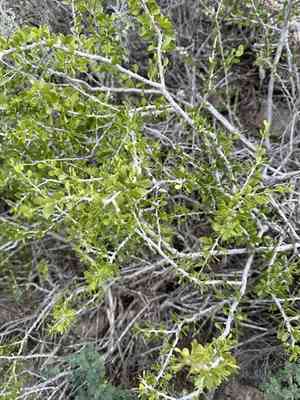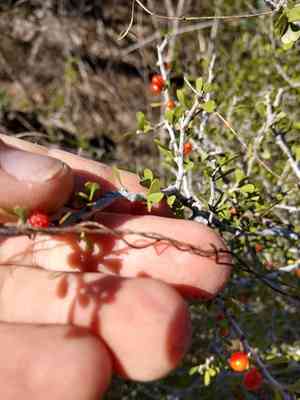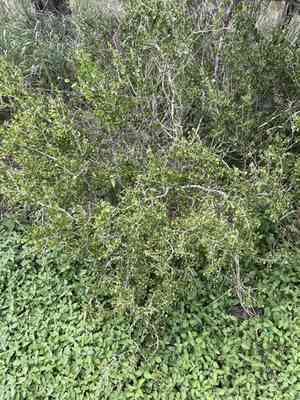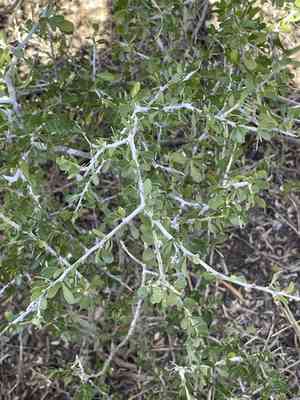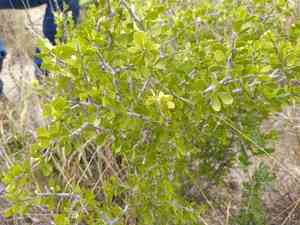
Desert Yaupon(Schaefferia cuneifolia)

Desert Yaupon (Schaefferia cuneifolia)

Also known as: None

The Desert Yaupon (Schaefferia cuneifolia) is a hardy shrub well-adapted to arid and rocky regions. Its resilience is attributed to several distinct features:

1. **Efficient Water Use**: The plant's small, wedge-shaped leaves are designed to minimize water loss, conserving moisture effectively.
2. **Sun Tolerance**: It thrives in full sunlight, an essential trait for survival in desert climates.
3. **Minimal Water Requirement**: Adapted to survive with scant moisture, it epitomizes endurance in harsh environments.
4. **Inconspicuous Flowers**: The plant often produces small, unobtrusive flowers, which is typical for flora in arid regions.
5. **Dense Growth**: Exhibiting a dense, rounded growth habit, it maximizes shade to its own root system, helping retain soil moisture.

These adaptations collectively enable the Desert Yaupon to flourish in challenging, dry conditions.

Attributes of Desert Yaupon

Lifespan
Perennial
Plant Type
Shrub
Plant Height
Typically 1.5 to 3 meters in height.
Spread
About 1 to 2 meters in diameter.
Leaf Color
Green
Flower Size
Small, typically less than 0.5 cm in diameter.
Flower Color
Green

ForwardPlant - Identify plants with a snap

Identify and diagnose plants, get toxicity alerts, and explore safety guides for all types of fungi.

Try for Free

Images of Desert Yaupon

Desert Yaupon(Schaefferia cuneifolia)

Quickly Identify Desert Yaupon

1
Look for tough, leathery leaves that have an oblong to cuneate (wedge-shaped) form. The flowers are small and not very showy, making the foliage the primary identifying feature.

Scientific Classification of Desert Yaupon

Phylum
Vascular plants
Class
Dicotyledons
Order
Celastrales
Family
Bittersweet
Genus
Schaefferia
Species
Desert Yaupon

Planting and Growing of Desert Yaupon

Care Difficulty
Easy
Watering Schedule
Every 2 days
Sunlight Requirements
Partial sun
Sunshine Duration
6-8 hours
Ideal Temperature
65-75℉
Soil Type
Potting Mix, Peat Mix
Soil pH
6.5-7.5
Fertilizer Type
Balanced
Pruning Season
Spring, Summer
Pruning Area
Branches, Leaves
Pruning Frequency
2 times a year
Repotting Season
Spring
Pot Type
Plastic, Ceramic

water icon How to Water Desert Yaupon?

Schaefferia cuneifolia prefers a moderate amount of water, ensuring the soil is consistently moist but never waterlogged. Aim to provide about 250 milliliters per watering session, enough to deeply hydrate the soil while allowing for adequate drainage.
What are the symptoms of an underwatered Desert Yaupon? ›
What should I do if my Desert Yaupon is not getting enough water? ›
What are the symptoms of an overwatered Desert Yaupon? ›
How to save an overwatered Desert Yaupon? ›

sunlight icon What Are the Sunlight Requirements for Desert Yaupon?

Sunlight Requirements: Partial sun
Duration of light: 4 to 6 hours
Schaefferia cuneifolia ideally enjoys partial sun, providing it with an adequate balance between light and shade. It supports robust plant health, resiliency, and appealing visual attributes.
What is the ideal amount of sunlight? ›
How to achieve ideal sun exposure? ›
Benefits of ideal sunlight? ›

temperature icon What Is the Ideal Temperature Range for Desert Yaupon?

Ideal Temperature: 65 ~ 75℉
The ideal temperature range for Schaefferia cuneifolia is between 65°F and 75°F. This range helps the plant thrive and maintain optimal growth and development, providing the right balance of warmth and comfort needed for its physiological processes.

soil icon What Soil is Best for Desert Yaupon?

Soil type: Loam, Calcareous soil
Soil PH: 6.5 ~ 7.5
Schaefferia cuneifolia thrives in well-drained soils, which prevent waterlogging and root rot. This is crucial for maintaining the plant's health, as excess moisture can lead to fungal diseases and hinder nutrient uptake. The plant prefers soils of moderate fertility, as it allows for steady growth without the risk of nutrient overloading, which can damage root systems and stunt growth. Schaefferia cuneifolia can tolerate slightly alkaline soils, making it suitable for regions with calcareous conditions. This flexibility helps in regions where altering soil pH is challenging.

fertilize icon How to Fertilize Desert Yaupon?

Fertilizer type: Balanced
When fertilizing Schaefferia cuneifolia, use a balanced fertilizer at half the recommended strength to avoid overfeeding. For example, if the package suggests 1 tablespoon per gallon, use only 0.5 tablespoon per gallon for this plant.

prune icon How to Prune Desert Yaupon?

Pruning Time: Spring, Summer
Start by removing any dead or diseased branches at their base. Next, look for branches that are crossing or growing inward and cut them back to maintain an open structure. Finally, trim the tips to encourage bushier growth. Prune during the early parts of spring or summer when the plant is actively growing. Avoid pruning in extremely hot or dry conditions to prevent undue stress on the plant. More About Pruning Techniques→

propagate icon How to Propagate Desert Yaupon plant?

Propagate Time: Spring, Late spring
1
Use a well-draining mix, such as a combination of peat and perlite, to fill your seed tray or pot. This provides the necessary aeration and moisture retention for seed germination.
2
Evenly distribute the Schaefferia cuneifolia seeds over the soil surface, covering them lightly with a thin layer of soil to protect them while allowing sunlight penetration.
3
Select a healthy branch from the mother plant and cut a 4-6 inch segment. Remove any leaves from the lower half to prevent rot and enhance rooting.

repot icon How to Repot Desert Yaupon plant?

Repotting frequency: Every 2-3 years
1
Look for signs like roots growing out of the pot bottom, slow growth, or soil drying out too quickly. These indicate it's time for a new pot.
2
Select a pot that is one to two inches larger in diameter than the current one. A pot that is too large can retain excess moisture, leading to root rot.
3
Use a well-draining mix, ideally a sandy loam. This ensures proper aeration and prevents moisture retention that could harm the roots.

ForwardPlant - Identify plants with a snap

Find the best spots for them to optimize their health, simply using your phone.

Try for Free