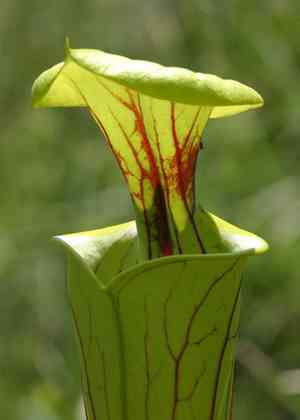
Yellow pitcherplant (Sarracenia flava)
Also known as: Huntsman's Horn, Biscuit-Flower, Trumpets
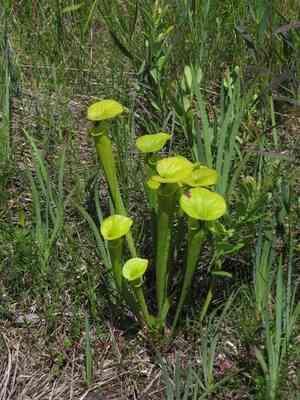
The yellow pitcherplant (Sarracenia flava) is a carnivorous perennial that flowers in the spring. Its vibrant, pitcher-like leaves emerge during the spring and summer, attracting insects with their vivid colors and nectar. Once an insect is drawn to the plant, it often slips and falls into the deep, tubular pitcher. Inside, the insect is trapped by downward-pointing hairs and a smooth interior, preventing escape. The insect eventually drowns in a pool of digestive fluids at the bottom of the pitcher, where it is broken down and absorbed as nutrients by the plant.
In This Article
Attributes of Yellow pitcherplant
Lifespan
Perennial, Annual
Plant Type
Herb
Plant Height
45 cm to 90 cm
Spread
45 cm to 90 cm
Leaf Color
Green Yellow
Flower Size
5 cm
Flower Color
Yellow Green
Images of Yellow pitcherplant
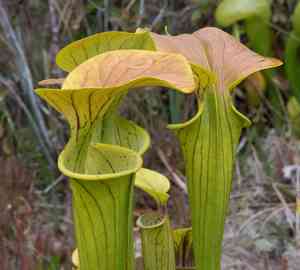
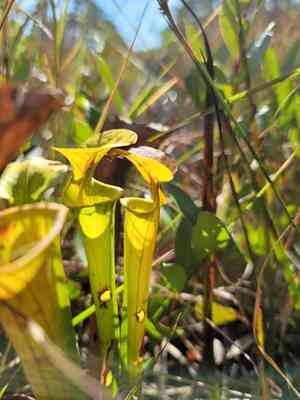
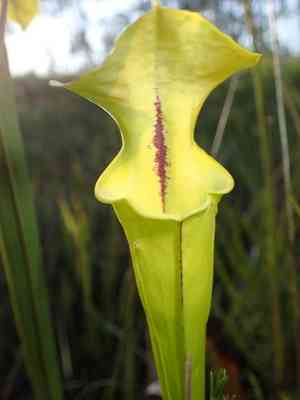
Quickly Identify Yellow pitcherplant
1
Pitcher-shaped green leaves with red to yellow hues, up to 3 feet (90 cm) tall.
2
Bright yellow nodding flowers, 2-4 inches (5-10 cm) wide, emitting a musty fragrance.
3
Textured 5-parted seed capsule fruit, essential for propagation, observed in May-June.
4
Trumpet-shaped leaves, 20-30 inches (50-76 cm) long, with crimson throat patch.
5
Distinctive waxy tubular leaves with downward-pointing hairs, hindering insect escape.
Scientific Classification of Yellow pitcherplant
Phylum
Vascular plants
Class
Dicotyledons
Order
Ericales
Family
Pitcher-plant
Genus
Trumpet pitchers
Species
Yellow pitcherplant
Planting and Growing of Yellow pitcherplant
Care Difficulty
Easy
Watering Schedule
Every 2 days
Sunlight Requirements
Full sun
Sunshine Duration
4-8 hours
Ideal Temperature
70-85℉
Soil Type
Potting Mix, Peat Mix
Soil pH
4.5-5.8
Fertilizer Type
Balanced
Pruning Season
Spring, Summer
Pruning Area
Branches, Leaves
Pruning Frequency
2 times a year
Repotting Season
Spring
Pot Type
Plastic, Ceramic
 How to Water Yellow pitcherplant?
Sarracenia flava prefers consistently moist conditions, with about 200 ml of water each time to ensure the soil remains damp but not waterlogged. It's crucial to mimic its natural bog habitat, where it can draw up moisture continuously.
What are the symptoms of an underwatered Yellow pitcherplant?
›
What should I do if my Yellow pitcherplant is not getting enough water?
›
What are the symptoms of an overwatered Yellow pitcherplant?
›
How to save an overwatered Yellow pitcherplant?
›
 What Are the Sunlight Requirements for Yellow pitcherplant?
Sarracenia flava prefers full sun conditions. Ideal sunlight offers benefits such as robust growth, vibrant color development, and enhanced photosynthetic ability, vital for energy production and prey digestion.
More About Sunlight Requirements Techniques→
How much sunlight is ideal for Sarracenia flava?
›
What are the options to ensure Sarracenia flava gets enough light?
›
What are the benefits of ideal light conditions for Sarracenia flava?
›
 What Is the Ideal Temperature Range for Yellow pitcherplant?
The ideal temperature range of 70-85°F is crucial for the optimal growth and photosynthesis of Sarracenia flava. Within this range, the plant can efficiently produce energy, absorb nutrients, and maintain hydration effectively. Such temperatures mimic the plant's natural habitat, allowing it to thrive in controlled environments.
 What Soil is Best for Yellow pitcherplant?
Sarracenia flava requires soil that retains moisture well, emulating its natural wetland habitat. This ensures the plant receives consistent hydration, crucial for its growth and health, preventing it from drying out and promoting robust foliage. The plant thrives in nutrient-poor soil, as it obtains nutrients from trapping insects. Ensuring low-nutrient soil helps maintain its natural adaptations and prevents nutrient burn that can occur with richer soils. Good aeration is essential for the roots to breathe, preventing root rot and enhancing overall soil structure. The inclusion of coarse elements like sand in the peat mix can facilitate adequate air flow.
 How to Fertilize Yellow pitcherplant?
For Sarracenia flava, fertilization should be mild and carefully managed. Use a 1/4 to 1/2 strength liquid fertilizer specifically designed for carnivorous plants, or diluted orchid fertilizer, to avoid burning the plant's delicate roots.
 How to Prune Yellow pitcherplant?
Although pruning can take place in all seasons, it's best done when you can easily access all parts of the plant. Make sure to observe during midday when the leaves are dry and more easily manageable. For effective pruning, carefully cut the chosen dead or wilting leaves at the very base, just above the rhizome. This ensures that the plant has an easier time sealing off the wound and prevents further decay.
More About Pruning Techniques→
 How to Propagate Yellow pitcherplant plant?
1
Collect mature seeds from the plant and soak them in water for 24 hours to help soften the seed coat and enhance germination.
2
Place the seeds on the surface of a moist, acidic soil mix without covering them, as they require light to germinate.
3
Carefully separate the rhizomes during dormancy, ensuring each division has at least one growth node for successful propagation.
 How to Repot Yellow pitcherplant plant?
1
Repotting Sarracenia flava is best done when you notice overcrowding in the pot, or when the growth rate slows significantly. These signs typically mean the roots might be congested or the soil is depleted of nutrients. It's crucial to choose a time when the plant is not actively growing to minimize stress.
2
Select a pot that is slightly larger than the current one, ensuring it has ample drainage holes. A well-draining pot helps prevent root rot, which is vital for the health of this carnivorous plant. Clay or plastic pots are both suitable, but remember that clay can help regulate moisture better.
3
Opt for a soil mix that is acidic and peat-based to mimic Sarracenia flava’s natural habitat. This type of soil is low in nutrients, which discourages fungi and bacteria and encourages the plant to develop strong, healthy root systems. Avoid any mix with added fertilizers.



