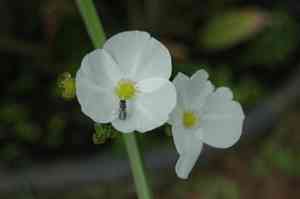
Guyanese arrowhead (Sagittaria guayanensis)
Also known as: Arrowhead lily
The Guyanese Arrowhead (Sagittaria guayanensis) is an aquatic tropical plant recognized by its distinctive floating arrow-shaped leaves. It features three-petaled white flowers with yellow, pearl-like centers. This species thrives in swamps and muddy waters across tropical and subtropical regions. Known also as the swamp potato, its tubers are commonly used as livestock feed in regions like Africa and China.
In This Article
Attributes of Guyanese arrowhead
Lifespan
Perennial
Plant Type
Herb
Plant Height
30-60 cm
Spread
20-40 cm
Leaf Color
Green
Flower Size
2-3 cm
Flower Color
White
Images of Guyanese arrowhead
Quickly Identify Guyanese arrowhead
1
This plant can be identified by its sagittate (arrow-shaped) leaves which are 15-30 cm long. The leaves grow on long stalks that emerge from a central rosette. Its white flowers with three petals are another distinctive feature.
Scientific Classification of Guyanese arrowhead
Phylum
Vascular plants
Class
Monocotyledons
Order
Alismatales
Family
Water-plantain
Genus
Arrowheads
Species
Guyanese arrowhead
Planting and Growing of Guyanese arrowhead
Care Difficulty
Moderate
Watering Schedule
Every 8 days
Sunlight Requirements
Full sun
Sunshine Duration
4-8 hours
Ideal Temperature
75-86℉
Soil Type
Potting Mix, Peat Mix
Soil pH
6.5-7.5
Fertilizer Type
Balanced
Pruning Season
Spring, Summer
Pruning Area
Branches, Leaves
Pruning Frequency
2 times a year
Repotting Season
Spring
Pot Type
Plastic, Ceramic
 How to Water Guyanese arrowhead?
Sagittaria guayanensis enjoys consistently moist soil, but it shouldn’t be waterlogged. It thrives with about 500 ml of water per session, ensuring the soil is saturated but not soggy. The aim is to mimic its natural swampy habitat, keeping the soil damp but allowing for some aeration.
What are the symptoms of an underwatered Guyanese arrowhead?
›
What should I do if my Guyanese arrowhead is not getting enough water?
›
What are the symptoms of an overwatered Guyanese arrowhead?
›
How to save an overwatered Guyanese arrowhead?
›
 What Are the Sunlight Requirements for Guyanese arrowhead?
Sagittaria guayanensis flourishes with a combination of full to partial sunlight. Maintaining this lighting range ensures optimal photosynthesis, vital for nutrient production and vigorous, healthy growth.
What are the ideal lighting conditions for Sagittaria guayanensis?
›
How can I ensure Sagittaria guayanensis gets the right amount of sun?
›
What are the benefits of ideal lighting for Sagittaria guayanensis?
›
 What Is the Ideal Temperature Range for Guyanese arrowhead?
The ideal temperature range for Sagittaria guayanensis cultivation is between 75°F and 86°F. Within this range, the plant exhibits optimal growth, with vibrant leaves and strong root development. This range ensures metabolic functions proceed at the best rate, maximizing photosynthesis and nutrient uptake.
 What Soil is Best for Guyanese arrowhead?
Sagittaria guayanensis thrives in soils that can hold moisture well, as it is often found in wetland areas. Ensuring soil retains moisture can reduce stress on the plant and promote healthy growth. This plant benefits from soils rich in organic matter, which provide essential nutrients. Adding compost or well-rotted organic matter can enhance soil fertility and plant vitality. Although it prefers moist environments, good drainage prevents root rot. Sandy loam soils offer an excellent balance, maintaining moisture while allowing excess water to drain.
 How to Fertilize Guyanese arrowhead?
Sagittaria guayanensis requires a balanced approach to fertilization. Use a diluted liquid fertilizer at half the recommended strength for houseplants, and ensure that you don't over-fertilize, which could harm the plant.
 How to Prune Guyanese arrowhead?
Begin by identifying leaves that are yellowing or dying. Carefully snip these off at the base to redirect the plant’s energy towards healthier growth. Removing these leaves helps stimulate better air circulation among the remaining foliage. Trim excessively long stems to maintain the ideal shape and prevent the plant from becoming too leggy. This process promotes a lush, bushy appearance and helps in managing the space the plant occupies. Consider trimming new shoots to encourage branching. This practice enhances the plant’s fullness and can lead to the development of more decorative foliage, which can make your plant more vibrant and aesthetically pleasing.
 How to Propagate Guyanese arrowhead plant?
1
Collect ripe seeds from Sagittaria guayanensis and clean them thoroughly. This ensures that they are free from any pests or diseases before planting.
2
Fill a seed tray with aquatic soil mix and lightly press seeds onto the surface. Cover with a thin layer of sand and water gently to keep the soil moist.
3
Carefully dig up the parent plant and use a trowel to separate its sections. Ensure each section has roots and replant them in a suitable location.
 How to Repot Guyanese arrowhead plant?
1
Signs that your Sagittaria guayanensis needs repotting include roots emerging from the pot's drainage holes, decreased growth, and quick drying of the potting mix after watering. Early spring or summer is ideal for repotting due to the plant's active growth phase, allowing it to recover and establish itself in new soil.
2
Select a pot that is one size larger than the current one, with ample drainage holes to prevent waterlogging. A clay pot can be beneficial as it allows for air circulation, promoting healthy root growth. Ensure the pot is heavy enough to support the plant and prevent tipping, especially in windy environments.
3
Opt for a rich, loamy, and well-draining soil mix that retains some moisture but doesn't become waterlogged. This type of soil supports Sagittaria's natural habitat, providing the necessary nutrients and moisture balance, which helps prevent root rot and encourages robust growth.
Learn More About Guyanese arrowhead Diseases
Anthracnose
Bacterial Leaf Spot
Bacterial Soft Rot
Bacterial Wilt
Chemical Injury
Cyst Nematode
Damping-off
Downy Mildew
Drought Stress
Fusarium Wilt
Gray Mold
Leaf Spot
Mosaic
Nutrient Deficiency
Nutrient Toxicity
Powdery Mildew
Root Rot
Root-knot Nematode
Rusts
Sooty Mold
Spider Mites
Temperature Stress
Thrips Damage
White Mold



