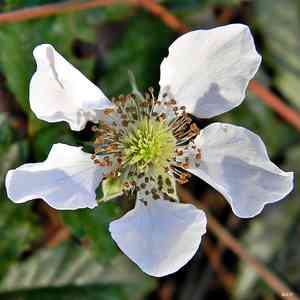
New orleans dewberry (Rubus sons)
Also known as: Raspberry, Blackberry
Rubus alabamensis is a rare species of bramble within the rose family, native to the southeastern United States. Its range extends from Arkansas and Louisiana to South Carolina.
In This Article
Attributes of New orleans dewberry
Lifespan
Perennial
Plant Type
Shrub
Plant Height
1.5 to 3 meters
Spread
Varies, can spread up to 1 to 1.5 meters
Leaf Color
Green
Flower Size
1 to 3 centimeters
Flower Color
White to pink
Images of New orleans dewberry
Quickly Identify New orleans dewberry
1
The plant typically has compound leaves with three to five leaflets, thorny stems, and produces small, round aggregates of drupelets as fruit.
Scientific Classification of New orleans dewberry
Phylum
Vascular plants
Class
Dicotyledons
Order
Rosales
Family
Rose
Genus
Brambles
Species
New orleans dewberry
Planting and Growing of New orleans dewberry
Care Difficulty
Moderate
Watering Schedule
Every 3 days
Sunlight Requirements
Partial sun
Sunshine Duration
6-8 hours
Ideal Temperature
60-75℉
Soil Type
Potting Mix, Peat Mix
Soil pH
6.5-7.5
Fertilizer Type
Balanced
Pruning Season
Spring, Summer
Pruning Area
Branches, Leaves
Pruning Frequency
2 times a year
Repotting Season
Spring
Pot Type
Terracotta, Plastic
 How to Water New orleans dewberry?
For Rubus sons, watering should ensure that the soil is moist but not saturated. Pour approximately 500 ml of water at each session, ensuring the entire root zone is evenly moist. The goal is to maintain consistent moisture levels for optimal growth.
What are the symptoms of an underwatered New orleans dewberry?
›
What should I do if my New orleans dewberry is not getting enough water?
›
What are the symptoms of an overwatered New orleans dewberry?
›
How to save an overwatered New orleans dewberry?
›
 What Are the Sunlight Requirements for New orleans dewberry?
Rubus sons flourishes in partial sun settings, balancing light and shade. This condition encourages vibrant growth, effective photosynthesis, and abundant fruiting, reflecting its natural preference.
Optimal Sun Exposure
›
Solution for Consistent Light
›
Benefits of Ideal Light
›
 What Is the Ideal Temperature Range for New orleans dewberry?
The ideal temperature range for cultivating Rubus species is between 60°F and 75°F. Maintaining this temperature ensures optimal growth, as it fits the plant's natural habitat conditions, offering the right balance of warmth and moisture retention needed for healthy foliage and fruit production.
 What Soil is Best for New orleans dewberry?
Rubus sons thrives in well-drained soil. It prevents root rot by allowing excess water to escape, encouraging healthier root growth and robust plant development. This plant loves soil rich in organic matter. The decomposition of organic materials boosts nutrients, improving growth rate and fruit quality. Consistent moisture is essential for Rubus sons. While the plant prefers well-drained conditions, retaining some moisture helps sustain metabolic activities and fruit production.
 How to Fertilize New orleans dewberry?
For Rubus species, an optimal amount of liquid fertilizer would be a balanced formula applied at half-strength for mature plants. As for granular or slow-release options, aim for a handful per square foot of soil around the plant. This ensures a steady supply of nutrients without overwhelming the root system.
 How to Prune New orleans dewberry?
The first step in pruning Rubus sons is to identify and remove any dead or diseased canes. These can be spotted as they usually appear brown or brittle compared to healthy canes. Selectively remove canes that are growing too close to each other. This thinning helps improve air circulation, reduces disease risk, and allows sunlight to reach all parts of the plant. When removing older or unwanted canes, cut them cleanly at the base. This encourages new growth and prevents unsightly stubs.
 How to Propagate New orleans dewberry plant?
1
Ensure the mother plant is healthy and well-watered a few days before propagation. This helps in obtaining strong cuttings or divisions. Check for any signs of disease and remove any damaged foliage.
2
Select a healthy stem and use sharp pruning shears to take a cutting that is about 4-6 inches long. Remove the lower leaves to expose nodes, where new roots are likely to develop.
3
If using seeds, sow them in seed trays filled with a suitable substrate. For divisions, ensure that each division has enough roots and plant them in prepared soil. Water gently but thoroughly.
 How to Repot New orleans dewberry plant?
1
Rubus sons should be repotted when you notice roots growing out of the drainage holes or the soil has lost its ability to retain moisture. These are signs that the plant is outgrowing its current pot, needing more space to thrive.
2
Select a pot that is one size larger than the current one, with adequate drainage holes. This ensures ample space for healthy root expansion, promoting better growth and preventing problems like root rot which can occur in waterlogged conditions.
3
Opt for loamy soil that drains well; it helps in oxygen circulation around the roots. Such soil offers the perfect balance of moisture retention and drainage, fostering optimal growth conditions for Rubus sons.



