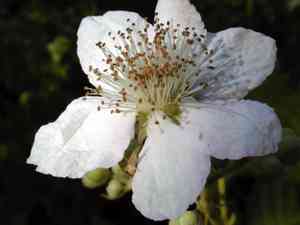
Himalayan blackberry (Rubus armeniacus)
Also known as: Armenian blackberry
Despite yielding delicious berries, the Himalayan blackberry has notable downsides. Its rapid growth makes it highly invasive, often overwhelming native plants and disrupting ecosystems. The plant forms dense, thorny thickets that are difficult to penetrate, complicating land management and access. In many regions, it is classified as a noxious weed due to its aggressive spread and dominance over local flora.
In This Article
Attributes of Himalayan blackberry
Lifespan
Perennial
Plant Type
Shrub
Plant Height
4 m to 10 m
Spread
2 m to 5 m
Leaf Color
Green
Flower Size
2 cm to 2.5 cm
Flower Color
White Pink
Images of Himalayan blackberry
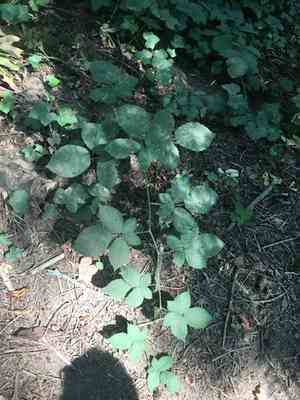
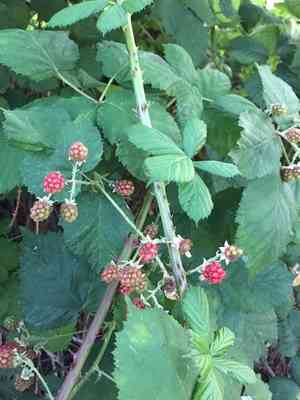
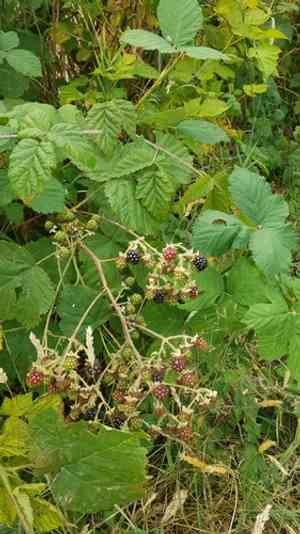
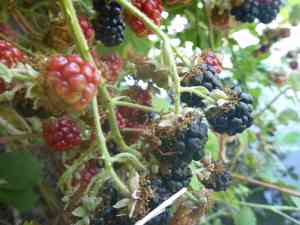
Quickly Identify Himalayan blackberry
1
Identify this plant by its long, arching canes which are covered with sharp thorns. The leaves are compound, usually with five leaflets, and have a serrated edge. Rubus armeniacus produces white or pale pink flowers followed by dark purple to black aggregate fruit.
Scientific Classification of Himalayan blackberry
Phylum
Vascular plants
Class
Dicotyledons
Order
Rosales
Family
Rose
Genus
Brambles
Species
Himalayan blackberry
Planting and Growing of Himalayan blackberry
Care Difficulty
Hard
Watering Schedule
Every 4 days
Sunlight Requirements
Full sun
Sunshine Duration
4-8 hours
Ideal Temperature
60-75℉
Soil Type
Potting Mix, Peat Mix
Soil pH
6.5-7.5
Fertilizer Type
Balanced
Pruning Season
Spring, Summer
Pruning Area
Branches, Leaves
Pruning Frequency
2 times a year
Repotting Season
Spring
Pot Type
Plastic, Ceramic
 How to Water Himalayan blackberry?
Rubus armeniacus, commonly known as the Himalayan blackberry, requires consistent moisture yet dislikes being waterlogged. Each watering session should aim to thoroughly saturate the soil to a depth of at least 20-30 cm, ensuring the roots receive abundant hydration. Aim for approximately 1000 ml of water per plant, adjusting for soil porosity and temperatures.
More About Watering Techniques→
What are the symptoms of an underwatered Himalayan blackberry?
›
What should I do if my Himalayan blackberry is not getting enough water?
›
What are the symptoms of an overwatered Himalayan blackberry?
›
How to save an overwatered Himalayan blackberry?
›
 What Are the Sunlight Requirements for Himalayan blackberry?
Rubus armeniacus prefers full sun and benefits from full sunlight exposure. Receiving consistent light results in better fruiting, hardy growth, and vibrant leaf color, optimizing the plant's health.
More About Sunlight Requirements Techniques→
What is the best lighting condition for Rubus armeniacus?
›
How can you ensure optimal lighting for Rubus armeniacus?
›
What are the benefits of providing ideal lighting to Rubus armeniacus?
›
 What Is the Ideal Temperature Range for Himalayan blackberry?
The ideal temperature range for Rubus armeniacus, commonly known as the Armenian blackberry, is between 60°F and 75°F. Within this range, the plant can thrive, exhibiting optimal growth and fruit production. This mild temperature range supports the plant's metabolic functions and reduces stress, leading to healthier foliage and abundant fruit yield.
 What Soil is Best for Himalayan blackberry?
Rubus armeniacus thrives in well-drained soil that prevents waterlogging, helping to maintain roots' oxygen supply which promotes vigorous growth. This plant benefits from soil rich in organic matter, as it provides essential nutrients and retains moisture, enhancing fruit production and overall plant health. Rubus armeniacus prefers a pH range from 6.5 to 7.5, which facilitates nutrient absorption, resulting in optimal growth and berry yield.
More About Soil→
 How to Fertilize Himalayan blackberry?
Rubus armeniacus, commonly known as Armenian Blackberry, thrives with moderate fertilization. A balanced NPK fertilizer with a ratio of 10-10-10 is ideal. For liquid fertilizers, use approximately one tablespoon per gallon of water to ensure the plants receive a steady, gentle supply of nutrients without overwhelming their roots.
More About Fertilizing Techniques→
 How to Prune Himalayan blackberry?
The canes of Rubus armeniacus have sharp thorns, so wearing gloves and long sleeves is essential to protect yourself from scratches. While it's important to manage their growth, avoid excessive pruning on young plants as this can stunt their development. Focus on removing dead or damaged canes.
 How to Propagate Himalayan blackberry plant?
1
Harvest mature fruits and extract the seeds. Clean the seeds thoroughly before planting to reduce the risk of disease.
2
Select healthy, young shoots and use sharp pruners to cut 6-8 inch sections. Remove leaves from the lower half to prevent rot.
3
Identify a low branch, bend it to the ground, and make a small incision to encourage rooting. Cover the incision with soil and keep it moist.
 How to Repot Himalayan blackberry plant?
1
Repot Rubus armeniacus when you notice that the roots are circling the bottom of the pot or growing through the drainage holes. Another signal is when the plant's growth has noticeably slowed despite proper care. Generally, this will happen every 2-3 years as the plant matures and requires more space to grow.
2
Select a pot that is 2-3 inches larger in diameter than the current one. A pot with several drainage holes is ideal as it prevents waterlogging and root rot. The material of the pot should also be sturdy to support the plant's growth and provide insulation to the roots.
3
Opt for a well-drained, loamy soil mixed with organic matter. A soil with good drainage properties prevents root rot and allows adequate oxygen supply to the roots, promoting healthy plant growth. The addition of organic matter ensures the soil remains nutrient-rich.



