How to Propagate Himalayan blackberry?
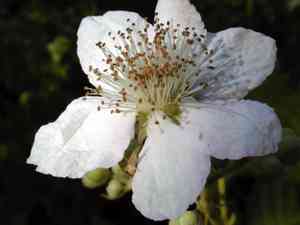
Himalayan blackberry is easily multiplied, ideally from cuttings taken in the spring and summer seasons. Observe for the emergence of new roots as an indicator of successful propagation. When appropriate, pay attention to tip rooting to achieve the best outcomes.
Optimal Period for Propagating Himalayan Blackberry
Propagation Method
Cutting
Propagation Period
Spring, Summer
Tools Required for Himalayan Blackberry Propagation
Sharp Pruning Shears
Sharp pruning shears are vital for making clean cuts from mature himalayan blackberry branches, minimizing harm to the parent plant and boosting rooting success. A precise cut helps prevent disease entry and offers a clean surface for root growth.
Rooting Hormone
Rooting hormone is utilized to encourage root formation on himalayan blackberry cuttings. Applying it to the cut base significantly increases the chance of successful propagation by fostering faster and stronger root development.
Sterilizing Solution
This is crucial for sanitizing pruning shears and other tools before use, preventing disease transmission to himalayan blackberry during the cutting process. A sterile environment supports a healthier propagation.
Potting Mix
A well-draining potting mix offers the necessary environment for new himalayan blackberry cuttings to develop roots. The medium should be loose and rich in organic matter to support growth while allowing proper drainage, essential for preventing root rot.
Propagation Tray or Pots
Trays or pots are used to hold himalayan blackberry cuttings while they root. They should be deep enough for root development and have drainage holes to avoid waterlogging.
Plastic Dome or Cover
A plastic dome or cover creates a mini-greenhouse effect, maintaining higher humidity around himalayan blackberry cuttings, which prevents them from drying out before roots form. This is crucial for cuttings, as they lack their own root system to supply water.
How to Propagate Himalayan Blackberry
Propagation Method
Cutting
Difficulty Level
Moderately Difficult
Caring for Your Newly Propagated Himalayan Blackberry
Caring for Your Newly Propagated Himalayan Blackberry
After propagation, gradually introduce the rooted cutting to outdoor conditions if grown indoors. Plant in well-draining soil with full sun to partial shade. Water regularly to keep the soil moist but not waterlogged, and fertilize during the growing season. Prune as needed to manage growth, as himalayan blackberry can become invasive. Monitor for common pests and diseases and treat appropriately.
Common Errors to Avoid When Propagating Himalayan Blackberry
Overwatering cuttings
Saturated soil can lead to root rot, impeding root development in himalayan blackberry cuttings and potentially killing them before establishment.
Ignoring plant runners
Neglecting himalayan blackberry's natural propagation via runners can result in missed opportunities for new plants to root.
Poor cutting selection
Choosing weak or diseased stems for cuttings can lead to poor or absent root development, negatively impacting the health and vigor of new himalayan blackberry plants.
Planting in nutrient-poor soil
Soil lacking essential nutrients may not support the healthy growth of himalayan blackberry, affecting the plant's ability to establish and thrive.
Neglecting local regulations
Himalayan blackberry is considered invasive in many areas; failing to check local regulations during propagation can lead to legal issues and ecological imbalances.
Tips For Propagating Himalayan Blackberry
Use healthy plant material
Select robust, disease-free stems from himalayan blackberry for cuttings, ensuring a higher success rate in propagation.
Maintain appropriate moisture
Keep the soil of himalayan blackberry cuttings consistently moist but not waterlogged to promote healthy root development without causing rot.
Leverage root barriers
When planting himalayan blackberry, use root barriers to control its spread and prevent it from becoming invasive in the garden.
Employ runners for propagation
Encourage the rooting of himalayan blackberry runners by lightly covering them with soil, which can naturally produce new plants.



