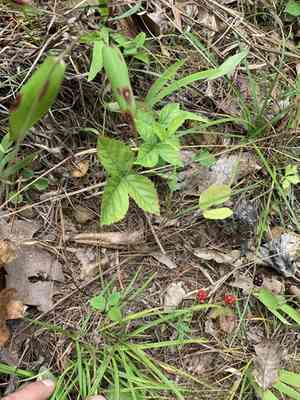
Garden dewberry (Rubus aboriginum)
Also known as: Southern Dewberry
Rubus aboriginum, also known as the southern dewberry, is a perennial shrub with long, arching canes that can reach up to 1.8 meters in both height and width. Initially, the branches have a 'hairy' appearance but tend to smooth out with age and are sparsely covered with small, hooked prickles. Its leaves are ovate with serrated edges, and the plant produces white flowers with five petals, each about 2.5 cm across. The fruit is an aggregate of small drupelets, resembling other dewberries or diminutive blackberries.
In This Article
Attributes of Garden dewberry
Lifespan
Perennial
Plant Type
Shrub
Plant Height
0.3-1 meter (1-3 feet)
Spread
Spreads widely through trailing vines
Leaf Color
Green
Flower Size
1-2 centimeters
Flower Color
White to pale pink
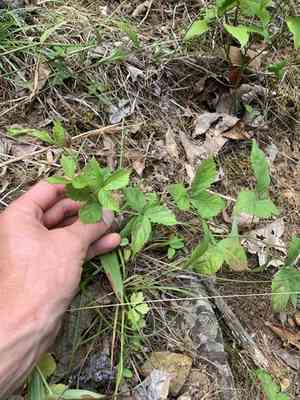
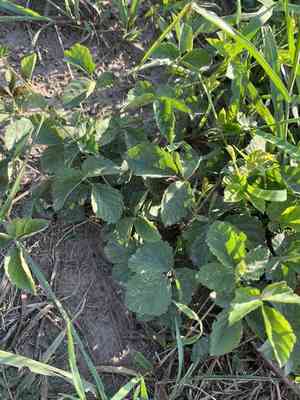
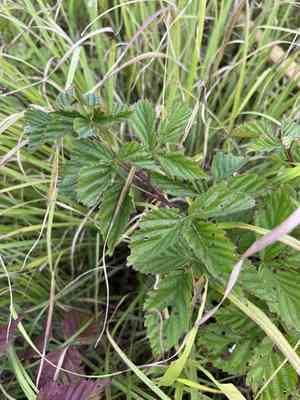
Images of Garden dewberry
Quickly Identify Garden dewberry
1
Rubus aboriginum can be identified by its trailing habit, compound leaves with 3-5 leaflets, and white to pale pink flowers. The stems are typically covered with small prickles.
Scientific Classification of Garden dewberry
Phylum
Vascular plants
Class
Dicotyledons
Order
Rosales
Family
Rose
Genus
Brambles
Species
Garden dewberry
Planting and Growing of Garden dewberry
Care Difficulty
Moderate
Watering Schedule
Every 4 days
Sunlight Requirements
Full sun
Sunshine Duration
6-8 hours
Ideal Temperature
68-77℉
Soil Type
Potting Mix, Peat Mix
Soil pH
5.8-6.5
Fertilizer Type
Balanced
Pruning Season
Spring, Summer
Pruning Area
Branches, Leaves
Pruning Frequency
2 times a year
Repotting Season
Spring
Pot Type
Ceramic, Plastic
 How to Water Garden dewberry?
For Rubus aboriginum, each watering session should provide ample moisture to the soil without making it waterlogged. Aim for around 500 milliliters per session, ensuring that the water penetrates to the root zone. This plant thrives when the roots are adequately hydrated but not drowning.
What are the symptoms of an underwatered Garden dewberry?
›
What should I do if my Garden dewberry is not getting enough water?
›
What are the symptoms of an overwatered Garden dewberry?
›
How to save an overwatered Garden dewberry?
›
 What Are the Sunlight Requirements for Garden dewberry?
Rubus aboriginum ideally requires full to partial sun, which promotes lush growth and abundant fruit production. Adequate sunlight enhances photosynthesis, fostering stronger structural development and resilience against environmental stressors.
What is the optimal light environment?
›
How can one ensure optimal lighting for Rubus aboriginum?
›
What are the benefits of ideal light conditions?
›
 What Is the Ideal Temperature Range for Garden dewberry?
Rubus aboriginum thrives best between 68°F and 77°F. Within this temperature range, the plant experiences optimal growth conditions, which include proper photosynthesis rates and efficient nutrient uptake. These conditions also help in minimizing stress and maximizing yields, ensuring the overall health of the plant.
 What Soil is Best for Garden dewberry?
Rubus aboriginum thrives in well-drained soils that allow for air circulation and proper root development. Such conditions prevent root rot and promote healthy plant growth, ensuring the plant receives the right amount of moisture without excess water retention. Rich organic content in the soil provides essential nutrients that support the plant's growth cycle. Organic matter improves soil texture, facilitates nutrient uptake, and enhances microbial activity, contributing to the robust health of Rubus aboriginum. While Rubus aboriginum requires fertile soil, it prefers moderate fertility over overly rich environments. Balanced nutrient levels support steady growth and fruit production without causing excessive vegetative growth that could hamper fruiting.
 How to Fertilize Garden dewberry?
Rubus aboriginum typically thrives with a balanced application of fertilizer. Apply a liquid fertilizer with a concentration of 20-20-20 at half strength twice a month during its growing season. Avoid over-fertilizing as it can harm the root system.
 How to Prune Garden dewberry?
Begin by assessing the overall structure of the Rubus aboriginum. Identify branches that look unhealthy, dead, or overly crowded. This observation enables efficient pruning targeting critical areas to encourage plant vitality. Cut away any dead or diseased wood to prevent the spread of toxins or infections. Make clean cuts close to the base of the affected branch, ensuring that you do not leave any stubs that could hinder growth. Focus on thinning out the branches that are competing for space and light. This step opens up the canopy, allowing sunlight and air to reach all parts of the plant, thus boosting photosynthesis and reducing the risk of fungal diseases. Prune to shape the plant, promoting a desirable structure that supports healthy growth. Training involves guiding the branches to grow in a way that maximizes sunlight exposure and fruit production, often through gentle tying techniques. After major pruning, conduct a final check for small twigs and shoots that may have been missed. These can be snipped off to refine the plant's appearance, ensuring there are no potential 'problem areas' left unattended.
 How to Propagate Garden dewberry plant?
1
Harvest ripe berries from Rubus aboriginum, extract the seeds, and clean them thoroughly. Allow seeds to dry before storing them until planting season to reduce mold growth and rot.
2
Select a healthy, disease-free stem from the parent plant. Cut a segment approximately 4-6 inches long, ensuring it includes several nodes, as these will develop into roots.
3
For seed propagation, place seeds in seed trays filled with a quality seed-starting mix. Cover the seeds lightly with soil and water gently. Keep in a warm, well-lit area.
 How to Repot Garden dewberry plant?
1
Rubus aboriginum should be repotted when you notice roots circling the bottom of the container or poking out of drainage holes. Also, if the plant outgrows its space or soil becomes compacted, it signals repotting time.
2
Select a pot that is 2 inches larger in diameter than the current one to allow for root expansion. Make sure it has ample drainage holes to prevent waterlogging, which helps maintain healthy root systems and prevents root rot.
3
Opt for a well-draining loamy mix rich in organic matter to promote growth. This type of soil ensures proper aeration, drainage, and nutrient availability, all of which are crucial for the plant's thriving.



